
May 22, 2026 | 3 min read
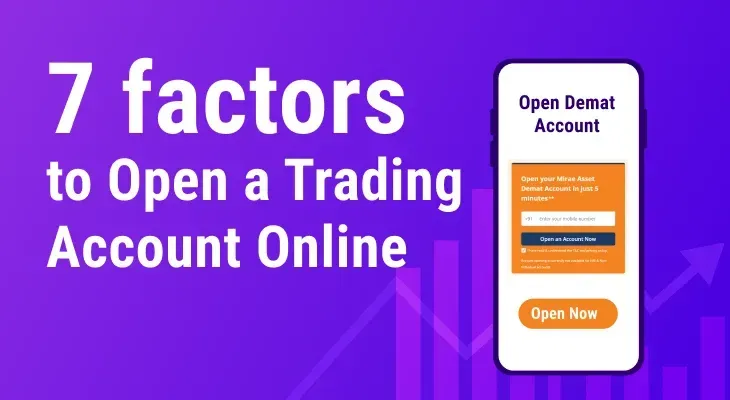
7 factors to consider while opening Trading account online
Want to open a trading account and invest in the financial markets? For a first-time investor, the process of opening a trading account seems like a daunting task. There are many factors involved that determine which trading account will be best suited to your needs. So, it’s natural to be filled with doubts and questions. To help you make an informed decision, we’ve compiled a list of 6 factors to consider while opening a trading account online.
Fees and charges
This factor needs to be carefully evaluated. You may come across advertisements offering free trading account opening, but be mindful, this is just one of the charges associated with the opening and maintaining of your trading account. There are a few other charges that may be levied such as annual maintenance charges and transaction charges. Thus, it is crucial to understand and compare the different charges associated.
With m.stock, traders can get complete transparency on the charges levied. m.Stock offers flat ₹10 brokerage on all trades.
Advanced trading platform
The use of a single platform for demat and trading makes the process more efficient. Most DPs have made the process convenient with the online application form and submission of documents. Ensure that the service provider offers paperless account opening with easy documentation. Further, a robust technology platform such as m.Stock will also provide details about your holdings, valuations, transaction statements, portfolio, etc. Some even offer investment notifications and smart investing tips.
Trading leverage offered
What is the trading leverage permitted by the broker? This is useful when you are trading intraday or in futures. Trading leverage has multiple benefits and can boost your ROI. Thus, it is of key importance to consider the maximum leverage with your broker. m.Stock Pay Later (MTF) offers you one of the industry’s lowest interest rates at 8.99% with no limit on the holding period.
Easy-to-use interface
The interface of the platform that you choose plays a crucial role in determining your overall experience. Thus, the platform must be intuitive and easy to access. Keeping up with these factors, m.Stock has designed a platform that makes your trading a seamless experience. Additionally, the platform also enables a quick, 5 mins onboarding process.
Security and stability
Look for a platform with a good presence and market reputation by conducting due diligence on its records, including customer base, geographical dominance, years of operation, etc. Among the leading platforms, m.Stock has gained investors’ confidence in providing a reliable and secure trading platform. This is particularly important given the current spike in cyberattack occurrences.
High-quality support services
DPs also provide support services to the investors, in which they differ from one another. You should look for support services like complaint redressal, timely settlements, dealing with pledge and lien issues, and consulting and advisory services, among others.
Bottom line
A trading account will not only help you execute transactions but will also prove beneficial in managing your investments. You can make your trading journey smoother by knowing what factors to consider when opening a trading account. Open your demat account and trading account with m.Stock to enjoy a smooth and secure trading experience.
More Related Articles
A Complete Guide on How to Open Trading Account
 May 26, 2026 | 0 mins read
You cannot trade in the stock market with a Demat account. Yes, a Demat account merely stores your assets. The actual buying and selling of assets (shares in this case) takes place in a trading account. In essence, Demat, trading, and bank account are all interlinked and crucial for you to execute a successful trade. When you buy shares, money is first transferred from your bank account to your trading account. Once the transaction goes through, the shares are credited to your Demat account. This is why opening a trading account is a must if you want to trade in the stock market.
How to trade online using a Trading account?
May 22, 2026 | 0 mins read
There were times when share markets were crowded with traders and investors gesturing and crying out to buy and sell shares. However, online trading has changed the game. Online trading was first implemented in India by the Securities and Exchange Board of India (SEBI) in January 2000. This digital mode took over the functioning of the market when the Indian regulations mandated every investor to get their online trading and demat account. The use of online trading and demat accounts has facilitated the reduction of paperwork and minimised the risk of fraud and theft associated with physical securities.
Difference between Demat and Trading Account
May 21, 2026 | 0 mins read
If you are planning to trade in the stock market, you may have come across these terms demat account and trading account. While many new investors use both these terms interchangeably, it is important to note that they are quite different from each other. Each type of account serves a specific purpose, and you need both to invest and trade in the share market. In this blog, you will understand the difference between the two and how they help you in your trading & investment journey in the stock markets.