

January 23, 2026 | 3 min read
Union Budget 2025: Key Ministry-Wise Allocations and Trends
The Union Budget 2025 focused on defence, rural development, and technological innovation, apart from the headline grabbing income tax cut for individuals. There were increases in allocations to specific ministries, but the focus appears of this budget is to accelerate economic growth, enhance India’s global competitiveness, and public welfare. Here is a break-up of the allocations to major ministries.
Ministry | Budget Allocation (₹ Crore) | YoY Change (%) |
|---|---|---|
Ministry of Road Transport & Highways | 2,72,000 | Unchanged |
Ministry of Defence | 6,81,210 | +9.53% |
Ministry of Railways | 2,52,000 | Similar to last year |
Ministry of External Affairs | 20,516 | -7.4% |
Ministry of Education | 1,28,000 | +12.3% |
Ministry of Health & Family Welfare | 99,858 | +9.78% |
Ministry of Rural Development | 1,88,000 | +5.75% |
Ministry of Tourism | 2,541 | +199% |
Ministry of Corporate Affairs | 11,561 | +972% |
National Geospatial Mission | 100 | New Initiative |
Ministry of Housing & Urban Affairs | 96,777 | +18% |
Ministry of Coal | 501 | +255% |
Ministry of Science & Technology | 38,613 | +167% |
Sectoral Implications: Who benefits from these allocations?
1. Infrastructure & Transportation
- With ₹2.72 lakh crore allocated to road transport and highways, the government is prioritizing highway expansions, logistics improvement, and rural connectivity.
- A significant budget for railways continues to support modernisation, high-speed rail projects, and improved passenger services.
2. Defence & National Security
- ₹6.81 lakh crore for defence ensures continued military modernisation, procurement of indigenous weaponry, and strategic border infrastructure development.
- This is aligned with Atmanirbhar Bharat in defence manufacturing.
3. Healthcare & Social Welfare
- ₹99,858 crore for health & family welfare ensures better public health facilities, vaccine programs, and expanded rural healthcare access.
- ₹3,350 crore for minority affairs aims at inclusive growth and welfare schemes for underprivileged communities.
4. Business & Economy
- The massive increase in corporate affairs budget suggests an effort to streamline regulatory frameworks, ease business operations, and attract global investments.
- Increased coal and energy sector budgets indicate a transition towards energy self-reliance and sustainable resource management.
5. Research, Innovation & Digital Economy
- ₹38,613 crore allocated for science and technology aims to drive AI, robotics, and digital transformation in India.
- The launch of the National Geospatial Mission (₹100 crore) marks India's ambition in mapping technologies, smart cities, and advanced spatial data analytics.
A Growth-oriented and future-focused budget
The Union Budget 2025-26 clearly reflects the government's vision of economic growth, innovation, and global competitiveness. With a strong emphasis on infrastructure, defense, science & technology, and corporate growth, this budget sets the stage for long-term economic sustainability and sectoral expansion.
As India gears up for the next phase of development, these allocations serve as a crucial step towards strengthening domestic capabilities, fostering innovation, and improving overall economic resilience.
An Income Tax Calculator helps you estimate how much tax you need to pay based on your income, deductions, and exemptions. Use our Income Tax Calculator to understand your tax liability better and plan smarter to save more.
More Related Articles
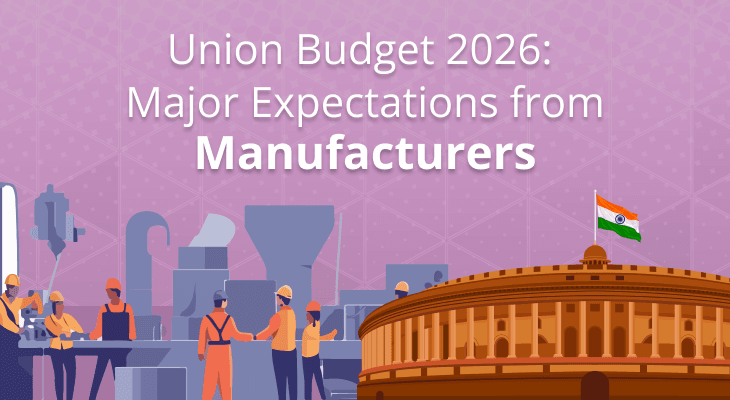
Union Budget 2026: Key Demands from the Manufacturers
 April 24, 2026 | 0 mins read
Ahead of Budget 2026, manufacturing expectations are centred on a familiar formula of lower input friction + predictable policy + incentives. It can improve global competitiveness especially when there are trade headwinds and tariff uncertainties growing before budget coverage. The manufacturing sector looking for policy continuity and targeted support to accelerate India’s journey towards becoming a global manufacturing hub. Industry leaders are keen that the Budget balances fiscal prudence with incentives that boost exports, and technology adoption across sectors.
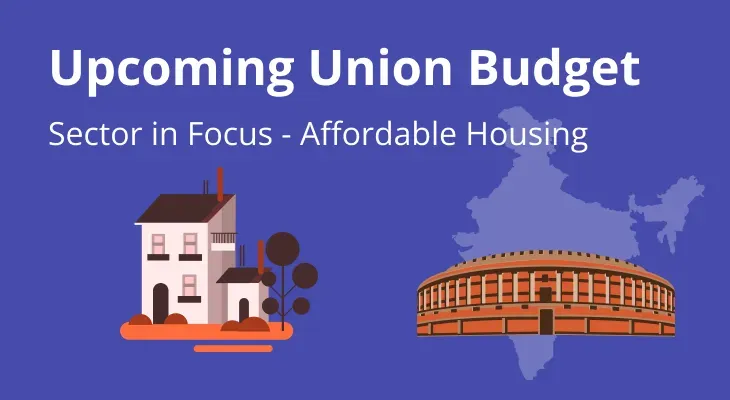
Upcoming Union Budget Focus on Affordable Housing Sector
April 24, 2026 | 0 mins read
Learn about the significant allocations to the Pradhan Mantri Awas Yojana (PMAY), tax benefits, and public-private partnerships aimed at expanding access to affordable housing. Understand how these measures support the 'Housing for All' mission and present investment opportunities in the real estate sector. One of the first decisions that the Union Cabinet took after the new government took office in June 2024 was to approve a proposal to build 3 crore new houses under the Pradhan Mantri Awas Yojana (PMAY). This has set the tone for the full Union Budget 2024 in July, where the expectation is that there will be many measures take to promote affordable housing across India. This continues from the Interim Budget of 2024-25 ahead of the general elections when the Finance Minister Nirmala Sitharaman had reiterated the government’s commitment to addressing the need for affordable housing, a critical component of the government’s broader social welfare agenda. The focus continues to be on expanding access to housing for low and middle-income groups, promoting urban development, and driving economic growth through increased housing investments.

Budget 2026 direct tax playbook: no slab cuts, STT on F&O increases, but big rule changes you can’t ignore
February 27, 2026 | 0 mins read
Budget 2026 didn’t bring major changes to direct tax slabs, but it laid out a clear roadmap for future reforms. The government has left individual income tax slabs unchanged under both the old and new regimes. But it has quietly rewritten several rules that will impact how you file returns, trade in F&O, taxation on share buybacks, hold Sovereign Gold Bonds, and manage foreign remittances. For retail investors and salaried taxpayers, Union Budget 2026 shifts focus from rate cuts to cleaner compliance, tighten loopholes, and a push toward long-term, tax-efficient investing over speculation.