m.Stock by Mirae AssetOpen Demat Account
m.Stock by Mirae Asset
Follow Budget 2026 with m.Stock

Sectors in Focus for Budget 2026

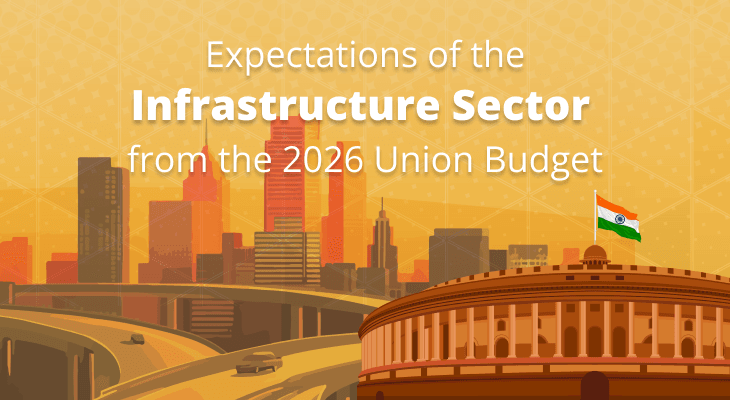
  • Infrastructure

    As Union Budget 2026 approaches, the infrastructure sector is again expected to be positioned as a key driver of growth. Industry bodies argue that sustained public capital expenditure (Capex) helps crowd in private investment and strengthens the economy’s competitiveness.
    Media reports suggest that stakeholders across major infrastructure developers and industry participants expect the Centre to use public investment in roads, railways, and urban infrastructure to continue to support India's growth story.

    Read More
  • Financial Services

    As the Union Budget 2026 approaches, financial sector expectations are being framed around market deepening, lowering friction costs, and strengthening long-term savings, retirement, insurance themes.
    The sector is looking for stability, tax certainty, and targeted interventions that deepen credit, savings, and capital markets, according to media reports. As growth is moderating and geo-political conditions are still fluid, banks, NBFCs, mutual funds, and insurers are seeking a balanced approach that supports financial inclusion and enduring system stability.

    Read More
  • Manufacturing

    Ahead of Budget 2026, manufacturing expectations are centred on a familiar formula of lower input friction + predictable policy + incentives. It can improve global competitiveness especially when there are trade headwinds and tariff uncertainties growing before budget coverage.
    The manufacturing sector looking for policy continuity and targeted support to accelerate India's journey towards becoming a global manufacturing hub. Industry leaders are keen that the Budget balances fiscal prudence with incentives that boost exports, and technology adoption across sectors.

    Read More

Jargons

Off-budget borrowing
This refers to borrowings raised outside the main budget, typically through public sector entities or special purpose vehicles. While it helps fund expenditure without showing up fully in the fiscal deficit, it still adds to the government’s overall debt. It is often tracked separately to understand the true borrowing requirement.
Revenue buoyancy
Revenue buoyancy measures how strongly government tax collections rise when the economy grows. If revenues increase faster than GDP, buoyancy is considered high. It indicates efficient tax collection, improved compliance, or a broader tax base, and helps the government fund spending without relying heavily on borrowing.
Counter-cyclical fiscal policy
A fiscal approach where the government increases spending or reduces taxes during a slowdown to support demand and tightens spending or raises taxes when the economy overheats. The objective is to smoothen economic cycles, protect jobs and incomes, and maintain stability without making growth overly dependent on short-term stimulus.

Union Budget 2025 Highlights

video

Bazaar & Beyond

video

Components of Budget

video

Budget Expectations Vox Pop

video

Budget Expectations of Middle Class

Calculate your income tax outgo under New and Old Tax Regime

Union Budgets Over the Years

Key measures from Budget 2025

Income Tax Slabs
Updated Income Tax Slabs & Rates for FY 2025-26

Capital Gains
Union Budget 2025: Key Ministry-Wise Allocations & Trends
STT
Union Budget 2025: Key Announcements & Highlights

mutual funds
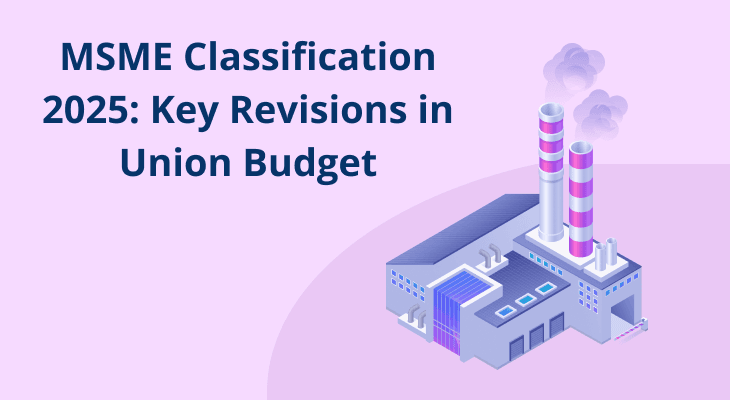
MSME Classification 2025: Key Revisions in Union Budget

Superfast Platform @ Superlow Brokerage,
Isse accha aur kaha?

+91 |

73 crore+ brokerage saved* Go Zero for life today!

+91 |

Articles