
March 27, 2025 | 4 min read
Introduction to Intraday Trading
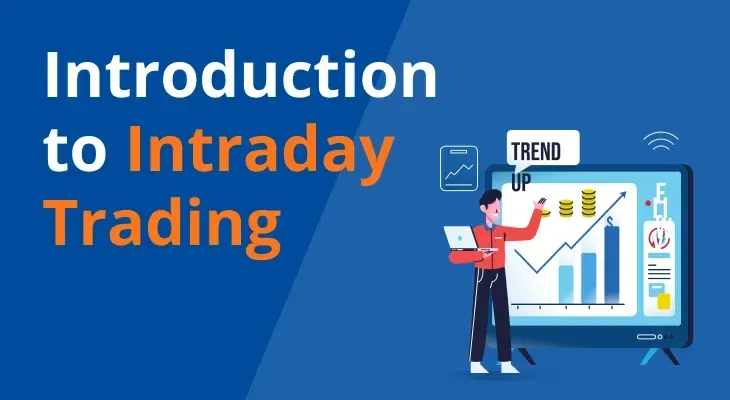
Of late, the popularity of intraday trading has skyrocketed, especially among stock market beginners, who perceive intraday trading as a quick money-making scheme. However, this is not entirely true. As lucrative as intraday trading is, it is important to learn the basics of intraday trading before you begin your intraday trading journey.
Intraday trading – meaning
Intraday trading is a short-term trading activity that involves buying and selling stocks on the same trading day. Intraday trading positions are squared off on the transaction day (T) itself and do not result in settlement or delivery. You can even undertake short selling in intraday positions. The motive of intraday trading is to benefit from short-term price volatilities in stocks.
Understanding the difference between delivery and intraday trading
As the name suggests, delivery trading involves taking the delivery of shares that can be sold at any time in the future. It involves less risk, and the rewards are comparatively lower. On the other hand, intraday trades are entered into and squared off on the same day. They involve high risk and high rewards.
Understanding intraday trading with an example
Suppose you shortlist Maruti Suzuki Ltd. for intraday trading. The stock is trading at ₹ 9,117.45 on 28th October 2022. You buy 100 shares with a total trade value of ₹ 9,11,745. Now since intraday trades do not result in settlement, you do not need the entire ₹ 9.11 Lakhs in your trading account. You can use leverage provided by your broker and can take the position in Maruti Suzuki Ltd at a fraction of the overall trade value. Fortunately for you, the stock moves to ₹ 9,548 intraday and you make a profit of ₹ 43,055. This is how intraday trading works.
In the same manner, if you believe that a stock will fall intraday, then you can initiate a short sell order. However, while buy intraday orders can be converted into delivery trades by paying the entire trade value, short sell positions must be mandatorily squared-off at the end of the trading day. Inability to square-off short sell order will lead to auction and penalty by the stock exchange. However, if you have existing stocks in your Demat account, then you can settle the short sell position via your Demat account holding.
Picking right stocks for intraday trading
While there are 8,900+ stocks registered on the BSE (Bombay Stock Exchange) and 1300+ on the NSE (National Stock Exchange), not all of them are traded every day. Thus, selecting the right stocks for intraday trading becomes crucial. You must look for the following characteristics while picking intraday stocks:
Trending Stocks
Trending stocks usually continue to follow the sentiments caused by major events throughout the day. Therefore, selecting such stocks is likely to give you better intraday opportunities.
Volatility
Look for stocks with medium volatility. While highly volatile stocks are risky, stocks with low volatility do not offer any trading opportunities.
Liquidity
Since shares are bought and sold on the same day, choosing a highly liquid stock will ensure timely settlement.
Top Gainers/Losers
Tracing the price movements of top gainers and top losers closely has proved beneficial for many intraday traders.
Range Breakout
When the stock price breaks out from a consolidation range, it usually makes a trending move. So, look for stocks giving indications of a breakout.
Key factors involved in intraday trading
Risk Management
Intraday trading has an inherent risk of loss. Therefore, you must put a proper risk management plan into action. This involves defining the maximum risk appetite for each trade and eventually reducing it as the price moves in your favour.
Trade Setup
Having an intraday trading strategy is necessary. This setup is the game plan that tells you when to enter and exit a trade. Typically, intraday traders use stock charts and technical indicators to build a setup.
Market Sentiments
Any major event concerning the economy, whether national or global, is likely to have an impact on stock prices. Therefore, you must be aware of all the current affairs influencing the price fluctuation during the day.
Ideal Market Hours
Every day during the trading session, there are only certain hours where the volatility is suitable for day trading. Usually, it is a couple of hours after the market opens and the last one hour before the closing bell. Otherwise, you are likely to get stuck between a range where buyers and sellers fight for a breakout.
Brokerage is a crucial factor to consider when conducting intraday trades. For instance, say you conduct intraday trades worth ₹2 Lakhs. If your broker charges you 0.2% on the total trade value (₹ 2 Lakhs), then you will end up paying ₹96,000 as brokerage for the year. Therefore, selecting the best broker for intraday trading is critical.
More Related Articles
What Is a Robo Order in Intraday Trading?
 August 19, 2026 | 0 mins read
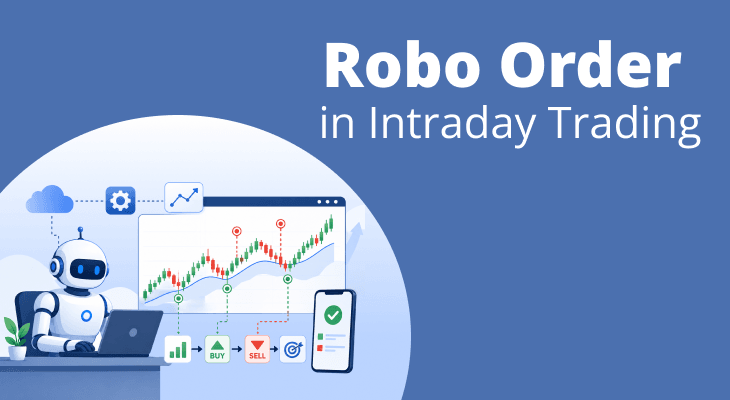
Intraday trading often requires quick decision-making and timely execution. A delay of even a few seconds can affect trade outcomes, particularly in fast-moving markets. To address this challenge, many trading platforms offer automated order execution features that help traders manage entries, exits, and risk parameters more efficiently. One such feature is the robo order.

Advantages of Leverage Trading
May 22, 2026 | 0 mins read
Leverage is an important concept in the stock market, that every trader should be aware of. It is a powerful tool that can help multiply your investment potential and returns. But what is leverage and why do traders choose to use it? Here’s everything you need to know about the concept of leverage and its various advantages.
How to Calculate Brokerage Charges in Intraday Trading
February 19, 2026 | 0 mins read
Intraday trading is a crowd-favourite, especially among stock market beginners. The constant tussle between buyers and sellers brings forth lucrative investment opportunities which are too good to pass. But high brokerage on intraday trading often eats into investors' profits and reduces their overall return on investment (ROI). This is why you must learn how to calculate brokerage on intraday trading to make better trading decisions.
FAQ
Intraday trading is a type of trading where you buy and sell shares on the same day before the market closes. While some people call it intraday trading, others refer to it as day trading.