
October 28, 2026 | 9 min read
Difference Between Fixed Price and Book Building Issue
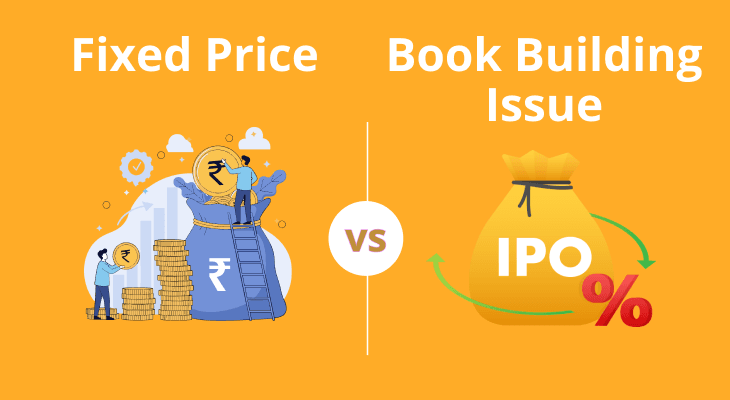
Before an IPO opens for subscription, the company must decide how its shares will be priced. In India, this is usually done through either a fixed price issue or a book building issue. Both methods enable companies to raise capital from the public, but they differ in the way the issue price is determined and how investors participate in the offering.
The difference between fixed price issue and book building issue lies in how companies determine the offer price for their shares. One method uses a predetermined price, while the other allows the price to be discovered through investor bids. Knowing how these pricing methods work can help you evaluate IPOs more confidently and better understand the public issue process.
What is a Fixed Price Issue
Before comparing IPO pricing methods, it is important to understand how each one works individually. A fixed price issue follows a straightforward pricing approach, as investors know the share price before the IPO opens. This type of issue is an IPO in which the company determines the offer price before inviting public subscriptions. Every investor applies for shares at this predetermined price, and the amount payable is known at the time of application. Since the price remains unchanged throughout the subscription period, investors do not bid within a price range.
Key Features of a Fixed Price Issue
A fixed price issue follows a straightforward pricing method, as the offer price is decided before the IPO opens. The following features explain how this pricing mechanism works and how investors participate in the issue.
Pre-Determined Issue Price
The company announces a single issue price before the IPO opens. All investors apply at this price.
No Price Bidding
Investors cannot quote a different price for the shares. The application is submitted only at the announced issue price.
Fixed Payment Amount
Since the share price is known in advance, the total application amount is calculated before the application is submitted.
Demand Is Determined After Subscription
The level of investor demand becomes clear once the subscription period closes and all applications are received.
Introduction to Book Building Issue
Under the book building issue method, the company specifies a minimum and maximum price for the IPO. Investors place bids within this range, and the final offer price is determined after assessing investor demand during the subscription period. This process allows the company to assess investor demand before deciding the offer price. As a result, the issue price is based on market participation rather than being fixed in advance.
Key Features of a Book Building Issue
A book building issue follows a market-driven pricing approach. The following features explain how the bidding process works and how the final issue price is determined.
Price Band Is Announced
Instead of a single price, the company specifies a lower and upper price limit. Investors can submit their bids anywhere within this range.
Investors Place Bids
Applicants choose the number of shares they wish to apply for and the price they are willing to pay within the announced price band.
Final Price Is Determined After Bidding
Once the subscription period ends, the company and its merchant bankers evaluate the bids and determine the final issue price through the price discovery process.
Demand Is Visible During the IPO
Subscription data is published throughout the bidding period. This allows investors to track the level of demand across different investor categories.
Difference Between Fixed Price Issue and Book Building Issue
Both the fixed price method and the book building issue method are recognised ways for companies to raise capital through an IPO. However, they differ in how the issue price is determined, how investors participate, and when market demand becomes visible. These distinctions influence the IPO process from subscription to price determination. The difference between a fixed price issue and a book building issue becomes clearer when you compare their pricing mechanism, bidding processes, and demand assessment.
Basis of Comparison | Fixed Price Issue | Book Building Issue |
|---|---|---|
Issue Price | A single issue price is decided before the IPO opens. | A price band is announced, and the final issue price is determined after bidding. |
Pricing Method | The company fixes the share price before the issue opens. | The final price is discovered based on investor bids received during the subscription period. |
Investor Participation | Investors apply at the announced issue price. | Investors place bids within the specified price band. |
Price Discovery | No price discovery process is involved. | The issue price is determined after evaluating investor demand. |
Demand Visibility | Subscription levels are known after the issue closes. | Subscription data is available throughout the bidding period. |
Application Amount | Investors apply at the predetermined issue price. | Investors can bid within the price band or select the cut-off option, where applicable. |
Pricing Flexibility | The issue price cannot be revised once announced. | The final price is decided after the bidding process concludes. |
Common Usage | Less commonly used in modern IPOs. | The preferred pricing method for most IPOs in India. |
How Fixed Price IPOs Work in India?
In a fixed price IPO, the company announces a predetermined offer price before the subscription period begins. Investors apply at this price throughout the issue. Once the subscription period closes, the company assesses the overall demand. Here are the steps involved in a fixed price IPO:
Step 1: The Company Determines the Issue Price
Before the IPO opens, the company decides the price at which its shares will be offered to investors. This price remains unchanged throughout the subscription period.
Step 2: Investors Submit Applications
Investors apply for shares at the announced issue price. Since there is no price band, they do not have the option to place bids at different prices.
Step 3: The Subscription Period Ends
Once the IPO closes, the company reviews the total number of applications received to determine the level of investor demand.
Step 4: Share Allotment Takes Place
If the issue is oversubscribed, shares are allotted according to the applicable regulatory guidelines. If demand is lower than the shares offered, eligible applicants generally receive the shares they applied for.
Step 5: Shares Are Listed on the Stock Exchange
After the allotment process is completed, the shares are credited to investors' demat accounts and listed on the stock exchange for public trading.
How Book Building Issues Work in IPOs?
A book building issue follows a price discovery process instead of offering shares at a predetermined price. Rather than applying at a single price, investors submit bids within the price band announced by the company. After the subscription period ends, these bids are evaluated to determine the final issue price. Here is the breakdown of the steps:
Step 1: The Company Announces a Price Band
Before the IPO opens, the company specifies a lower and upper price limit. Investors can place their bids anywhere within this range.
Step 2: Investors Submit Their Bids
During the subscription period, investors indicate the number of shares they wish to apply for and the price they are willing to pay. Retail investors may also choose the cut-off option, where applicable.
Step 3: Bids Are Collected Throughout the Issue Period
All bids received during the subscription window are recorded. This helps assess investor demand at different price levels.
Step 4: The Final Issue Price Is Determined
After the IPO closes, the company and its merchant bankers analyse the bidding data and determine the final issue price through the book-building process.
Step 5: Shares Are Allotted and Listed
Once the final price is decided, shares are allotted according to the applicable guidelines. The company then lists the shares on the stock exchange for trading.
Limitations of Fixed Price and Book Building Issues
Both the fixed price method and the book building issue method have certain limitations. While one offers a predetermined issue price, the other depends on a price discovery process. The table below highlights the key limitations associated with each approach.
Aspect | Fixed Price Issue | Book Building Issue |
|---|---|---|
Price Discovery | The issue price is fixed before the IPO opens and does not reflect investor demand during the subscription period. | The final issue price depends on investor bids, which may vary based on market conditions. |
Price Certainty | Investors know the exact issue price before applying. | The final issue price is determined only after the bidding process ends. |
Demand Visibility | Subscription levels become known only after the IPO closes. | Subscription data is available throughout the bidding period. |
Pricing Flexibility | The company cannot revise the issue price once it is announced. | The final price is determined through the book-building process within the announced price band. |
Investor Participation | Investors apply at a single predetermined price. | Investors need to bid within the specified price band or choose the cut-off option, where applicable. |
Market Influence | Market demand has no impact on the issue price during the subscription period. | Changes in investor sentiment can influence the final issue price. |
Fixed Price and Book Building Issue Examples
Examples from the Indian IPO market show how companies have used different pricing methods over time. While fixed price issues were more common in earlier decades, the book building issue has become the preferred approach for most modern IPOs.
1. Infosys (1993) – Fixed Price Issue
When Infosys launched its IPO in 1993, it followed the fixed price method. The company announced a predetermined issue price before the subscription period began, and all investors applied at that price. There was no bidding process or price discovery during the IPO.
2. Hero Honda (1985) – Fixed Price Issue
Hero Honda also adopted the fixed price approach for its public issue. Investors subscribed to the IPO at a single offer price decided by the company, making the application process straightforward and transparent.
3. Tata Technologies (2023) – Book Building Issue
Tata Technologies used the book-building issue method by announcing a price band instead of a fixed offer price. Investors placed bids within this range, and the final issue price was determined after analysing the demand received during the subscription period.
4. LIC (2022) – Book Building Issue
The IPO of LIC also followed the book-building issue process. The company specified a price band, allowing investors to submit bids within the announced range. The final issue price was determined after evaluating the bids received from different investor categories.
Conclusion
The difference between a fixed price issue and a book building issue lies primarily in the way shares are priced and offered to investors. A fixed price issue provides certainty because the offer price is announced before the IPO opens, while a book building issue determines the final price through investor bids within a specified price band. Each method follows a different pricing approach, but both are recognised mechanisms for raising capital through an IPO. Comparing these methods can help you interpret IPO structures more effectively and assess how the pricing process influences investor participation and the final issue price.
More Related Articles

M. K. Sons Fine Jewels Ltd IPO Day 3 Subscription Status
 October 30, 2026 | 0 mins read
M. K. Sons Fine Jewels Ltd is launching its IPO on 28 Oct 26. Check here the Day 3 IPO subscription status on m.Stock.
Bombay Coated and Special Steels Ltd IPO Day 2 Subscription Status
October 30, 2026 | 0 mins read
Bombay Coated and Special Steels Ltd is launching its IPO on 29 Oct 26. Check here the Day 2 IPO subscription status on m.Stock.
HGS India Ltd IPO Day 1 Subscription Status
October 30, 2026 | 0 mins read
HGS India Ltd is launching its IPO on 30 Oct 26. Check here the Day 1 IPO subscription status on m.Stock.
FAQ
There is no universally better pricing method. A fixed price issue provides certainty because the offer price is known in advance, while a book building issue uses investor demand to determine the final issue price. The suitability of either method depends on the IPO structure and your investment approach.