

July 22, 2024 | 5 min read
What is The Minimum Amount to Invest in the Stock Market in India?
For many individuals in India, the stock market presents an exciting world brimmed with potential and opportunities. This journey invariably begins with a crucial query: "What is the minimum amount to invest in the stock market?" This question is pivotal, especially for novices keen on navigating the intricacies of stock investments. The aim of this article is to shed light on the unique aspects of the Indian stock market, helping investors understand this vital component.
Whether you're a student with accumulated savings or a professional looking to diversify your investment portfolio, it's fundamental to know the minimum capital required for starting. This article is crafted to clear up the often-asked question, "How much money do you need to start trading stocks?". We delve into more than just figures, examining how this initial investment integrates into various investment strategies and methods. Our focus is to acquaint you with the stock market basics, catering to interests in either day trading or long-term investments. We simplify the concept of "what is the minimum amount to invest in the Indian share market," paving the way for your first investment step. Our objective is to provide a straightforward, comprehensible understanding, equipping you with confidence and readiness for your stock market investment journey.
Unravelling the Investment Threshold in India's Share Market
The Indian stock market does not enforce a standard minimum investment figure. This flexibility allows the participation of individuals from various financial backgrounds. However, understanding how much you need to start can be a bit more complex than it appears at first glance.
To begin, the price of the shares you are interested in frequently determines the minimum amount you can invest. In the event that you're looking at a specific stock estimated at ₹ 500, and you wish to buy a single share, your minimum investment would be ₹ 500. However, this is an excessively oversimplified view. Realistically, when considering "how much money you need to start trading stocks," you should also factor in various other costs, such as brokerage fees and taxes, which can add to your initial expenses.
Moreover, the concept of diversification cannot be ignored. While you could technically start with a small amount, investing it all in a single stock is not a recommended strategy. Diversification, or spreading your investment across different stocks or sectors is key to risk management. For effective diversification, you might need a larger amount. For instance, if you're considering a diversified portfolio, you might start with ₹ 10,000 to ₹ 20,000. This approach allows you to invest in a mix of stocks across different sectors or even invest in mutual funds, a common preference among beginners wondering, "What is the minimum amount to invest in the share market in India?"
Strategies for Minimal Investment
Venturing into the stock market with a modest budget can be daunting yet potentially fruitful. We present various tactics to maximise your investment with minimal funds, specifically focusing on the Indian stock market. This guide aims to optimise your starting capital.
Setting A Budget
Before asking, "What is the minimum amount to invest in the share market in India?" assess your financial limits. Begin modestly, but align your budget with your investment ambitions. For many, a starting budget of ₹ 1,000 to ₹ 5,000 is a realistic benchmark.
Selecting Budget-Friendly Investments
Look into Index Funds or Exchange-Traded Funds (ETFs). These require less initial investment, offer diversification benefits, and have lower expense ratios. They're ideal for investors with constrained budgets.
Considering Penny Stocks
To enter stock trading with minimal funds, think about penny stocks. These are low-priced stocks from smaller companies, letting you purchase more shares with limited funds. Be cautious of their volatility and research thoroughly before investing.
Embracing Systematic Investment Plans (SIPs)
For those considering how much money you need to start day trading, SIPs in mutual funds are a viable option. SIPs let you invest a fixed sum regularly, building your investment over time with small amounts.
Using Discount Brokers
Choose brokers with lower transaction fees. This matters when starting with minimal funds, as high brokerage costs can reduce your profits.
Investing In Fractional Shares
Some platforms allow buying fractional shares, enabling investment in expensive stocks with smaller amounts. This helps diversify your portfolio without requiring significant capital.
Gaining Knowledge And Staying Informed
Understanding market trends, stock analysis, and investment tactics is key. Educate yourself to make savvy decisions and manage your investments effectively, even with minimal resources.
Setting Realistic Expectations
Know that investing small sums means gradual growth. Exercise patience and steer clear of high-risk strategies, which can be detrimental for beginners with limited funds.
Regularly Reviewing Your Investments
Keep a close eye on your investments and the market. Frequent reassessments let you adjust your approach timely, ensuring your minimal investment remains effective.
Embarking on an investment adventure in India's stock market does not require substantial financial resources. Grasping the basics, such as what is the minimum amount to invest in the share market in India or the essential funds for initiating stock trades, is crucial. These strategies underscore that a meticulously informed and considered method can kickstart your investment journey, even with restricted funds. Keep in mind, in the domain of stock market investments, the virtues of patience, comprehensive knowledge, and careful planning are equally important as the size of your initial investment.
Conclusion
We've addressed the key question: the minimum investment required to start. From grasping initial financial needs to exploring various investment strategies, the journey has been thorough. The stock market offers a variety of opportunities, irrespective of the size of your initial investment. With this newfound knowledge, you're better equipped to step into the world of investing with confidence and clarity. Remember, every significant investment journey begins with an informed, calculated step.
More Related Articles
ETF trading rules from 7 September: What changes for retail investors?
 September 4, 2026 | 0 mins read
If there was no trade during the final 30 minutes on the previous day, the exchange will use that day’s last traded price. If there was no trade at all on the previous day, the latest available closing NAV will be used. The base price will also be adjusted for corporate actions, if applicable. From April 1, 2027, SEBI expects stock exchanges and mutual fund AMCs to use the previous day’s closing NAV as the base price after resolving operational issues.

How MSCI rebalancing tested India's Closing Auction System on August 31
September 2, 2026 | 0 mins read
India’s new Closing Auction Session (CAS) processed a record ₹39,718 crore turnover, on 31 August 2026 as MSCI India Index latest index rebalancing took effect at the market close. The event showed that CAS could handle an exceptional concentration of institutional flow. However, there were some sharp, and sometimes counterintuitive, stock moves. This shows that the quality of closing-price discovery is still being tested.
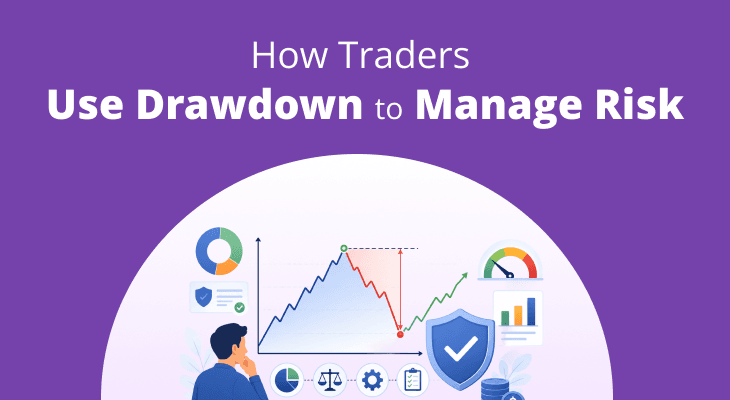
How Traders Use Maximum Drawdown to Manage Portfolio Risk?
August 19, 2026 | 0 mins read
When evaluating an investment or trading strategy, returns usually receive the most attention. However, returns alone do not tell investors how much risk was taken to achieve them. Two portfolios may deliver the same annual return, but one may have experienced far steeper losses during market downturns. This is where max drawdown becomes useful. It measures the largest decline in the value of a portfolio, trading account, or investment from its highest point to its lowest point before a new peak is reached. Instead of focusing only on profits, it shows the worst historical loss an investor would have experienced by staying invested.
FAQ
The "ideal" amount for initiating your investment journey in the Indian stock market varies. Consider your financial stability, risk appetite, and investment goals. While there's no fixed minimum, what is the minimum amount to invest in the stock market is crucial. Begin with a sum that is financially manageable and allows you to engage with market dynamics.