
July 29, 2024 | 3 min read
Is There Any Tax on Intraday Trading?
Intraday trading refers to buying and selling stocks on the same trading day. Apt for short-term traders than long-term investors, intraday trading is a lucrative trading option. But a lot of investors and traders forget that intraday trading is not tax-free. Yes, your intraday gains are subject to taxation as intraday profits fall under the purview of ‘speculative business income’. Hence it is essential for you to understand what legally obligated intraday taxes are attached to intraday trading in order to enjoy a hassle-free trading experience.
Intraday trading falls under the category of ‘business income’. However, there are two broad definition-heads under which trading income can be divided as:
Speculative Business Income
Intraday transactions that are speculative in nature fall under this category.
Non-Speculative Business Income
Non-speculative business income includes income from equity trades, F&O, Currency or Commodity etc.
How is Intraday Tax Calculated?
In a very basic way, all the income from speculative and non-speculative business are calculated together with your other income and income tax is levied accordingly. Let us understand this with a simple example.
Ravish Kumar, a 29-year-old software engineer, has the following income:
Salary - ₹10 lakh per annum
Short-term capital gain - ₹ 1lakh
Speculative business income- ₹2 lakh
Non-speculative business income- ₹2 lakh
Bank deposit interest- ₹ 1lakh
Ravish's short-term capital gains (STCG) of ₹1 lakh will be taxed at 15%. Hence, the liable income tax on Ravish's STCG (Short-Term Capital Gain) will be ₹15,000.
Ravish’s total taxable income will be: Salary (₹10 lakh) + Speculative Business Income (₹2 Lakh) + Non-Speculative Business Income (₹2 Lakh) + Bank Deposit Interest (₹1 Lakh)
= (10 lakh + 2 lakh + 2 lakh + 1 lakh)
= ₹15 lakh
Now, based on the tax slab, Ravish will have to pay 30% tax on total taxable income. So, 30% of ₹15 lakh will be ₹ 2,62,000. Hence, Ravish has to pay ₹2,62,000 as tax on his long-term capital gains while his short-term capital gains from intraday trade is taxed separately at 15% and amounts to ₹15,000.
Inescapable Intraday Trading Rules
In order to win the game of intraday trading, there are a few things you mustn't miss out on-
Know your threshold and the loss you can afford
Wait, if the market is volatile
Do not trade until you have sufficient knowledge
Record your trading results, be it losses or gains. It gives you an insight, especially on the backdrops of your trading method
Read trading news and stay updated
Know all about your trading companies before investing
Do not overtrade to cover your past losses
Profits on intraday trading are legally taxable in India and there is no way to avoid it. Open a free Demat account with m.Stock today and enjoy one of the low brokerages on all intraday trades.
An Income Tax Calculator helps you estimate how much tax you need to pay based on your income, deductions, and exemptions. Use our Income Tax Calculator to understand your tax liability better and plan smarter to save more.
More Related Articles
What Is a Robo Order in Intraday Trading?
 August 19, 2026 | 0 mins read
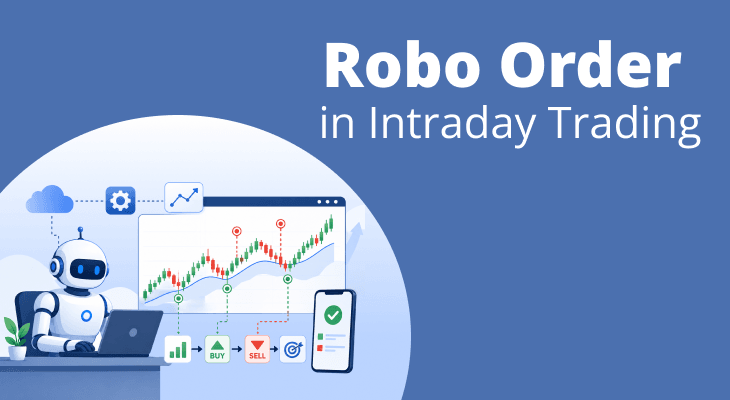
Intraday trading often requires quick decision-making and timely execution. A delay of even a few seconds can affect trade outcomes, particularly in fast-moving markets. To address this challenge, many trading platforms offer automated order execution features that help traders manage entries, exits, and risk parameters more efficiently. One such feature is the robo order.

Advantages of Leverage Trading
May 22, 2026 | 0 mins read
Leverage is an important concept in the stock market, that every trader should be aware of. It is a powerful tool that can help multiply your investment potential and returns. But what is leverage and why do traders choose to use it? Here’s everything you need to know about the concept of leverage and its various advantages.
How to Calculate Brokerage Charges in Intraday Trading
February 19, 2026 | 0 mins read
Intraday trading is a crowd-favourite, especially among stock market beginners. The constant tussle between buyers and sellers brings forth lucrative investment opportunities which are too good to pass. But high brokerage on intraday trading often eats into investors' profits and reduces their overall return on investment (ROI). This is why you must learn how to calculate brokerage on intraday trading to make better trading decisions.
FAQ
Yes, capital gains are taxable in India. For equities, the holding period is one year while the holding period for debt instruments is 3 years.