
January 13, 2026 | 7 min read
What Does Retained Earnings Mean?
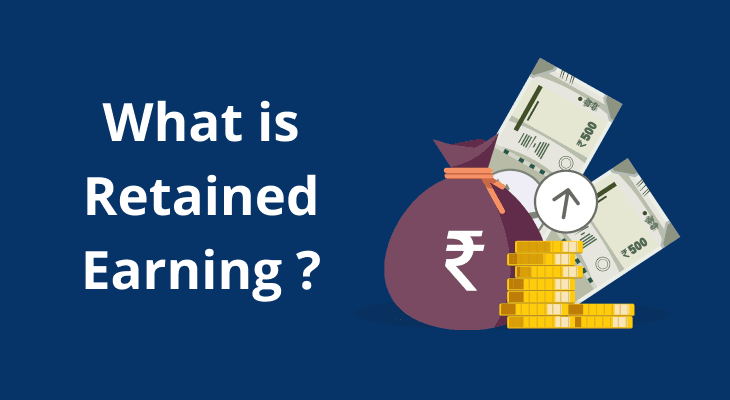
Every business generates profit, but what truly defines its strength is how that profit is managed. Instead of distributing all earnings as dividends, many companies retain a portion to reinvest in growth, reduce liabilities, or prepare for uncertain times. This retained portion, known as retained earnings, is a critical measure of financial discipline and future readiness. By exploring the meaning of retained earnings, its calculation procedure, and the role it plays in decision-making, you will understand why it is considered one of the most important components of shareholders’ equity.
Introduction To Retained Earnings
Revenue or profit are frequently the first things that spring to mind when considering a company's growth. However, retained earnings are what truly demonstrate how a company reinvests in itself. So, what is retained earnings in simple terms? It represents the portion of a company’s net profit that is not distributed as dividends but instead kept aside to reinvest in operations, pay off debt, or fund future expansion.
Unlike one-time profits or distributions, retained equity grows with the business and reflects its long-term sustainability. This accumulated balance sits on ta company’s balance sheet, showing the shareholders how much of the profit has been redirected back into the company rather than being returned to them.
By understanding the meaning of retained earnings, you gain deeper insights into a company’s financial stability and how management makes decisions about profit utilisation.
Importance & Uses of Retained Earnings
The importance of retained earning lies in its versatility. For any business, whether small or large, these funds can serve as the backbone of sustainable growth. Here’s why retained earnings matter:
- Business Expansion: The main purpose of retained earnings is to encourage growth. These funds are frequently used by businesses to expand their production capacity, diversify into new markets, or open new branches. Retained earnings offer an internal source of funding that promotes autonomous and sustainable growth, as opposed to mainly depending on loans or external investors.
- Debt Repayment: Employing retained equity to pay off debts can help businesses with outstanding borrowings improve their financial standing. In addition to saving interest costs, reducing liabilities enhances creditworthiness, which facilitates future funding access when needed.
- Emergency Cushion: Companies may become unsteady due to economic uncertainties like market downturns, pandemics, or unexpected operational difficulties. Retained earnings that have accumulated serve as a safety net, allowing businesses to carry on and fulfill their commitments even in difficult circumstances.
- Research & Development: Businesses must constantly innovate in order to remain competitive in a market that evolves rapidly. Research and development activities are often funded by retained earnings, which help companies create new goods, implement cutting-edge technology, and create lasting value.
- Dividend Flexibility: Shareholders value consistency in returns. Retained earnings give companies the flexibility to distribute dividends even in years when profits are modest. By maintaining steady payouts, businesses can strengthen investor trust while balancing reinvestment needs.
How Are Retained Earnings Calculated?
To know the health of a company’s financial standing, you need to understand the formula for calculating retained earnings at the end of a financial year. The calculation is straightforward, yet it reveals crucial details.
The formula is:
Retained Earnings = Opening Retained Earnings + Net Income (or Loss) – Dividends Paid
- Opening Retained Earnings: The balance carried forward from the previous accounting period.
- Net Income (or Loss): The profit earned or loss incurred during the current period.
- Dividends Paid: The portion of profit distributed to shareholders.
For instance, suppose a company starts with ₹50,00,000 in retained earnings. During the year, it earns ₹20,00,000 in net income and pays ₹5,00,000 in dividends.
Retained Earnings = 50,00,000 + 20,00,000 – 5,00,000 = ₹65,00,000.
This simple formula for calculating retained earnings helps you track whether profits are being reinvested efficiently or distributed out of the company.
Interpreting Retained Earnings
Understanding retained earnings is just the first step; how you interpret this number is where the true value is. On a company's balance sheet, retained earnings offer crucial information about its financial standing, prospects for expansion, and management's approach to decision-making.
In most cases, a positive retained earnings balance means that the business has continually generated revenue and opted to reinvest a portion of it back into the company. This may indicate sound financial standing and potential for long-term expansion. However, it doesn't always mean the business is operating at its best. For instance, excessively high retained earnings in the absence of dividends or investments could indicate that management is not allocating funds efficiently to reward shareholders or spur growth.
Negative retained earnings, also known as an accumulated deficit, on the other hand, indicate that the company's total losses have surpassed its profits over time. Startups and early-stage companies often face this predicament, where significant expenditures on product development or market entry may exceed earnings. Long-term negative balances may not always be concerning at first, but they may be a sign of inefficiency or financial failure.
Interpreting retained equity requires context. Analysts often compare retained earnings with other financial metrics, such as net income, dividend history, and growth in assets, to form a balanced view. For instance:
- Consistently rising retained earnings combined with revenue growth reflect stability and reinvestment.
- Moderate retained earnings alongside regular dividends show a balanced strategy of growth and shareholder reward.
- Declining or persistently negative retained earnings may raise red flags about long-term sustainability.
Ultimately, retained earnings are not a standalone measure. Their significance lies in how they align with the company’s overall strategy, profitability trends, and ability to create shareholder value.
Why Retained Earnings Matter for Stakeholders
The amount of retained earnings provides significant details about the company's long-term goals and financial priorities to all parties involved in the business, including employees, creditors, investors, and management team members. Retained earnings, as opposed to short-term profits, show how well a business has handled its previous earnings and how ready it is for new challenges.
- For Investors: Retained earnings demonstrate whether a business is paying out dividends or reinvesting profits to build value in the future. While a balanced wealth-creation strategy is indicated by moderate retained equity combined with regular dividend payments, a steadily increasing balance frequently reassures investors that the company is focused on growth.
- For Creditors: Creditors, such as banks and lending institutions, view retained earnings as an important measure of financial stability. A strong balance indicates the company has internal funds to manage obligations, making it less risky to lend to. This can influence the interest rates offered and the ease of securing additional financing.
- For Employees: Retained earnings-backed growth frequently results in improved infrastructure, better working conditions, and enhanced opportunities for professional advancement. This reinvestment indirectly benefits individuals by fostering a safer and forward-thinking work environment.
- For Management: Retained earnings give decision-makers flexibility. Management can finance research, expansion, and debt repayment internally rather than depending entirely on outside funding. This reduces the company's reliance on outside funding while also enabling it to pursue strategies that support its long-term objectives.
Conclusion
The concept of retained earnings is more than just a line item in financial statements. It signifies how well a company balances between rewarding shareholders and preparing for long-term growth. By applying the formula for calculating retained earnings, stakeholders can assess whether profits are being reinvested wisely.
Whether you are an investor seeking returns, a creditor assessing repayment ability, or a professional analysing business stability, understanding what is retained earning allows you to make informed decisions. It is not merely an accounting term but a reflection of management’s vision for the future.
Also Read: Equity vs Debt: Difference Between Equity & Debt | Mirae Asset
More Related Articles

How Traders Use Maximum Drawdown to Manage Portfolio Risk?
 August 19, 2026 | 0 mins read
When evaluating an investment or trading strategy, returns usually receive the most attention. However, returns alone do not tell investors how much risk was taken to achieve them. Two portfolios may deliver the same annual return, but one may have experienced far steeper losses during market downturns. This is where max drawdown becomes useful. It measures the largest decline in the value of a portfolio, trading account, or investment from its highest point to its lowest point before a new peak is reached. Instead of focusing only on profits, it shows the worst historical loss an investor would have experienced by staying invested.
Iron Butterfly vs Iron Condor: Which Strategy Is Better?
August 19, 2026 | 0 mins read
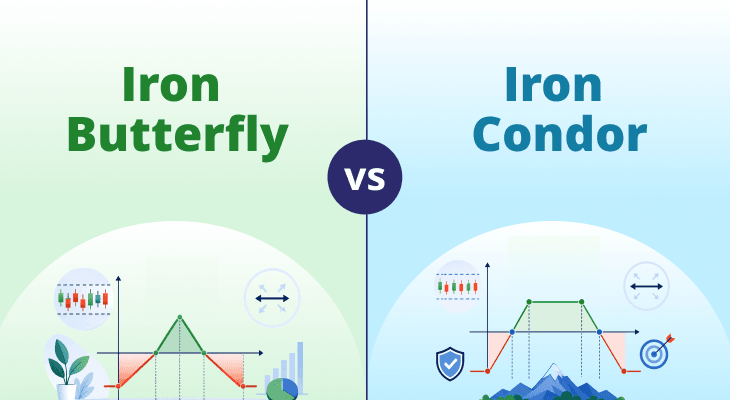
Options trading is not always about predicting the next big market move. At times, the market trades within a narrow range, creating opportunities for strategies that benefit from stability rather than direction. Two of the most widely used neutral strategies are the iron butterfly strategy and the iron condor options strategy. While both strategies use four option contracts and defined risk, they do not behave in the same way. Differences in strike selection, profit range, and risk-reward dynamics can significantly affect trading outcomes. Understanding the difference between an iron condor and an iron butterfly can help you select a strategy that matches your market expectations and trading objectives.

Iron Condor Strategy
August 19, 2026 | 0 mins read
Markets do not always trend strongly. At times, prices remain within a narrow range, making directional trades more challenging. The iron condor strategy is designed for these market conditions. It doesn’t rely on a bullish or bearish outlook. It aims to generate returns when the underlying asset remains within a predefined price range. With clearly defined risk and reward, it has become a widely used approach among traders looking to capitalise on range-bound markets while maintaining controlled exposure.
FAQ
Retained earnings can be used to pay down debt, fund new initiatives, or reserve capital on hand for unforeseen circumstances. Without borrowing from outside sources, it can also reinvest these profits in R&D, innovation, and growth.