
February 26, 2025 | 7 min read
What Is Call Option And Put Option?
If you’re new to trading, then it is likely you must have come across the terms “call option” and “put option” often. But what are they? In this guide, you will find out what these terms stand for, their differences, call and put options examples, and other details that will empower you to use the strategies to your advantage.
What Are Call and Put Options?
Call and Put options are fundamental concepts in the derivatives market. They allow investors to trade securities without directly owning them, offering both flexibility and leverage. With these tools, you can speculate on price movements or hedge your portfolio against potential risks.
A call option gives you the right (but not the obligation) to buy an underlying asset at a specified price (strike price) before the expiry. Conversely, a put option gives you the right to sell the underlying asset under similar conditions.
Understanding Call Options
When you buy a call option, the expectation is that the price of the underlying asset will go beyond the strike price before the option expires. For example:
Scenario: Suppose a stock is trading at ₹ 100, and you purchase a call option with a strike price of ₹ 105 for a premium of ₹ 5. If the stock price rises to ₹ 115, you can exercise the option, buy at ₹ 105, and sell at ₹ 115, making a net profit of ₹ 5 (₹ 10 gain minus ₹5 premium).
Call options are popular among bullish investors who anticipate an upward movement in stock prices but want to limit their investment.
Understanding Put Options
Buying a put option is a bearish strategy. It allows you to sell the underlying asset at a pre-determined strike price, protecting against a potential price drop. Here’s an example:
Scenario: A stock is trading at ₹ 200, and you purchase a put option with a strike price of ₹ 195 for a premium of ₹ 10. If the stock price falls to ₹ 180, you can sell at ₹ 195, gaining ₹ 15 per share (minus the ₹ 10 premium).
Put options are often used for hedging purposes to minimise losses during market downturns.
Key Differences Between Call Options and Put Options
Here’s a quick summary of the key differences between call and put options:
Feature | Call Option | Put Option |
Purpose | You get the right to buy an asset | You get the right to sell an asset |
Market Sentiment | Bullish | Bearish |
Potential Profit | Unlimited | Limited to the strike price |
Potential Loss | Limited to the premium you pay for the call option | Strike price minus the premium amount, at max |
Hedging Use | Protect against rising prices | Protect against falling prices |
Buyer’s Goal | Asset price rises above strike price | Asset price falls below strike price |
Another difference worth noting is that a call option tends to reduce in value when the stock’s ex-dividend approaches, while the put option’s value increases. Naturally, this is applicable only when the company has declared a dividend for its shareholders.
Basic Terms Related to Call and Put Options
Understanding the terminology is essential for navigating the options market effectively. Here are some basic terms that you should be aware of:
Premium: The price paid to purchase the option.
Strike Price: The agreed upon buy/sell price of the underlying asset.
Spot Price: The current market price of the underlying asset.
Expiry Date: The last date the option can be exercised.
Intrinsic Value: The profit if the option is exercised immediately.
Time Value: The potential value based on the time left until expiry.
How to Calculate Payoffs for Call Options
The payoff (net profit or loss) for a call option depends on factors such as the market price and the premium you pay. Here’s how to calculate it:
For Buyers (Long Call)
When you buy a call option, you gain if the underlying asset's price exceeds the strike price.
Formula: Payoff = [(Market Price - Strike Price) - Premium Paid]
Example:
Strike Price = ₹ 100, Premium = ₹ 5, Market Price = ₹120.
Payoff = (₹ 120 - ₹ 100) - ₹ 5 = ₹ 15.
If the market price is below ₹ 100, the option expires worthless, and your loss is limited to the ₹ 5 premium.
For Sellers (Short Call)
Selling a call exposes you to potential losses if the market price rises significantly.
Formula: Payoff = [Premium Received - (Market Price - Strike Price)]
Example:
Strike Price = ₹ 100, Premium Received = ₹ 5, Market Price = ₹ 120.
Payoff = ₹ 5 - (₹ 120 - ₹ 100) = -₹ 15 (a loss).
If the market price is below ₹ 100, you keep the ₹ 5 premium as profit.
Bottomline: Buyers gain when the price rises above the strike price, while sellers gain if the price stays below.
How to Calculate Payoffs for Put Options
For put options, the payoff formula is similar but reflects a bearish outlook:
For Buyers (Long Put)
Buying a put allows you to profit if the underlying asset’s price drops below the strike price.
Formula: Payoff = [(Strike Price - Market Price) - Premium Paid]
Example:
Strike Price = ₹ 200, Premium = ₹ 10, Market Price = ₹ 180.
Payoff = (₹ 200 - ₹ 180) - ₹ 10 = ₹ 10.
If the market price is above ₹ 200, the put expires worthless, and your loss is limited to the ₹ 10 premium.
For Sellers (Short Put)
Selling a put obligates you to buy the asset if the market price falls below the strike price, potentially incurring significant losses.
Formula: Payoff = [Premium Received - (Strike Price - Market Price)]
Example:
Strike Price = ₹ 200, Premium Received = ₹ 10, Market Price = ₹ 180.
Payoff = ₹ 10 - (₹ 200 - ₹ 180) = -₹ 10 (a loss).
If the market price is above ₹ 200, you keep the ₹ 10 premium as profit.
Bottomline: Buyers profit from a price drop below the strike price, while sellers gain if the price remains above.
Risk vs. Reward in Call Options and Put Options
Options trading involves balancing potential rewards against associated risks. With call options, your risk is limited to the premium paid, while your reward can be unlimited if prices soar. In contrast, put options offer limited profit potential but serve as a valuable hedge against falling prices.
Buying Call Options: Expiration Situation
If you’ve purchased a call option:
In the Money (ITM): The market price exceeds the strike price. You can exercise the option for a profit.
Out of the Money (OTM): The market price is below the strike price. The option expires worthless, and you lose the premium paid.
At the Money (ATM): Market price is the same as strike price, hence, no profit, no loss.
Selling Call Options: Expiration Situation
Selling call options can be profitable in specific scenarios:
ITM: You must sell the asset at the strike price, potentially incurring a loss if the market price is much higher.
OTM: The option expires worthless, and you retain the premium received.
ATM: You retain the premium received.
Buying Put Options: Expiration Situation
For buyers of put options:
ITM: The strike price is higher than the market price. You can exercise the option for a profit.
OTM: The market or spot price being higher in this case is likely to result in a loss.
ATM: The option expires worthless, and you lose the premium paid.
Selling Put Options: Expiration Situation
Sellers of put options face different outcomes:
ITM: You must buy the asset at the strike price, potentially at a loss.
OTM: Since market price exceeds strike price, you stand to make potential profit.
ATM: The option expires worthless, and you keep the premium received.
Conclusion
Understanding call and put options is crucial for navigating the options market effectively. These financial instruments offer flexibility and potential profits but come with inherent risks. Whether you’re bullish or bearish, options can help you hedge or speculate, provided you understand their dynamics and use them wisely.
More Related Articles

How Rising Oil Prices Impact Stock Market Investments
 October 9, 2026 | 0 mins read
A petroleum price hike, driven by rising global crude oil prices, can have far-reaching consequences for the economy and financial markets worldwide. As India imports over 88% of its crude oil requirements, understanding the impact of rising oil prices on stock market investments is essential for investors.
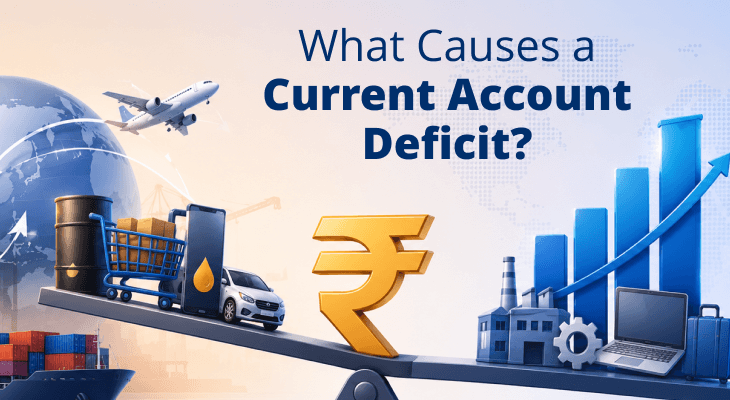
Understanding the meaning and impact of a current account deficit on an economy
October 9, 2026 | 0 mins read
The current account is an important component of a country’s balance of payments. A current account deficit occurs when a country’s total payments to the rest of the world exceed its total earnings from abroad. These payments include imports of goods and services, investment income paid to foreign investors, and current transfers. These earnings include receipts from exports of goods and services, income earned from overseas investments, and current transfers such as remittances. A country’s current account deficit is generally expressed as a percentage of its gross domestic product (GDP).

Revenge trading meaning explained: Causes, impact, and how to avoid it
October 9, 2026 | 0 mins read
in revenge trade, they are often driven by emotions such as anger, frustration, fear, or disappointment rather than sound analysis. In the process, they overlook carefully planned trading strategies designed around their financial goals, investment horizon, and risk appetite. More often than not, revenge trading results in further losses, creating a vicious cycle that becomes increasingly difficult to escape.
FAQ
A call option gives the buyer the right, but not the obligation, to purchase an underlying asset at a predetermined price (strike price) before the option expires. The buyer profits if the asset's market price exceeds the strike price, minus the premium paid.