February 26, 2025 | 6 min read
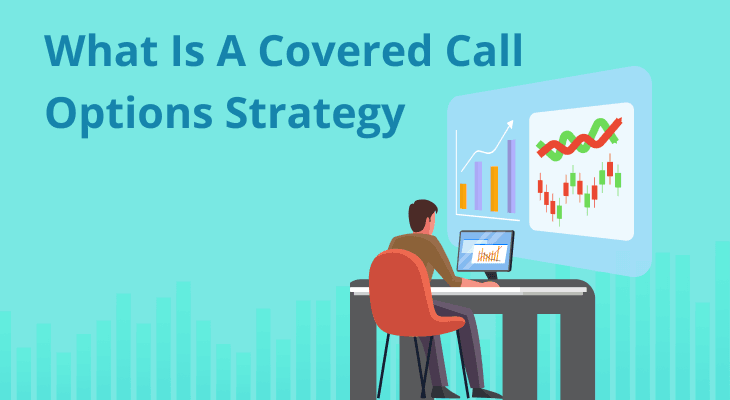
What Is A Covered Call Options Strategy
There are various strategies that are used to maximise returns and manage risk in options trading. One such popular approach is the covered call strategy. It combines owning a stock and selling call options. This strategy is widely used by investors looking to generate additional income from their existing stock holdings. In this article, we’ll explore the concept of covered calls, their features, benefits, and associated risks, helping you understand how to leverage this method effectively in your portfolio.
Understanding a Covered Call Option
A covered call is an options trading strategy where you hold a long position in a stock and sell a call option on that same stock. Essentially, this means you are giving someone the right, but not the obligation, to buy your stock at a specific price (strike price) within a certain period. The strategy is “covered” because you already own the underlying asset, eliminating the need to buy it if the buyer exercises the option.
Let’s suppose you buy ABC stock at ₹ 500 and sell a six-month ₹ 550 call option for a ₹ 40 premium.
If the stock price rises to ₹ 550 or higher
You earn ₹ 50 per share from the stock price increase and ₹ 40 per share from the premium, resulting in a total profit of ₹ 90 per share. For 100 shares, the total profit is ₹ 9,000 (₹ 50 x 100 + ₹ 40 x 100).
If the stock price drops to ₹400
You incur a loss of ₹ 100 per share on the stock, but this is partially offset by the ₹ 40 premium received from the option. This limits the net loss to ₹ 60 per share. For 100 shares, the total loss is only ₹ 6,000 (₹ 60 x 100).
Key Features of the Covered Call Strategy
Stock Ownership as a Base Requirement: The covered call strategy begins with owning the underlying stock, making it a method reliant on existing investments. Unlike naked calls, you are not speculating without ownership, which ensures that you are prepared to sell the stock if the option buyer exercises their right.
Income Through Premiums: A significant feature of this strategy is the premium received for selling call options. This payment acts as an upfront income for investors, adding to their cash flow, even if the option is never exercised.
Defined Profit Potential: Gains are predetermined because the strategy combines the sale of call options with stock ownership. Your maximum profit is the premium received plus the difference between the stock’s purchase price and the strike price.
Suits Moderate Market Movement: Covered calls work best in markets with slow or moderate upward trends. This strategy capitalises on sideways movements, where stock appreciation is minimal, making the premium a valuable income stream.
Short-Term and Flexible Strategy: The covered call is typically a short-term strategy. Options are written with expiry dates ranging from a few weeks to a few months, allowing investors to adjust their positions based on market changes.
Market Risk Reduction: While not eliminating risk entirely, the premium earned can cushion against minor declines in the stock’s price. However, this risk reduction is limited to the value of the premium earned.
Advantages of the Covered Call Strategy
A covered call strategy, when done right, can offer several benefits to traders:
Steady Income Stream: One of the most attractive benefits is the consistent income generated through premiums. This makes the covered call strategy particularly useful for investors seeking cash flow to meet short-term financial needs.
Enhancement of Portfolio Returns: Selling calls enhances your portfolio’s returns by adding an income layer to your existing investments. This is especially useful when stock prices stagnate or show limited growth potential.
Effective Cost Management: The premiums earned reduce the effective cost of owning stocks. For example, if you buy a stock for ₹ 1,000 and earn ₹ 50 as a premium, your effective cost drops to ₹ 950, lowering your breakeven point.
Predictable Gains with Partial Risk Mitigation: While the strategy doesn’t protect against major downturns, the premium earned serves as a small buffer against minor losses. This can be reassuring during periods of market uncertainty.
Customised to Investor Goals: Covered calls are highly adaptable. You can select strike prices and expiry dates that align with your specific investment objectives, whether those involve income generation or moderate appreciation.
Works in Neutral or Slightly Bullish Markets: For stocks expected to rise moderately or trade sideways, covered calls ensure you’re earning returns even when stock prices are not skyrocketing.
No Additional Margin Requirements: Since the strategy is “covered” by the stock you already own, there’s no need to maintain additional margin requirements, reducing complexity compared to other derivatives strategies.
Provides a Discipline Framework: Covered calls enforce a disciplined approach to trading. You commit to selling at a specified price, preventing emotional decisions based on sudden market fluctuations.
Leverage Without Additional Borrowing: Unlike other leveraging strategies that involve loans or additional capital, this method uses your existing assets to generate returns, making it a conservative approach.
Eases Entry Into Options Trading: For beginners in the options market, the covered call strategy offers a relatively simple way to understand and participate without taking on excessive risks.
Risks and Factors to Consider
While the covered call strategy offers multiple advantages, it’s essential to evaluate the potential risks and factors before diving in:
Capped Upside: If the stock price rises significantly, your profits are limited to the strike price plus the premium received.
Stock Ownership Risk: You are still exposed to the full downside risk of owning the stock, as the premium doesn’t fully offset a large decline.
Market Timing: Selling calls when the market is extremely volatile may result in lower premiums and fewer opportunities.
Opportunity Costs: If the stock price surges, you forfeit the opportunity to sell at higher market prices, missing out on potential gains.
Tax Implications: The income earned from selling call options is taxable, so you must account for this in your calculations.
Conclusion
The covered call strategy is a versatile tool in an investor's portfolio, offering income generation and partial risk mitigation. By understanding its mechanics, benefits, and limitations, you can make informed decisions that align with your financial goals. Whether you’re a beginner or experienced trader, this approach provides an excellent opportunity to optimise returns on your stock holdings while maintaining a degree of control over risk.
More Related Articles
Understanding the meaning and benefits of the systematic trading system
 October 23, 2026 | 0 mins read
A systematic trader is an individual who uses a predesigned and backtested trading strategy to buy and sell financial instruments such as stocks, futures, currencies, or commodities. Instead of relying on gut feelings or emotions, they use a systematic trading system built on predefined rules, quantitative analysis, and technology to make trading decisions.

Muhurat Trading 2026: Will stock market be open on 8th November Sunday?
October 23, 2026 | 0 mins read
Muhurat Trading 2026 will be held on Sunday, 8 November 2026, on Diwali Laxmi Puja. NSE and BSE will open their equity markets for a special afternoon session, with continuous trading beginning at 2:20 pm IST. Trading in securities not covered by the Closing Auction Session (CAS) will continue until 3:30 pm, while continuous trading in CAS-eligible securities will end at 3:15 pm. For investors, Muhurat Trading combines a long-standing Diwali tradition with an opportunity to participate in the stock market. Here is a guide to the date, timings and session structure for 2026.

How stock market psychology influences investment decision-making
October 23, 2026 | 0 mins read
Stock market psychology refers to the collective emotions, sentiment, and behavioural biases that influence the buying and selling decisions of investors. Rather than relying on fundamental and technical analysis, investors may sometimes react based on emotions, which can influence market movements.
FAQ
A covered call strategy involves owning stocks and selling call options on the same stock. This approach generates income from premiums while potentially limiting the stock's profit beyond a specific price, the strike price.