

January 13, 2026 | 9 min read
What Are Neutral Options Trading Strategies And How Do They Work?
Options trading can offer different ways to take positions on a stock or an index. One category many traders use is the neutral options strategy. It is a collection of methods that do not require you to predict large moves in either direction. Instead, you try to profit (or protect yourself) during periods when markets are range-bound, or when you expect little directional change.
In this article, we will explore what neutral strategies mean, why you might use them, the risks associated with them, the various types of strategies, how to choose one, with examples, and how they fit into today’s market.
What Does “Neutral” Mean in Options Trading?
In the context of option trading, “neutral” means you are neither bullish (expecting price to rise) nor bearish (expecting price to fall) strongly. You try to set up positions so that small movements of the underlying asset (stock, index, etc.) in either direction have a limited effect on your position. The aim is that the net sensitivity to price changes in the underlying asset is minimal or balanced.
Also Read: Bull vs Bear Market - Know the Key Differences Between Them
Key technical terms:
- Delta: Shows how much an option’s price changes for a unit move in the stock.
- Delta neutral: A position where the combined deltas are near zero.
- Theta (time decay): Options lose value with time. Neutral trades often rely on this decay.
- Volatility: The market’s expectation of movement. Changes in volatility affect option prices.
Why Use Neutral Options Strategies?
- Unclear market direction: When you’re unsure of the next big move, neutral trades reduce directional risk.
- Range-bound periods: Markets often move within narrow bands. Neutral setups can capture option premium in such times.
- Income generation: Selling options or spreads lets you earn a premium, provided the price stays within limits.
- Hedging: If you already hold positions, neutral strategies can protect against small fluctuations.
- Volatility opportunities: If implied volatility is mispriced, neutral trades may benefit.
Key Risks of Neutral Options Strategies
Neutral does not mean risk-free. There are several risk factors you must understand:
- Sudden large moves: If there is a sharp move in the underlying—for example, due to macroeconomic news, policy decision, geopolitical event, or earnings surprise—neutral strategies can suffer large losses. Because you have limited profit potential but possibly large adverse moves.
- Cost of hedging and transaction costs: To maintain delta neutrality, you may need to rebalance positions (adjust your options or add/remove stock), which incurs brokerage, slippage, and market impact.
- Volatility risk: If implied volatility rises unexpectedly, or falls differently from what you expect, positions may lose value. Neutral strategies often assume moderate or falling volatility; if volatility spikes, the premiums on sold options inflate, causing losses.
- Time decay is not always in your favour: While selling options benefits from theta, long parts of spreads (if you buy options, as a hedge) also suffer from time decay. The rates of decay differ. If the market lingers and doesn’t do what you expect, you could lose.
- Gamma risk: Gamma measures how fast delta changes as the underlying asset moves. Some neutral strategies have high gamma, which means small movements can unbalance the delta, requiring costly rebalancing.
- Margin and assignment risk: In Indian markets, writing options (selling naked options) requires margin. If the option is exercised or assigned, or moves deep in the money, you may face obligations.
- Liquidity and strike spacing risk: The availability of strikes, liquidity in both options and underlying, and bid-ask spreads matter. Poor liquidity can increase costs or make adjustments difficult.
Types of Neutral Options Strategies
Strategy | Basic Setup | When It Works Best | Advantages | Disadvantages |
|---|---|---|---|---|
Short Straddle | Sell an at-the-money (ATM) call + sell ATM put, same expiry. | When you expect little price movement; either side move will hurt. | You collect both premiums; high theta decay. | Potentially unlimited risk (on upside) or large on downside. |
Short Strangle | Sell an out-of-the-money (OTM) call + sell OTM put. | When you expect a moderate range, not much move beyond those strikes. | Risk more limited than straddle; less premium but safer than straddle. | Still vulnerable to large moves; premium less. |
Iron Condor | You sell an OTM call and an OTM put; buy further OTM call and put to hedge. Four legs. | If you believe the underlying stays between two strikes; you want defined risk. | Limited risk (because of the bought wings); decent premium; good in low-volatility ranges. | Profit is limited; risk increases if underlying moves beyond hedges. |
Butterfly Spread | Buy one option at lower strike, sell two at middle strike, buy one at higher strike. Works with calls or puts. | Market expected to stay very close to the middle strike; minimal movement. | Very low cost, limited risk, high reward if price ends near central strike. | Very small profit area; small room for error; not much premium income. |
Calendar / Time Spreads | Sell short-term option, buy longer-term option (same strike). | When you expect volatility to change, or price to remain around strike for short term. | Benefit from time decay of short option; long option gives hedge if move occurs. | Exposure to volatility of long-term option; cost of doing spread; risk if price moves sharply in short-term. |
Delta-Neutral Option Selling | Combination of options and sometimes underlying stock to ensure net delta ≈ 0; often implemented via iron condors, straddles, or spreads with adjustments. | In stable or mildly volatile markets; when implied volatility is richer. | Less directional risk; you gain from theta; can be repeated. | Needs frequent monitoring; risk of large losses; margin requirements. |
How to Choose the Right Neutral Strategy?
To decide which neutral strategy you should adopt, you need to consider several factors:
Your view on volatility vs price movement
- If you expect almost no price movement, but steady, stable conditions, you might choose a strategy with a tight range, such as a butterfly or narrow iron condor.
- If you expect volatility spikes (without knowing direction), you might lean toward something that benefits from volatility increases.
Risk tolerance and capital available
- Strategies that involve naked or lightly hedged positions carry greater risk. The more you hedge (e.g. buys to limit loss), the cost goes up, but risk drops.
- Also, you need to ensure you have enough margin in the brokerage context. Options writing involves margin.
Time till expiry
- How many days to expiry matters. Shorter expiries accelerate theta decay, but also require more frequent adjustments. Longer expiry gives a time buffer but costs more and has more exposure to volatility changes.
Strike Price selection
- Choosing strikes (how far from the ATM) influences the premium earned vs risk. Wider strikes give more room but less premium, narrow strikes give more premium but more risk.
Liquidity and cost structure
- Options with illiquid strikes or expiries have wider bid-ask spreads. You may lose because of slippage or inability to adjust.
- Brokerage, taxes, margin cost, etc. must be accounted for.
Monitoring and adjusting
- If your position is no longer delta-neutral (due to movements), you may need to rebalance. That requires action, cost, and sometimes rapid decisions. You should be prepared.
Step-by-Step Setup – Example
Suppose you believe Nifty will stay roughly between 25,000 and 25,500 over the next week. You want a neutral options strategy to benefit if that holds, and protect against large moves outside that range.
Underlying and data check
- First, check the India VIX. It is 9.97 now (on 21st Sept’25). That suggests implied volatility is modest.
- Check the option chain for Nifty. Note the premiums for calls and puts at strikes around those levels. Also, check the cost of hedges.
Strategy selection
- You select an Iron Condor because you want defined risk, and believe the market will remain in the range [25,000 - 25,500].
Strike choice and construction
- Sell 1 OTM Call at strike 25,600 (just above upper expected limit)
- Buy 1 further OTM Call at strike 25,700 (hedge)
- Sell 1 OTM Put at strike 24,900 (just below the lower expected limit)
- Buy 1 further OTM Put at strike 24,800 (hedge)
- All options at the same expiry, say the weekly expiry, which is 5 days away.
Calculate the premium, margin and breakeven
- Suppose premiums are:
You receive ₹ 80 for the 25,600 Call sold,
pay ₹ 40 for the 25,700 Call,
receive ₹ 70 for the 24,900 Put,
pay ₹ 30 for the 24,800 Put.
Net premium collected = (80−40)+(70−30) = ₹ 80 per unit. (These are illustrative numbers.)
- Your maximum loss per side = difference of strike widths minus net premium. For example, the call side width is 100 (25,700−25,600), so the potential loss if Nifty rises above 25,700 is (100−(premium earned on call side)). Similarly, for put side.
Monitor and adjust
- As days pass, time decay (theta) works in your favour.
- If Nifty starts drifting up significantly, call side risk increases; you may close or roll that leg.
- If VIX or implied volatility rises, it may increase the premium of both bought and sold options.
Exit or expiration
- If by expiry Nifty remains between 25,000 and 25,500, both sold options expire worthless, you keep the net premium.
- If it moves outside, your losses are capped thanks to the bought legs.
Metrics to watch
- Delta of each leg and net delta to ensure approximate neutrality.
- Theta (time decay per day).
- Vega (sensitivity to volatility).
- Gamma (how fast delta changes).
Strategies in the Current Market Context
- Low volatility: When volatility is low, premiums are small, but neutral spreads like condors can still work.
- Range-bound index moves: If Nifty or Bank Nifty stays in tight ranges, neutral setups may profit.
- Event risk: Policy decisions, global cues, or data releases can trigger sudden moves. Wider strikes or hedged positions are safer.
- Costs: Taxes, brokerage, and margin costs reduce returns and must be included in planning.
- Liquidity: Stick to liquid contracts. Less traded stocks often lack viable strikes.
Conclusion
Neutral options trading strategies are tools for traders who do not want to place a directional bet or believe that underlying prices will remain within certain ranges. They allow you to profit from time decay (theta), or from volatility not behaving too wildly, or even benefiting from volatility declines. They are especially useful in markets like India’s, when implied volatility is relatively moderate, markets are range-bound, and you wish to manage risk.
However, neutral does not mean safe. You must be aware of the risks from large moves, costs, monitoring, hedging, and adjustments. Choosing the right strategy depends on your risk tolerance, market view (especially on volatility), your available capital, and willingness to manage or adjust positions.
Also Read: What are Futures and Options and Its Benefits? | m.Stock
More Related Articles
How Traders Use Maximum Drawdown to Manage Portfolio Risk?
 August 19, 2026 | 0 mins read
When evaluating an investment or trading strategy, returns usually receive the most attention. However, returns alone do not tell investors how much risk was taken to achieve them. Two portfolios may deliver the same annual return, but one may have experienced far steeper losses during market downturns. This is where max drawdown becomes useful. It measures the largest decline in the value of a portfolio, trading account, or investment from its highest point to its lowest point before a new peak is reached. Instead of focusing only on profits, it shows the worst historical loss an investor would have experienced by staying invested.
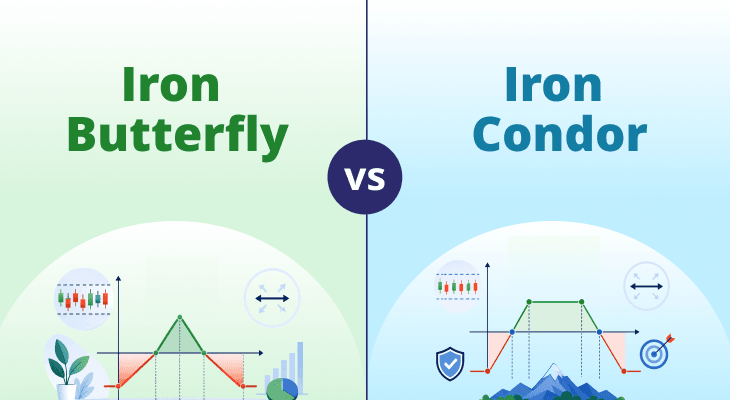
Iron Butterfly vs Iron Condor: Which Strategy Is Better?
August 19, 2026 | 0 mins read
Options trading is not always about predicting the next big market move. At times, the market trades within a narrow range, creating opportunities for strategies that benefit from stability rather than direction. Two of the most widely used neutral strategies are the iron butterfly strategy and the iron condor options strategy. While both strategies use four option contracts and defined risk, they do not behave in the same way. Differences in strike selection, profit range, and risk-reward dynamics can significantly affect trading outcomes. Understanding the difference between an iron condor and an iron butterfly can help you select a strategy that matches your market expectations and trading objectives.

Iron Condor Strategy
August 19, 2026 | 0 mins read
Markets do not always trend strongly. At times, prices remain within a narrow range, making directional trades more challenging. The iron condor strategy is designed for these market conditions. It doesn’t rely on a bullish or bearish outlook. It aims to generate returns when the underlying asset remains within a predefined price range. With clearly defined risk and reward, it has become a widely used approach among traders looking to capitalise on range-bound markets while maintaining controlled exposure.
FAQ
Iron condors with wide strikes are often simplest, as they define risk and reduce sudden losses. Beginners should stick to liquid indices like Nifty or Bank Nifty and avoid too many legs or tight strike spacing.