
February 28, 2025 | 5 min read
The difference between personal and business credit scores
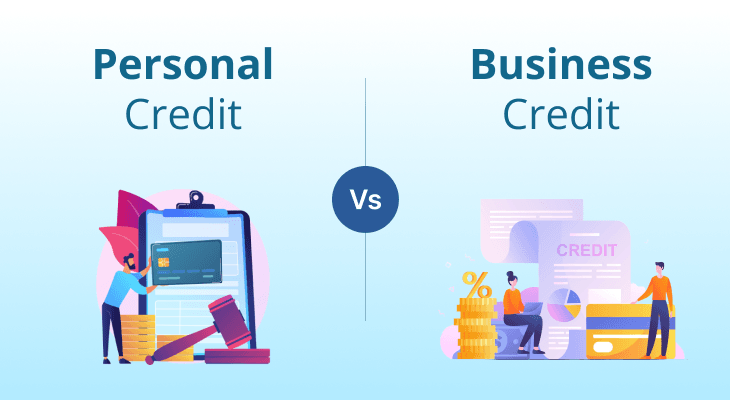
Your credit profile reflects your financial reliability. It shows how well you manage credit and whether you pay your dues on time. Lenders use it to gauge how consistent and responsible you are as a borrower. But did you know there is more than one type of credit score?
Your creditworthiness is primarily assessed through your personal credit score. However, if you own a business, especially one with a separate legal entity, a business credit score may also play a role in financial evaluations. This article breaks these down so you can see how they impact your financial journey.
What is a personal credit score?
A personal credit score indicates your individual financial history and is based on factors like the number of outstanding loans you have, repayment history, and credit card usage. It ranges from 300 to 900, with 900 being the highest. However, a score of 750 or above is generally considered good.
Your credit report includes personal details such as your name, gender, date of birth, and Permanent Account Number (PAN). It may also contain your employment information, including your income.
What is a business credit score?
A business credit score points to the financial health of a company. It takes into account factors such as the company's credit history, age of the business, payment track record, and outstanding balances. Also known as a company credit score, this metric is evaluated using different methodologies by various agencies based on information provided by lenders and creditors. The scoring ranges may vary across these agencies.
What are the differences between personal and business credit scores?
Associated with
- Personal credit is tied to an individual's financial activities.
- Business credit is linked to a partnership, sole proprietor or Limited Liability Company (LLC) and is used for business-related expenses.
Evaluated through
- Personal credit scores consider all your personal financial activities, including individual and joint loans, credit card debt, and even credit inquiries.
- Business credit scores evaluate your company's financial statements, legal filings, and payment history.
Used for
- A personal credit score plays a key role in evaluating your individual credibility. When you apply for a loan or credit card, lenders check your credit score to determine if you are a reliable candidate. A high credit score indicates that you can pay your dues on time, which qualifies you for better interest rates and terms. On the other hand, a low personal credit score could lead to higher interest rates or even loan rejection.
- A business credit score is evaluated when a company applies for a business loan or credit card. It helps lenders assess how stable the company is and how efficiently it manages its loans. A higher score can qualify the business for competitive interest rates and quicker loan approvals. On the other hand, a lower score can make it difficult to secure funding for the business.
Generated by
- Personal credit reports are generated by credit bureaus such as the Credit Information Bureau (India) Limited (CIBIL), Equifax, Experian, and CRIF High Mark.
- A business credit check report is produced by agencies like the Credit Rating Information Services of India Limited (CRISIL), Investment Information and Credit Rating Agency (ICRA), and Small and Medium Enterprises Rating Agency of India (SMERA).
How do personal and business scores affect each other?
It is important to understand how personal and business credit scores impact each other to manage your finances effectively. In most cases, business credit cards do not affect personal credit scores, except during the initial application process when lenders check your personal credit history. However, some business credit card issuers report account activity to consumer credit bureaus. As such, any late or missed payments on your business credit card could negatively impact your personal credit score. On the other hand, maintaining a strong business credit profile can indirectly help your personal credit by reducing your reliance on personal loans or credit cards for business expenses.
Many lenders also review personal credit before extending business credit, especially for small businesses. If you are a sole proprietor, banks and financial institutions are more likely to assess your personal credit history before approving a business loan or credit card. Hence, for sole proprietorships, it may be beneficial to separate personal and business finances and maintain a clear financial distinction.
How can you build and maintain your personal and business credit scores?
For personal credit scores, it is crucial to pay your bills on time. Setting up automatic payments can help ensure timely repayment. Skipping or postponing payments can lead to a lower credit score. Additionally, having a short credit history can also result in a poor score. If you have little to no credit history, you can consider applying for a credit card and using it responsibly to gradually build your personal credit score.
To strengthen your business credit score, you can start by opening a business bank account to ensure you have a separate account for your company’s financial transactions and do not use your personal account. This helps establish a financial track record for your business. Additionally, ensure that you repay existing debts before taking on new loans to avoid overleveraging. Too many loan applications at once can also negatively impact your business credit score. Using a business credit card responsibly can further help improve your company’s creditworthiness over time.
Conclusion
It is important to regularly check your credit score online to ensure both your personal and business scores remain within a healthy range. If your credit score is lower than ideal, consider working with a financial advisor to improve it. Additionally, you must take proactive steps, such as paying bills on time, reducing outstanding debts, and understanding how your scores impact each other to enhance your creditworthiness.
More Related Articles
Financial Planning in the App Era: Managing Money Fully Online
 August 7, 2026 | 0 mins read
India processes nearly half of all real-time digital payment transactions worldwide. Smartphones have replaced passbooks, algorithms have replaced spreadsheets, and the branch visit that once consumed a half-day now takes around 90 seconds.
Why Do Indians Struggle with Financial Planning Despite High Savings?
August 7, 2026 | 0 mins read
India is a nation of savers. The household savings rate consistently hovers around 30% of GDP, one of the highest in the world. Yet millions of Indian families work hard their entire lives, park money in fixed deposits and savings accounts, and still retire with far less than they need. Their discipline with money is real. The gap between that discipline and actual financial growth, however, is equally real.

How to avoid panic selling in stock market volatility
August 6, 2026 | 0 mins read
Believe it or not, the chances of drowning increase when you panic in water. Instead, staying calm, conserving energy, and focusing on swimming back to the edge improves your chances of getting out safely. The same principle applies to investing. Market volatility can trigger fear and anxiety. But if you let these emotions drive your investment decisions and indulge in panic selling, you may end up suffering bigger losses.