
March 20, 2026 | 10 min read
High-Yield Corporate Bonds: Meaning, Features, Benefits and Risks
In a low-interest-rate environment, many investors actively look beyond traditional fixed-income options such as bank fixed deposits and government bonds. This search for better returns often leads them to high-yield corporate bonds, which promise significantly higher interest payouts. However, higher returns rarely come without higher risk.
High-yield corporate bonds sit at an interesting intersection between debt and equity. While they provide regular income like bonds, their performance is closely linked to the issuing company’s financial health and broader economic conditions. Understanding how these bonds work, why they offer higher returns, and what risks they carry is essential before making them part of your portfolio.
This blog will explain what high-yield corporate bonds are in simple terms, compare them with government bonds, explore high-yield corporate bond funds, and help you decide whether they suit your financial goals.
What Is a High-Yield Corporate Bond?
A high-yield corporate bond is a debt security issued by a company with a lower credit rating than investment-grade issuers. Credit rating agencies assess such companies as having a higher probability of financial stress or default, which is why they must offer higher interest rates to attract investors.
When you invest in a high-yield corporate bond, you are essentially lending money to a company that may be growing aggressively, operating in a volatile industry, or carrying higher levels of debt. In return, the company commits to paying periodic interest and repaying the principal at maturity.
These bonds are often referred to as high interest corporate bonds because the coupon rates can be substantially higher than safer alternatives. While the term “junk bond” is sometimes used, it does not necessarily mean the company is weak. Many well-known firms temporarily fall into this category due to business cycles or restructuring phases.
Features of High-Yield Corporate Bonds
High-yield corporate bonds have a distinct set of characteristics that set them apart from government bonds and investment-grade corporate debt. Understanding these features is essential before considering them as part of your investment portfolio, especially because higher returns come with higher responsibility on the investor’s side.
Higher Coupon Rates
The most noticeable feature of high-yield corporate bonds is their significantly higher interest rate, also known as the coupon rate. Companies issuing these bonds are perceived to have a higher risk of default, so they must offer investors a higher coupon rate to lend them money.
For example, while a government bond or a highly rated corporate bond may offer annual returns of 6%-7%, a high-yield corporate bond may offer 9%-12% or even more, depending on the issuer’s credit profile and market conditions. This higher income potential is what attracts yield-seeking investors, particularly during low interest rate environments.
Lower Credit Quality
High-yield corporate bonds are typically issued by companies with lower credit ratings, often below investment grade. These companies may not necessarily be failing, but they usually face one or more challenges such as high debt levels, inconsistent cash flows, cyclical business models, or aggressive expansion plans.
For instance, a fast-growing infrastructure company may issue high-yield bonds to fund large projects before its revenues stabilise. Similarly, companies undergoing restructuring or operating in volatile sectors like metals, telecom, or real estate often rely on high-yield debt to raise capital.
Lower ratings do not automatically mean default risk is imminent, but they indicate greater uncertainty.
Market-Driven Pricing
Another defining feature of high-yield corporate bonds is their close link to the overall economic cycle. When the economy is growing, corporate earnings improve, default risks fall, and high-yield bonds tend to perform well. During economic slowdowns or recessions, however, weaker companies may struggle to service debt, increasing default risk.
This makes high-yield bonds more cyclical in nature compared to government securities, which are generally considered safe havens during uncertain times.
Equity-Like Behaviour
Although high-yield bonds are technically fixed-income instruments, their prices often behave more like equities than traditional bonds. Changes in company performance, sector outlook, or investor sentiment can cause noticeable price movements.
For example, if a company reports strong earnings or reduces debt, its bond prices may rise sharply. Conversely, negative news such as credit downgrades or regulatory issues can lead to sharp price declines. This equity-like volatility is a key feature investors must be comfortable with.
Fixed Income Structure
Most high-yield bonds pay fixed interest at regular intervals. This predictability of income can be useful, especially compared to dividend-paying equities.
Benefits of High-Yield Corporate Bonds
Despite their higher risk profile, high-yield corporate bonds can offer meaningful advantages when used thoughtfully within a diversified portfolio. Their benefits go beyond just higher interest rates.
1. Attractive Income Generation
The biggest advantage of high-yield corporate bonds is their ability to generate higher regular income compared to most traditional fixed-income options. For investors who rely on periodic interest payments, such as retirees or income-focused investors, this can be a significant benefit.
In a low interest rate environment where bank deposits and government bonds offer limited returns, high-yield bonds help bridge the income gap while still remaining within the debt investment universe.
2. Diversification Benefits
High-yield corporate bonds often respond differently to interest rate changes compared to government bonds. While government bond prices may fall sharply during rising interest rates, high-yield bonds are more influenced by corporate earnings and credit conditions.
This difference in behaviour helps diversify fixed-income portfolios, reducing over-dependence on interest rate movements alone.
3. Potential for Capital Appreciation
Unlike fixed deposits or government bonds, high-yield corporate bonds can also offer capital appreciation potential. If a company’s financial health improves over time, credit rating agencies may upgrade its rating. As perceived risk reduces, demand for its bonds increases, pushing bond prices higher.
This dual benefit of interest income plus price appreciation makes high-yield bonds more dynamic than traditional debt instruments.
4. Inflation Buffer
Higher coupon rates can help offset inflation better than low-yield debt instruments, especially during moderate inflationary periods. High-yield bonds allow investors to enhance overall portfolio returns without fully shifting towards equities. For investors who find equity volatility uncomfortable but still want better returns than conservative debt options, high-yield bonds can act as a middle ground.
When allocated in moderation, they can improve portfolio yield while maintaining a predominantly fixed-income structure.
5. Better Access Through High-Yield Corporate Bond Funds
An important indirect benefit is that high-yield bonds are widely accessible through high-yield corporate bond funds, which offer diversification, professional credit research, and active risk management.
For retail investors, this means exposure to high-yield opportunities without having to analyse individual issuers or take concentrated credit risk.
Risks of High-Yield Corporate Bonds
While high-yield corporate bonds offer attractive income and return potential, they also come with certain risks that investors should understand clearly before investing. These risks do not automatically make high-yield bonds unsuitable, but they do highlight why careful selection, diversification, and a long-term perspective are important.
1. Credit Risk and Default Probability
The most commonly discussed risk in high-yield corporate bonds is credit risk, which refers to the possibility that the issuing company may face financial stress and struggle to meet its interest or principal repayment obligations.
Because these bonds are issued by companies with lower credit ratings, their financial stability can be more sensitive to business slowdowns, rising costs, or sector-specific challenges. However, it is important to note that many companies successfully service their debt and improve their financial position over time.
This is why credit research, issuer quality assessment, and portfolio diversification play a critical role in managing this risk.
2. Higher Price Volatility Compared to Traditional Bonds
High-yield corporate bonds tend to experience greater price fluctuations than government or investment-grade bonds. This volatility arises because investor confidence in lower-rated companies can change quickly based on earnings results, management decisions, or broader economic conditions.
For example, positive developments such as improved cash flows or debt reduction can push bond prices up, while negative news may temporarily pull prices down. Investors who understand this characteristic and avoid reacting to short-term movements are generally better positioned to benefit from the long-term income potential.
3. Sensitivity to Economic and Market Conditions
Another important consideration is that high-yield bonds are more closely linked to economic cycles. During periods of economic expansion, companies tend to generate stronger revenues, making it easier for them to meet debt obligations. In contrast, during economic slowdowns, weaker companies may face pressure on profitability.
That said, high-yield bonds often perform reasonably well in stable or moderately growing economies. Investors who align their exposure with their risk tolerance and investment horizon can manage this cyclicality more effectively.
4. Liquidity Risk in Certain Market Conditions
Liquidity risk refers to the possibility that an investor may not be able to buy or sell bonds quickly at a fair price. Some high-yield corporate bonds, especially those issued by smaller companies, may trade less frequently than government securities.
In normal market conditions, this is rarely an issue. However, during periods of market stress, bid-ask spreads may widen temporarily. Investing through high-yield corporate bond funds can help reduce this risk, as fund managers actively manage liquidity and maintain diversified holdings.
5. Interest Rate Impact, Though Less Severe
While all bonds are affected by interest rate movements, high-yield corporate bonds are generally less sensitive to interest rate changes than long-duration government bonds. Their prices are more influenced by credit conditions and company performance than by interest rates alone.
This feature can actually work in favour of investors during rising interest rate cycles, provided corporate earnings remain stable. However, sudden and sharp rate hikes combined with economic slowdown may still impact overall bond valuations.
6. Reinvestment and Refinancing Risks
Some high-yield issuers rely on refinancing existing debt when it matures. If market conditions tighten or borrowing costs rise significantly, refinancing may become more expensive, which can affect company cash flows.
This risk highlights the importance of investing in issuers with manageable debt levels and strong operating fundamentals. Again, diversified bond funds help spread this risk across multiple issuers rather than concentrating it in one company.
It is important to view these risks in context rather than isolation. High-yield corporate bonds are not meant to replace safer instruments entirely, but to complement them. When used as part of a diversified portfolio, especially through professionally managed funds, the risks can be moderated while still allowing investors to benefit from higher income and return potential.
Corporate Bonds vs Government Bonds
Government bonds prioritise capital safety, while high-yield bonds focus on income enhancement. While both are fixed-income instruments, they serve different purposes in a portfolio and carry distinct risk-return characteristics. Government bonds are generally issued to meet public funding needs, whereas corporate bonds are issued by companies to raise capital for business expansion, refinancing, or operational requirements.
Understanding the differences between the two helps clarify where high-yield bonds fit in your investment strategy.
Aspect | High-Yield Corporate Bonds | Government Bonds |
|---|---|---|
Issuer | Private companies | Government |
Risk Level | Higher | Very low |
Return Potential | Higher, especially for high-yield bonds | Lower but stable |
Price Volatility | Moderate to high | Low |
Suitable For | Risk-tolerant investors | Conservative investors |
High-Yield Corporate Bond Funds
For most retail investors, investing directly in high-yield corporate bonds may not always be practical due to higher capital requirements, credit analysis complexity, and liquidity considerations. This is where high-yield corporate bond funds become a more accessible and efficient option.
These funds act similar to regular mutual funds, but in this case they invest in a diversified basket of high-yield bonds across companies and sectors. Professional fund managers continuously assess credit quality, rebalance portfolios, and manage risk exposure.
They offer several advantages that make them suitable for investors looking to participate in the high-yield bond segment without taking excessive concentration risk:
- Diversification across issuers and sectors
- Reduced impact of a single issuer default
- Lower investment threshold
- Better liquidity compared to individual bonds
- Professional credit evaluation by professional fund managers
However, investors should still evaluate fund credit quality, expense ratios, and interest rate exposure.
Who Should Invest in High-Yield Bonds?
High-yield bonds are suitable for investors who:
- Have a moderate to high risk tolerance
- Seek higher income than traditional debt instruments
- Can stay invested through market cycles
- Already hold stable, low-risk assets elsewhere
They are generally not ideal for investors who need capital certainty or short-term liquidity.
Conclusion
High-yield corporate bonds can enhance income and diversification but require careful evaluation of risk. They are not substitutes for safe fixed-income investments but rather complements within a balanced portfolio.
For investors who want higher income potential but prefer a structured and diversified approach, high-yield corporate bond funds via a platform like m.Stock can offer a balanced way to participate in this segment, without any commission.
More Related Articles

How Rising Oil Prices Impact Stock Market Investments
 October 9, 2026 | 0 mins read
A petroleum price hike, driven by rising global crude oil prices, can have far-reaching consequences for the economy and financial markets worldwide. As India imports over 88% of its crude oil requirements, understanding the impact of rising oil prices on stock market investments is essential for investors.
Understanding the meaning and impact of a current account deficit on an economy
October 9, 2026 | 0 mins read
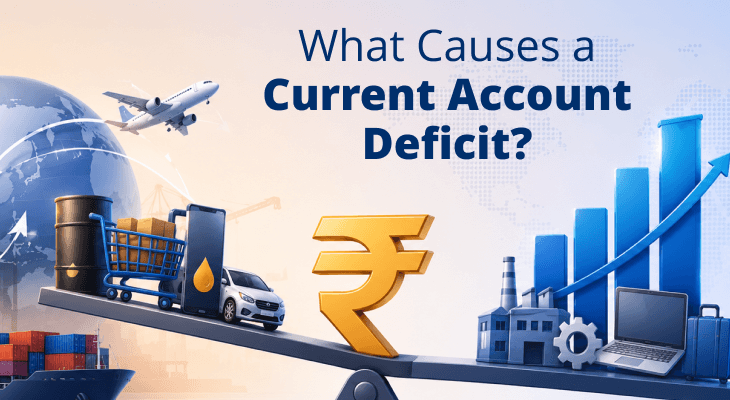
The current account is an important component of a country’s balance of payments. A current account deficit occurs when a country’s total payments to the rest of the world exceed its total earnings from abroad. These payments include imports of goods and services, investment income paid to foreign investors, and current transfers. These earnings include receipts from exports of goods and services, income earned from overseas investments, and current transfers such as remittances. A country’s current account deficit is generally expressed as a percentage of its gross domestic product (GDP).

Revenge trading meaning explained: Causes, impact, and how to avoid it
October 9, 2026 | 0 mins read
in revenge trade, they are often driven by emotions such as anger, frustration, fear, or disappointment rather than sound analysis. In the process, they overlook carefully planned trading strategies designed around their financial goals, investment horizon, and risk appetite. More often than not, revenge trading results in further losses, creating a vicious cycle that becomes increasingly difficult to escape.
FAQ
High-yield corporate bonds are riskier than government or investment-grade bonds. While many issuers meet their obligations, defaults are more likely during economic downturns. Safety depends on issuer quality, diversification, and overall market conditions rather than interest rates alone.