

June 15, 2026 | 4 min read
How active ETFs bridge passive affordability with expert skill
Active ETFs try to give investors the cost and transparency benefits of ETFs along with the flexibility and stock-picking skill of active fund managers. They sit between pure passive ETFs and traditional active mutual funds, to help investors who want expert management.
What is an active ETF?
An active ETF is an exchange-traded fund where a professional fund manager takes active decisions on what to buy, what to sell, and how much to allocate to each stock or bond. The fund still trades on the stock exchange like any other ETF and investors buy or sell units during market hours through a demat and trading account.
Unlike a traditional index ETF, an active ETF does not track a fixed index. The manager aims to beat a benchmark or deliver a specific outcome while still offering the ETF format’s cost efficiency, transparency through daily holdings disclosure in many cases, and trading flexibility.
Why did passive ETFs become popular?
Passive ETFs became popular for three main reasons:
They offered low-cost access to diversified equity or debt markets because they simply copied an index.
They made investing simple and rules based because investors did not need to choose a fund manager and could just pick an index.
They provided intraday liquidity because investors could buy and sell units on the exchange at live prices.
Over time, many investors realised that a lot of active funds struggled to beat broad indices after costs. This pushed money towards passive ETFs and index funds for core allocation. However, some investors still wanted the chance to outperform the index or manage risk more dynamically. That is where active ETFs entered the picture.
Active vs Passive ETF: Key differences
Aspect | Passive ETF | Active ETF |
|---|---|---|
Objective | Match index performance | Can beat a benchmark or deliver a specific outcome |
Portfolio construction | Replicates index weights | Manager selects and weights securities actively |
Cost (TER) | Lower than active funds | Higher than passive, often lower than many active mutual funds |
Transparency | Tracks a known index with rules‑based portfolio | Portfolio disclosed periodically, strategy details may be less transparent |
Role in portfolio | Core, low-cost market exposure | Satellite, return enhancement or risk management |
Passive ETFs work best for simple, broad market exposure. Active ETFs try to add value through stock selection, sector tilts, or risk control while still giving investors the ETF structure.
Actively Managed ETFs in India: Current Landscape
Actively managed ETFs in India are still at an early but growing stage. Most ETF assets remain in broad index trackers, sector ETFs, and gold or debt ETFs. Active ETFs have started to appear in categories such as thematic strategies, factor-plus-discretion approaches, and certain debt or dynamic allocation strategies.
The space is evolving as regulations, disclosure norms, and investor awareness improve. For now, active ETF options and track records are more limited than traditional active mutual funds and plain index ETFs. Investors who consider active ETFs should therefore pay close attention to the strategy, the manager’s experience, and how the product has behaved across different market conditions rather than chasing a label.
Risks and Limitations of Active ETFs
Active ETFs carry many of the same risks as active mutual funds along with some ETF-specific considerations.
Manager risk
Performance depends on the fund manager’s decisions. The ETF can underperform both the benchmark and passive peers if calls go wrong.Strategy complexity
Some active ETFs use complex or opaque strategies. If you do not understand how the portfolio is constructed, the behaviour may surprise you during volatility.Cost vs Benefit
Active ETFs charge more than purely passive ETFs. The manager needs to add enough value to justify this fee difference over time.Tracking difference vs broad market
Because they do not track a simple index, they can look very different from popular benchmarks like the Nifty or Sensex for long periods. This can create discomfort if you compare them too frequently to headline indices.
Liquidity and spreads
If trading volumes are low, the bid–ask spread can widen. This increases your effective buy or sell cost even if the fund itself is well managed.
Who should consider active ETFs?
Active ETFs can make sense for investors who:
Already use passive ETFs or index funds for core allocation and now want a satellite strategy that seeks extra returns or smoother risk.
Prefer the ETF format for its intraday liquidity and transparency but still believe in skilled active management.
Are comfortable evaluating fund strategies and can stay invested through phases of underperformance rather than exiting at the wrong time.
Want to build a barbell or core–satellite portfolio where low-cost passive funds from the base and select active ETFs add targeted exposures.
They may not suit new investors who are still learning basics and might chase recent performance. For them, starting with simple index funds or broad passive ETFs usually makes more sense.
More Related Articles

How Rising Oil Prices Impact Stock Market Investments
 October 9, 2026 | 0 mins read
A petroleum price hike, driven by rising global crude oil prices, can have far-reaching consequences for the economy and financial markets worldwide. As India imports over 88% of its crude oil requirements, understanding the impact of rising oil prices on stock market investments is essential for investors.
Understanding the meaning and impact of a current account deficit on an economy
October 9, 2026 | 0 mins read
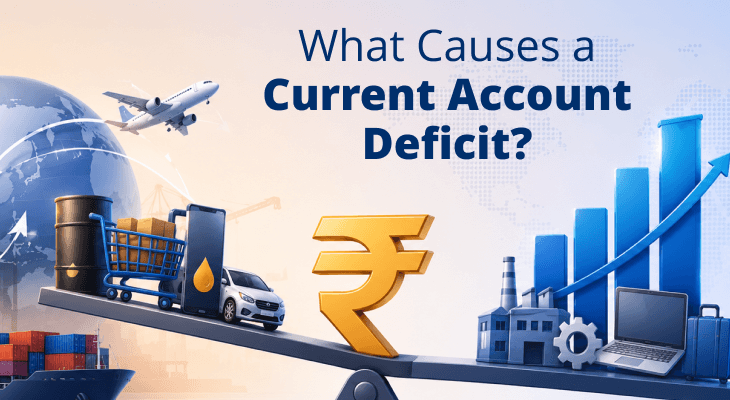
The current account is an important component of a country’s balance of payments. A current account deficit occurs when a country’s total payments to the rest of the world exceed its total earnings from abroad. These payments include imports of goods and services, investment income paid to foreign investors, and current transfers. These earnings include receipts from exports of goods and services, income earned from overseas investments, and current transfers such as remittances. A country’s current account deficit is generally expressed as a percentage of its gross domestic product (GDP).
Revenge trading meaning explained: Causes, impact, and how to avoid it
October 9, 2026 | 0 mins read
in revenge trade, they are often driven by emotions such as anger, frustration, fear, or disappointment rather than sound analysis. In the process, they overlook carefully planned trading strategies designed around their financial goals, investment horizon, and risk appetite. More often than not, revenge trading results in further losses, creating a vicious cycle that becomes increasingly difficult to escape.
FAQ
Yes. Many investors combine both. They use low-cost passive ETFs for core exposure to broad-based indices and add a few active ETFs as satellites to target specific themes, styles, or risk-managed approaches. This mix can keep overall costs reasonable while still leaving room for potential outperformance or better diversification.