
May 8, 2026 | 7 min read
India–EU FTA: will this mega deal unlock India’s next trillion-dollar opportunity?
The India–EU Free Trade Agreement (FTA), announced on 27th January 2026, is being described as the ‘mother of all trade deals’. It is less a one time event and more a long term economic reset that will shape exports, manufacturing, jobs, and even portfolio positioning over the next decade.
India and the European Union have agreed to reduce tariffs and non-tariff barriers so that goods, services, capital, and professionals can move more smoothly between them. In return for easier access to a rich, stable market like Europe, India is signing up for tougher discipline on quality, environment, labour standards, and sustainability.
The FTA is a growth plus discipline story, not an overnight jackpot.
How will tariffs change over time?
The heart of the deal is a massive tariff cut exercise on both sides. The EU will eliminate or reduce import duties on most Indian goods over time, while India will cut duties on a large share of EU exports, especially in industrial and high-value segments.
The table here shows how tariffs will be reduced over the time from both the countries.
Duties across key sectors over long term:
Sector | Pre-FTA Tariff (Approx.) | Long Term (5–10 yrs, Indicative) |
|---|---|---|
Automobiles | 70–110% | India will reduce tariffs up to 10% (phased, within quotas) |
Pharma Products | 0–11% | EU will reduce tariffs to zero-to-near-zero on most covered products |
Chemicals | Up to 22% | EU will largely eliminate tariffs on most industrial chemical exports from India |
Medical Devices | Up to 27.5% | Imports into India will have near-zero tariffs for most device categories |
Wines & Spirits | Up to 150% | Imports of wine from Europe will have only 20%–30% tariffs; spirits ~40% (state taxes extra) |
This explains why markets will treat the FTA as a durable theme rather than a one quarter earnings trigger.
Sector impact: where India wins big
Some sectors will feel the impact sooner and stronger than others. Broadly, export-oriented, compliance-ready, and scale-focused industries are positioned to benefit the most.
1. Textiles & Apparel: the big opportunity
India’s textile exports to the EU are currently around $7 billion, but policy estimates suggest this could rise multiple times if capacity, compliance, and competitiveness is aligned properly. Such growth can create millions of jobs for low and semi-skilled workers in textile and apparel clusters.
Only players that meet EU standards on labour, chemicals, sustainability, and traceability will fully benefit, but low-compliance commodity producers may struggle.
2. Pharma & Healthcare
Tariff reduction plus smoother regulatory processes can make Indian generics and medical devices more competitive in Europe. Faster approvals and clearer rules will bring more contract manufacturing and partnership deals.
This strengthens India’s position as a global pharmacy and medical device manufacturing base, especially for value conscious European healthcare systems.
3. Engineering, Marine, and Industrial Goods
Engineering goods, marine products, and several industrial categories stand to gain from lower tariffs and more predictable rules of origin. For many midcap industrials, the EU can shift from being a niche export destination to a scalable core market.
At the same time, cheaper European capital goods entering India will help domestic manufacturers upgrade plants and processes faster.
4. Key Sectors: Short-Term vs Long-Term Impact
Let us understand now, how India EU trade happens currently and what will change in the long term.
Sector | PreFTA (Today) | Post-FTA: Long-term impact |
|---|---|---|
Automobiles (Premium) | EU premium cars are expensive | Premium imports grow, more competition for local players |
Textiles & Apparel | Exports face high EU barriers |
India exports more to EU, especially in value added categories |
Pharma & Healthcare | EU approvals slow growth | Indian pharma gains market share in EU and deeper partnerships |
Machinery | Advanced machines cost more | Better machines lift productivity and automation |
Chemicals | High costs plus strict compliance | Strong players scale up, weaker or noncompliant firms struggle |
Imports: Why cheaper EU goods matter for India
On the import side, the FTA is a strong productivity story rather than just cheaper foreign goods on shelves.
Over time, India should see:
- Premium cars and auto parts: some price relief and more model options, expanding the premium segment.
- Machinery and capital goods: lower effective capex for factories, easier tech upgrades, and better automation.
- Electrical and electronic equipment: improved access to high end industrial electronics and components.
- Medical devices: greater choice and potentially better pricing for high-end equipment, aiding hospitals and diagnostics.
- Specialty chemicals and inputs: better quality raw materials for Indian manufacturers across sectors.
- Wines, spirits, and processed foods: more variety and quality for urban consumers.
The real macropositive is capex efficiency i.e. access to advanced European machinery at lower landed cost can raise productivity and export competitiveness for Indian manufacturing.
However, there are some sectors that will be impacted, as no foreign trade agreement is a one-way train. India is also accepting several constraints and competitive pressures.
Where does India compromise?
1. Agriculture: A limited win
Despite tariff cuts on industrial products, the EU’s strict food safety rules largely stay in place. Rice, spices, tea, and other agri exports continue to face tight pesticide limits, while marine products remain vulnerable to rejections over antibiotic or contamination findings.
Fresh fruits and other sensitive products can also see sudden bans or enhanced checks, and dairy gains can be reduced considering EU standards. So, this is not an agriculturecentric deal, as farmers receive only a modest opening compared to industry.
2. Carbon tax pressure
The EU’s Carbon Border Adjustment Mechanism (CBAM) remains fully applicable to India, meaning carbon intensive exports like steel and aluminium will face additional levies linked to embedded emissions. If producers do not decarbonise, these carbon charges can partly or fully offset tariff cuts.
This forces greener capex, cleaner energy, and better emissions tracking but also raises near-term costs for many exporters.
3. Lockedin standards and less flexibility
By signing the FTA, India accepts tougher commitments on environment, labour rights, sustainability reporting, and responsible business conduct.
These are positive for long term competitiveness and branding but immediately increase compliance costs, especially for MSMEs.
India has protected critical areas such as policy space around generic medicines and certain IP flexibilities, but it has agreed to tighter rules of origin and related provisions that curb routing of third country goods via India for tariff benefits.
This improves systemic integrity but reduces flexibility for firms using complex global supply chains.
What does it mean for India’s economy?
Putting the pieces together, India gains:
- Higher trade intensity with a rich, diversified market
- Stronger manufacturing and services exports in EU-facing sectors
- More foreign and domestic capex tied to EU-linked supply chains
- Cheaper and better capital goods that can lift productivity
But also faces risks of:
- Short term pressure in import exposed sectors like autos, machinery, and some chemicals
- Higher transition costs from CBAM and sustainability related compliance
- Uneven benefits, with organised, EUready firms gaining much more than small, informal players
Net net, this is a pro- industry, pro-exports, pro-formalisation deal.
How might investors look at it?
Equity markets are likely to treat the India–EU FTA as a slow burn structural theme.
For investors, the bigger opportunity lies in identifying EU-ready, compliance-strong, scale-oriented businesses.
Likely structural beneficiaries:
- Export-oriented textiles, apparel, engineering, marine, and chemical companies with strong EU linkages
- Pharma and medical device players with clean regulatory track records
- Auto ancillaries and logistics/port companies that benefit from higher trade flows
- Industrial and manufacturing firms that can leverage cheaper EU machinery to expand efficiently
Potential pressure pockets:
- Domestic machinery makers that relied more on tariff protection than innovation
- Highcarbon, lowcompliance exporters exposed to CBAM and stricter ESG filters
- Small exporters lacking capital or capability to meet EU standards
In essence, the India–EU FTA is a bet on India as a serious, rulescompliant industrial and services power that can play by advanced economy standards. It offers jobs, factories, exports, and better global positioning but only to businesses willing to step up on quality, green transition, and governance to fully cash in on the opportunity.
More Related Articles
How Rising Oil Prices Impact Stock Market Investments
 October 9, 2026 | 0 mins read
A petroleum price hike, driven by rising global crude oil prices, can have far-reaching consequences for the economy and financial markets worldwide. As India imports over 88% of its crude oil requirements, understanding the impact of rising oil prices on stock market investments is essential for investors.
Understanding the meaning and impact of a current account deficit on an economy
October 9, 2026 | 0 mins read
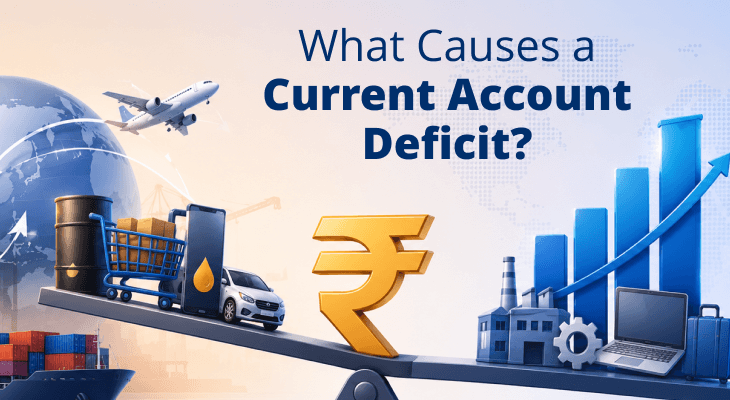
The current account is an important component of a country’s balance of payments. A current account deficit occurs when a country’s total payments to the rest of the world exceed its total earnings from abroad. These payments include imports of goods and services, investment income paid to foreign investors, and current transfers. These earnings include receipts from exports of goods and services, income earned from overseas investments, and current transfers such as remittances. A country’s current account deficit is generally expressed as a percentage of its gross domestic product (GDP).

Revenge trading meaning explained: Causes, impact, and how to avoid it
October 9, 2026 | 0 mins read
in revenge trade, they are often driven by emotions such as anger, frustration, fear, or disappointment rather than sound analysis. In the process, they overlook carefully planned trading strategies designed around their financial goals, investment horizon, and risk appetite. More often than not, revenge trading results in further losses, creating a vicious cycle that becomes increasingly difficult to escape.