
January 13, 2026 | 9 min read
STP vs Lumpsum: What's The Smarter Way to Invest in Mutual Funds & Get Higher Returns?
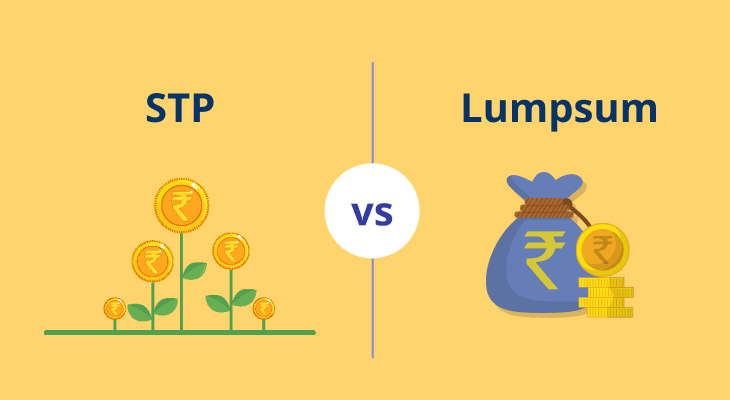
Investing in mutual funds is one of the most effective methods for wealth creation over the long term, as it allows your money to grow through market exposure and the power of compounding. However, the approach you adopt to deploy your capital, whether investing a large sum at once through lump sum investment in mutual funds or gradually through a Systematic Transfer Plan or STP in a mutual fund can significantly impact your overall investment outcomes.
Every approach has unique traits, benefits, and possible drawbacks. Understanding how these strategies function, assessing your risk tolerance, and coordinating them with your financial objectives will help you make better decisions. Doing so will increase your mutual fund returns while also giving your investing journey more stability and flexibility.
What Is A Systematic Transfer Plan (STP)?
This investment strategy allows an investor to transfer a specified amount among mutual funds on a periodic schedule. The initial investment is typically made in a low-risk instrument, such as a debt or liquid fund, and is progressively moved over a predetermined time period to an equity fund. By distributing the investment over several market cycles, this strategy reduces the risk of market volatility.
Suppose an investor has ₹5 lakh. Instead of investing the entire amount in equities at once, they can park the funds in a liquid fund and systematically transfer ₹50,000 each month into an equity fund. This phased approach reduces the risk of investing a lump sum at the market’s peak while taking advantage of fluctuating market levels to potentially enhance mutual fund returns.
STPs are particularly well-suited for cautious investors, who can gradually increase their exposure to riskier assets while maintaining a portion of their capital in comparatively safer funds. This strategy is an effective way of methodically accumulating wealth because it combines the advantages of equity growth potential with the security of debt instruments.
What Is Lump Sum Investment In Mutual Funds?
Lump sum investment in mutual funds investment involves deploying a large amount of capital into a mutual fund in a single transaction, rather than spreading it over time. With this strategy, the investor can potentially profit from full market gains from the outset since the entire investment is exposed to the market instantly. Lump sum investments are often made when an investor has access to surplus funds, such as bonuses, inheritances, or accumulated savings, and wishes to deploy them efficiently in pursuit of long-term wealth creation.
For instance, an investor receives ₹10 lakh as a bonus and decides to invest it entirely in a diversified equity fund. If the market enters a growth phase, the full investment benefits from compounding, potentially delivering higher mutual fund returns than if the investment were spread over several months. However, if the market experiences a sudden correction shortly after the investment, the portfolio may see a temporary dip in value, highlighting the inherent risk of timing the market.
Investors with a longer investment horizon, a greater risk tolerance, and reliance on market trends are typically advised to make lump sum investments. It is particularly suitable for those who prefer simplicity and are comfortable managing the emotional ups and downs that can accompany market volatility.
STP vs Lump Sum – Key Differences
Choosing between an STP in a mutual fund or a lump sum depends on several factors, including risk appetite, investment horizon, and market conditions. Understanding the key differences between these two approaches can help you make a strategy that aligns with your financial goals.
Feature | Lumpsum Mutual Funds | STP in Mutual Fund |
|---|---|---|
Investment Method | A one-time investment of the entire capital into a mutual fund. | Gradual transfer of fixed amounts from a low-risk fund (like debt or liquid) to an equity fund over a defined period. |
Market Exposure | Full exposure from day one. Your entire capital participates in market gains and losses immediately. | Exposure is phased over time, which reduces the impact of market volatility on the investment. |
Risk Level | Higher risk due to immediate full exposure; performance is highly sensitive to market timing. | Moderate to lower risk as investments are spread across multiple market cycles, mitigating timing risks. |
Flexibility | Limited flexibility once invested; changes may incur redemption charges or tax implications. | High flexibility; transfer amounts, frequency, or duration can be adjusted based on goals or market conditions. |
Potential Returns | It can yield higher returns if invested at market lows and held long-term. | Returns may be slightly lower in consistently rising markets, but risk-adjusted returns tend to be steadier. |
Investor Suitability | Ideal for confident investors with surplus capital, a long-term horizon, and higher risk tolerance. | Suitable for cautious or new investors who prefer systematic, disciplined exposure to equity markets. |
Psychological Impact | Requires mental resilience during market volatility; short-term losses can create stress. | Reduces emotional pressure, as investments are phased and not fully exposed to market swings at once. |
Advantages Of STP In Mutual Funds
Investing through an STP offers a structured and strategic way to grow your wealth while managing risk. Unlike a one-time investment, STPs allow you to gradually enter the market, combining the growth potential of equities with the stability of safer funds. The following advantages highlight why STPs are a preferred choice for disciplined and risk-conscious investors.
- Reduced Market Timing Risk: STPs reduce the risk of entering the market at a high point by distributing your investment over an array of intervals as opposed to making a single, large investment. This methodical approach lowers the possibility of losses during volatile times by ensuring that your exposure is not entirely affected by transient market swings.
- Rupee Cost Averaging: Units are acquired with STPs at varying Net Asset Values (NAVs) over time. This implies that you purchase more units at low prices and fewer units at high prices. By lowering the overall cost of your investment over time, this averaging enhances potential mutual fund returns and reduces the impact of market volatility.
- Flexibility: With STPs, investors may alter the amount of transfers, the frequency of transfers, or even temporarily halt the plan in response to shifting market conditions or financial objectives. This enables STPs to remain disciplined in their investment approach while adjusting to changing conditions.
- Disciplined Approach to Investing: STPs promote systematic investing practices by automating recurring transfers from a low-risk fund to an equity fund. By avoiding impulsive choices influenced by emotions or market noise, this methodical approach helps maintain a balanced portfolio allocation between debt and equity.
Advantages of Lump Sum Investment
Investing through lump-sum mutual funds allows you to deploy your capital immediately, giving the full investment the potential to grow from day one. This approach is particularly effective when you have a large sum available and want to take advantage of market opportunities, compounding, and long-term wealth creation. The following advantages explain why lump sum investing can be a powerful strategy for confident investors.
- Immediate Market Exposure: Your capital is fully exposed to the market when you invest the full amount at once, allowing you to profit from any growth or upward trends in the fund. In a rising market, where early participation maximises compounding over time, this is especially advantageous.
- Higher Compounding Potential: With lump sum investments, you may utilise all of the funds immediately. When held in equity funds, the compounding effect on the entire amount can produce higher mutual fund returns over time compared to phased investments.
- Simplicity and Convenience: A one-time investment eliminates the need to track periodic transfers or monitor the timing of multiple contributions. This makes lump-sum investing straightforward and convenient for investors who prefer a hands-off approach.
- Strategic Use of Surplus Funds: When you receive bonuses, an inheritance, or savings that can be effectively distributed among wealth-building assets, lump sum investing is an ideal choice. Long-term financial objectives can be accelerated through the strategic deployment of considerable capital.
STP vs Lump Sum: Which Strategy Delivers Better Returns?
Choosing between lump sum mutual funds and an STP into a mutual fund largely depends on market conditions, your risk appetite, and the investment horizon you are targeting. Understanding how each strategy performs under different scenarios can help you optimise mutual fund returns while managing potential risks.
- Rising Markets: Lump sum investments frequently offer an advantage when markets are rising. Your money will immediately benefit from market growth and compound interest if you invest the entire amount at once. When compared to a phased investment strategy, this may yield larger overall returns.
- Volatile Markets: STPs usually offer more consistent performance during times of market volatility or uncertainty. You can average out the purchase cost and alleviate the impact of short-term market fluctuations by investing methodically over time and purchasing units at different NAVs. This strategy minimises the possibility of large losses brought on by market timing errors and assists investors in maintaining smoother returns.
- Long-Term Perspective: Over a longer investment horizon, typically 3 to 10 years or more, the difference in performance between lump sum and STPs tends to narrow, especially in well-diversified equity funds. Both strategies benefit from compounding and the general upward trend of equity markets, making either approach effective for long-term wealth creation, although STPs offer a more conservative entry for cautious investors.
Let’s understand with a detailed comparison:
Hypothetical Returns: Lumpsum vs STP
Investment Approach | Investment Amount | Market Scenario | 1-Year Value | 1-Year Return | 3-Year Value | 3-Year CAGR* |
|---|---|---|---|---|---|---|
Lumpsum Mutual Funds | ₹5,00,000 | Rising Market | ₹5,60,000 | 12% | ₹7,00,000 | 12.5% |
Lumpsum Mutual Funds | ₹5,00,000 | Volatile Market | ₹4,75,000 | -5% | ₹6,50,000 | 8.5% |
STP in Mutual Fund | ₹5,00,000 | Rising Market | ₹5,50,000 | 10% | ₹6,90,000 | 12% |
STP in Mutual Fund | ₹5,00,000 | Volatile Market | ₹5,20,000 | 4% | ₹6,80,000 | 11% |
*CAGR = Compounded Annual Growth Rate
Insights:
- A lump sum can deliver slightly higher returns in rising markets since the entire capital benefits from compounding immediately.
- STPs reduce exposure to market peaks and lows, averaging the purchase cost and providing steadier growth in the volatile market.
- Over 3 years, differences narrow as both strategies benefit from market recovery and compounding, but STP still lowers short-term risk.
Conclusion
Both lump sum mutual funds and STP in mutual fund have unique advantages. Lump-sum investing suits investors with immediate capital and higher risk tolerance, while STPs are ideal for those who prefer a disciplined, phased approach that mitigates market risk.
Your choice should align with financial goals, risk appetite, and investment horizon. For investors uncertain about market timing or seeking a smoother path to growth, STP in mutual fund is often the smarter choice.
By understanding the characteristics and benefits of each strategy, you can enhance mutual fund returns, maintain flexibility, and make informed investment decisions that support long-term financial objectives.
Also Read: What is STP? Differences Between STP and SIP | m.Stock
More Related Articles

How to Pledge Mutual Funds for Margin?
 August 11, 2026 | 0 mins read
Many investors today hold sizable investments in mutual funds while also actively participating in stock market trading, derivatives, or margin-based strategies. In such situations, investors often face a practical challenge: they may want additional trading margin without liquidating their long-term investments.
Is Gold ETF better than Gold Mutual Fund?
August 7, 2026 | 0 mins read
Gold has once again become a major talking point among Indian investors. Rising geopolitical tensions, global inflation concerns, central bank buying, and economic uncertainty have pushed gold prices sharply higher in recent years. In 2025 and early 2026, international gold prices repeatedly touched record highs, while domestic gold rates in India also surged due to both global prices and rupee movement.

How to Build a Retirement Plan Using SWP vs Annuity
August 6, 2026 | 0 mins read
Retirement is one of those milestones that seem far away until suddenly they are not. After two decades of advising individuals on their financial futures, one truth keeps surfacing: a retirement plan built on hope rather than structure is a plan waiting to fail.
FAQ
Yes, especially in volatile markets. While lump sum mutual funds may perform better during periods of steady market expansion, STPs reduce timing risks by employing rupee cost averaging, which frequently results in higher risk-adjusted mutual fund returns.