
December 24, 2024 | 7 min read
What Are Stop Loss Orders And How To Use Them?
As a trader, while it is important to do your research to chart out your trading strategies, managing the associated risk is equally vital. An overexposed position, or poor risk management has the potential to negate all your research and effort that you have put in and could result in losses. One crucial tool that traders use to protect their investments is the stop-loss order. It is important to understand what stop-loss orders are and how to use them in your trading journey. This comprehensive guide will delve into what is stop-loss orders in trading, its importance, various types, and how it compares to other order types.
What is a Stop-Loss Order? -
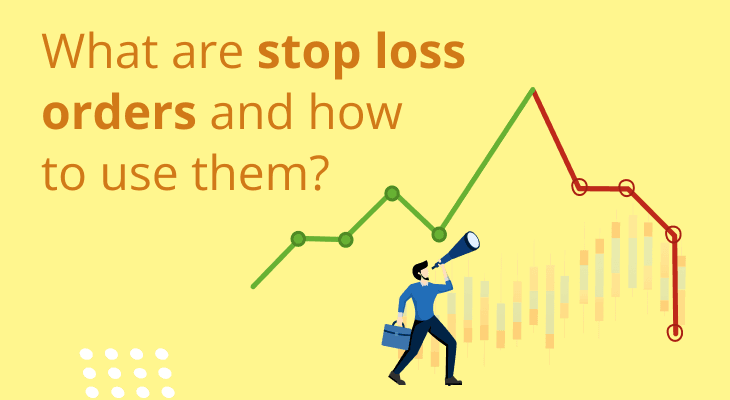
A stop-loss order is a predetermined instruction to sell a stock when its price reaches a specified level. This helps investors limit their potential losses on a position by automatically executing a sale once the price hits the stop-loss threshold.
When you enter a stop-loss order, you set a "stop price" that triggers the sale of a scrip. For example, if you own shares of a company currently trading at ₹ 1,000 and you set a stop-loss order at ₹ 900, your shares will be sold if the price falls to ₹ 900. This helps prevent further losses in case the stock price continues to decline.
Importance of a Stop-Loss Order
A stop-loss allows a trader to mitigate risk by protecting their down-side losses. This is especially crucial in volatile markets where stock prices can fluctuate rapidly. Knowing what the meaning is of stop loss in the share market ensures you can strategically manage your trades and maintain financial discipline.
Stop-loss orders also help remove emotional decision-making from trading. A stop-loss order enforces a disciplined approach, ensuring you stick to your risk management strategy. This is particularly beneficial for beginners who might be more susceptible to emotional trading.
How Does a Stop-Loss Order Work?
A stop-loss order activates once a stock's price hits a pre-decided level. For example, if you purchase a stock at ₹500 and set a stop-loss order at ₹450, a sell order will automatically be executed if the stock price drops to ₹450. This way you can exit a loss-making position without needing to monitor the market constantly.
When the stock reaches the stop price, the stop-loss order becomes a market order, meaning it will sell at the next available price. This could be slightly above or below the stop price, depending on market conditions. It’s important to understand that a stop-loss order does not guarantee a specific price. It guarantees an exit if the stock hits the stop level.
Types of Stop-Loss Orders
- Fixed Stop-Loss Order: A fixed stop-loss order is set at a specific price. This type of order remains unchanged regardless of market movements. For example, if you buy a stock at ₹200 and set a fixed stop-loss at ₹ 180, your position will be sold if the price touches ₹ 180. Fixed-stop losses are straightforward and easy to implement, making them suitable for investors who prefer a simple approach to risk management.
- Trailing Stop-Loss Order: A trailing stop-loss order adjusts with the market price. It sets the stop level at a fixed percentage or amount below the market price. The stop-loss level trails the stock as it moves up. For instance, if you set a trailing stop-loss order with a 10% trail and the stock price rises from ₹100 to ₹120, the stop-loss price will move from ₹90 to ₹108 (10% of ₹120). This allows you to lock in profits while still protecting against any downside.
Stop-Loss Orders Vs Market Orders Vs Limit Orders
A stop-loss order and a market order serve different purposes. A market order is executed immediately at the current market price. In contrast, a stop-loss order only triggers a market order when a specific stop-loss price is breached.
A limit order specifies the maximum or minimum price at which you are willing to buy or sell a stock. Unlike a stop-loss order, which becomes a market order when triggered, a limit order will only execute at a specified price or better. For example, if you set a sell limit order at ₹100, your shares will only be sold if the price is ₹100 or higher. Combining a stop-loss order with a limit order (stop-limit order) can provide more control over the execution price, but it also increases the risk of not selling if the stock price falls rapidly below the limit price.
Pros and Cons of Using a Stop-loss Order
While stop-loss orders offer several benefits, they also come with certain drawbacks. Let’s delve deeper into the advantages and disadvantages of using stop-loss orders.
Pros of Using a Stop-Loss Order
- Risk Management: Stop-loss orders are essential for risk management. By setting a stop-loss, you can limit your potential losses on your investment or trading position. This is particularly important in volatile markets where prices can change rapidly. For instance, if you buy a stock at ₹ 500 and set a stop-loss order at ₹ 450, your maximum loss is limited to ₹50 per share. This predefined limit helps protect your investment from a significant fall in the stock price.
- Emotional Discipline: One of the biggest challenges in trading is managing emotions that can lead to unwise or rash decisions. Stop-loss orders enforce discipline by automatically executing a sale at a predetermined price, removing the emotional element from decision-making. This helps ensure you stick to your trading plan and maintain a consistent strategy.
- Time-Saving: Stop-loss orders allow you to manage your trades without needing to monitor the market constantly. This is especially beneficial for part-time traders or those with other commitments. Once a stop-loss order is set, you can focus on other tasks, knowing that your position will be automatically managed if the market moves against you.
Cons of Using a Stop-Loss Order
- Volatility can cause trades to be executed: Temporary market dips can trigger a stop-loss order, resulting in a sale. For example, if a stock briefly drops below the stop-loss price due to short-term volatility and then recovers, the stop-loss order may cause you to sell the stock at a loss, even though the stock’s long-term trend remains positive. This can be frustrating and may result in missed opportunities for gains.
- No Price Guarantee: The execution price of a stop-loss order might be different from the stop price, especially in volatile markets. When the stop price is reached, the stop-loss order becomes a market order and is executed at the next available price. In fast-moving markets, this price could be significantly lower than the stop price, leading to larger-than-expected losses.
- Missed Opportunities: Automatically selling a stock can mean missing out on potential rebounds in the market. If a stock’s price briefly drops and triggers a stop-loss order, but then quickly recovers and continues to rise, you may miss out on substantial profits. This is a common risk with stop-loss orders, particularly in volatile markets where prices can fluctuate widely.
- Higher Costs: Setting stop-loss orders too tightly can lead to frequent triggering, resulting in higher transaction costs and potential losses. For instance, if you set a stop-loss order very close to the purchase price, minor price fluctuations could cause the order to be executed unnecessarily. It can erode your returns due to increased trading fees and small, but frequent, losses.
- Not Suitable for All Strategies: Stop-loss orders might not be suitable for all investment strategies, particularly for long-term investors who prefer to ride out market volatility. Long-term investors often focus on the fundamentals of a stock and are willing to endure short-term price fluctuations. Using stop-loss orders in such strategies can be counterproductive, as they may lead to premature selling of fundamentally strong stocks during temporary market downturns.
Final Thoughts
Understanding what stop-loss orders in the share market are and how to use them effectively can greatly enhance your trading strategy. Whether you opt for fixed stop losses or trailing stop-loss orders, incorporating these tools into your trading plan can help ensure financial discipline and reduce potential losses. However, it’s important to be aware of their benefits and potential drawbacks. Carefully consider your investment goals, risk tolerance, and trading strategy when deciding how to use stop-loss orders.
More Related Articles

SEBI Proposes CAS Changes: What Could Change for Derivatives Settlement, IEPs & Timings?
 September 17, 2026 | 0 mins read
A month after introducing the new Closing Auction Session, SEBI has proposed changes after early market feedback raised concerns about derivatives settlement on expiry days, changing auction prices and trading timings. SEBI is not scraping CAS. Instead, it wants to make expiry settlement clearer, improve the auction process and help traders understand that indicative auction prices are not the same as actual traded prices.
ETF trading rules from 7 September: What changes for retail investors?
September 7, 2026 | 0 mins read
If there was no trade during the final 30 minutes on the previous day, the exchange will use that day’s last traded price. If there was no trade at all on the previous day, the latest available closing NAV will be used. The base price will also be adjusted for corporate actions, if applicable. From April 1, 2027, SEBI expects stock exchanges and mutual fund AMCs to use the previous day’s closing NAV as the base price after resolving operational issues.
How MSCI rebalancing tested India's Closing Auction System on August 31
September 2, 2026 | 0 mins read
India’s new Closing Auction Session (CAS) processed a record ₹39,718 crore turnover, on 31 August 2026 as MSCI India Index latest index rebalancing took effect at the market close. The event showed that CAS could handle an exceptional concentration of institutional flow. However, there were some sharp, and sometimes counterintuitive, stock moves. This shows that the quality of closing-price discovery is still being tested.
FAQ
A stop-loss order is an instruction you give to your broker to sell a security when it reaches a specific price, known as the stop price. The main purpose of a stop-loss order is to limit an investor's loss on a security position by automatically executing a sell order if the market price breaches a predetermined stop price.