
February 12, 2026 | 10 min read
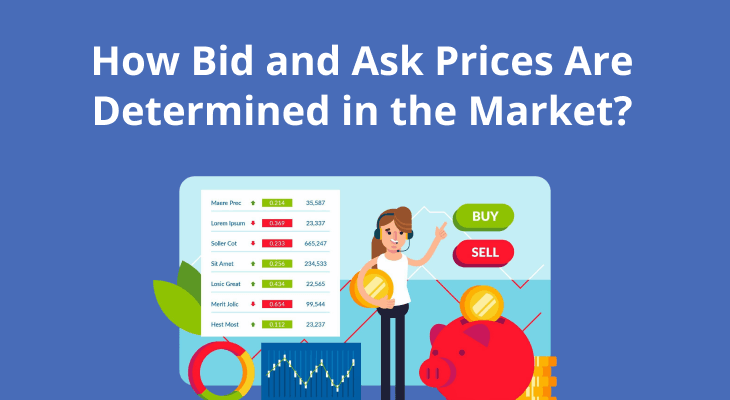
How Bid and Ask Prices Are Determined in the Market?
Every time you buy or sell a share, mutual fund unit, ETF, or derivative in the financial market, two prices quietly influence whether your trade gets executed quickly or not. These prices are known as the bid price and the ask price. While most beginners focus only on the “market price,” experienced investors know that bid and ask prices reveal much more about demand, supply, liquidity, and trading costs.
Understanding how bid and ask prices work helps you make better decisions, especially during volatile markets or when trading less liquid stocks. It also explains why sometimes your order does not get executed instantly, or why the final traded price differs slightly from what you expected.
In this guide, you will learn what bid and ask prices mean, how they are determined, why the difference between them matters, and how investors can use this knowledge effectively while trading through platforms like m.Stock.
What Is Bid and Ask Price?
The bid and ask price system reflects buyers and sellers negotiating through prices in an open marketplace.
Bid Price Meaning
The bid price is the highest price a buyer is willing to pay for a security at a given moment. It represents demand in the market.
For example, if a stock has multiple buyers placing orders, the highest price among those buy orders becomes the current bid price. If you are selling, the bid price is the price at which you can sell immediately.
Ask Price Meaning
The ask price is the lowest price a seller is willing to accept to sell a security. It represents supply in the market.
If several sellers are offering to sell the same stock, the lowest selling price becomes the current ask price. If you want to buy immediately, you typically pay the ask price.
Simple Example
Imagine a stock where:
- Buyers are willing to buy at ₹495, ₹498, and ₹500
- Sellers are willing to sell at ₹502, ₹505, and ₹510
In this case:
- Bid price = ₹500
- Ask price = ₹502
The actual market price will fall somewhere between these two when a trade occurs.
Difference Between Ask and Bid Price
While bid and ask prices may appear like two simple numbers on a trading screen, the difference between them reflects how the market truly functions at a micro level. This difference is not just technical jargon for traders. It directly affects trade execution, transaction costs, liquidity, and price efficiency, especially for retail investors.
At any given moment, the bid price represents what buyers believe the security is worth right now, while the ask price reflects what sellers think it should be worth. Since buyers naturally want to pay less and sellers want to receive more, these two prices rarely match perfectly. The gap between them exists because markets are driven by negotiation, expectations, and urgency on both sides.
For example, in a highly liquid stock with strong interest from both buyers and sellers, competition keeps this difference very small. In contrast, for a less actively traded stock, buyers may hesitate to bid aggressively and sellers may demand a higher price, resulting in a wider gap. This makes the difference between bid and ask prices an important indicator of market liquidity and investor confidence.
From an investor’s perspective, understanding this difference is crucial because:
- When you place a market buy order, you usually pay the ask price, not the last traded price you see.
- When you place a market sell order, your trade executes at the bid price.
- The wider the gap between the two, the higher the implicit cost of entering and exiting a trade.
This also explains why short-term traders pay close attention to bid and ask prices, while long-term investors may be less affected. Over time, the impact of this gap becomes relatively smaller for investors who hold assets for years rather than days or minutes.
Also Read: Types of Stock Market Orders & How They Work | m.Stock
The table below summarises the key differences between bid and ask prices in a clear and structured manner.
Parameter | Bid Price | Ask Price |
|---|---|---|
Meaning | Highest price a buyer is willing to pay | Lowest price a seller is willing to accept |
Market role | Reflects buying demand | Reflects selling supply |
Relevant for | Investors looking to sell | Investors looking to buy |
Execution | Sell orders execute at bid | Buy orders execute at ask |
Behaviour in liquid markets | Moves closer to ask price | Moves closer to bid price |
Behaviour in illiquid markets | Stays lower due to weak demand | Stays higher due to limited sellers |
Impact on investors | Determines immediate selling value | Determines immediate buying cost |
How Bid and Ask Prices Are Determined
Bid and ask prices are determined through a continuous process of order matching on the exchange. This happens electronically within milliseconds.
Role of Order Book
Every exchange maintains an order book, which lists:
- All buy orders at different price levels
- All sell orders at different price levels
The highest buy order becomes the bid price, and the lowest sell order becomes the ask price.
Factors That Influence Bid and Ask Prices
1. Demand and Supply
The most fundamental driver is demand and supply.
- High demand pushes bid prices upward
- High supply pushes ask prices downward
For example, during positive earnings announcements, buyers rush in, increasing bid prices.
2. Market Liquidity
Highly liquid stocks have many buyers and sellers, which keeps bid and ask prices close together.
Illiquid stocks have fewer participants, resulting in wider gaps.
3. News and Events
Corporate announcements, economic data, or geopolitical events can instantly change investor expectations, causing rapid changes in bid and ask prices.
4. Market Orders vs Limit Orders
- Market orders accept existing bid or ask prices
- Limit orders influence where future bid and ask prices settle
Large limit orders can temporarily shape the price levels.
5. Trading Volume
Higher trading volume increases competition among buyers and sellers, leading to tighter pricing.
Role of Bid-Ask Spread in Trading
The bid-ask spread is the difference between the ask price and the bid price. It represents the implicit cost of trading.
Why the Spread Exists
The spread compensates market participants, including liquidity providers, for the risk of holding securities and facilitating trades.
Example of Bid-Ask Spread
If:
- Bid price = ₹1,000
- Ask price = ₹1,004
Then:
- Bid-ask spread = ₹4
If you buy at ₹1,004 and immediately sell at ₹1,000, you incur a ₹4 loss due to the spread.
Why Spread Matters to Investors
- Wider spreads increase trading costs
- Narrow spreads improve execution efficiency
- Long-term investors face less impact than short-term traders
Spread and Market Conditions
- Calm markets usually have narrow spreads
- Volatile markets see wider spreads
- Illiquid stocks always carry wider spreads
Bid and Ask in Different Markets
Bid and ask prices exist across all financial markets, though their behavior varies.
Equity Markets
In stocks, bid and ask prices fluctuate rapidly during market hours, especially in actively traded shares.
Derivatives Markets
In options and futures, bid and ask prices are influenced by factors like volatility, time to expiry, and underlying asset movement.
Bond Markets
Bonds often have wider spreads due to lower liquidity, especially in corporate and high-yield bonds.
Forex Markets
Currency markets typically have extremely tight spreads due to high liquidity and global participation.
Also Read: Understanding Business & Market Cycles
Features of Bid and Ask Prices
As you must have understood by now, bid and ask prices are not static figures displayed for reference only. They are dynamic indicators of market behaviour, reflecting real-time demand, supply, and investor sentiment. Understanding their key features helps investors read the market more intelligently and avoid costly execution mistakes.
Key Features
1. Real-Time and Continuously Changing
Bid and ask prices change constantly throughout the trading session. Every new buy or sell order entered into the market has the potential to alter these prices. When buying interest increases, bid prices move higher. When selling pressure rises, ask prices tend to move lower. This continuous movement makes bid and ask prices a live representation of market activity rather than historical data.
2. Reflect Immediate Market Demand and Supply
The bid price reflects how eager buyers are to acquire a security at that moment, while the ask price shows how willing sellers are to part with it. A rising bid price often signals strengthening demand, whereas a falling ask price may indicate increasing supply or urgency among sellers. Together, these prices provide a clearer picture of short-term market sentiment than the last traded price alone.
3. Vary Based on Liquidity of the Asset
One of the defining features of bid and ask prices is their sensitivity to liquidity. Highly traded stocks, popular ETFs, and large-cap securities typically have very narrow differences between bid and ask prices. In contrast, thinly traded stocks or niche instruments tend to show wider gaps, reflecting limited participation and higher execution risk.
4. Influence Execution Price, Not Just Quoted Price
Many beginners assume trades happen at the price they see quoted on the screen. In reality, trades execute at the best available bid or ask price at that moment. This means bid and ask prices directly influence the actual cost of buying or selling, especially when using market orders. This feature makes them far more important than the last traded price for active investors.
5. Sensitive to News and Market Events
Bid and ask prices respond immediately to news, earnings announcements, economic data, and broader market developments. During periods of uncertainty or volatility, sellers may raise ask prices to compensate for risk, while buyers may lower bids. This behaviour often results in temporarily wider spreads during major market events.
6. Displayed Along With Market Depth
Bid and ask - H2prices are usually accompanied by market depth, which shows the quantity of shares available at different price levels. This feature helps investors understand how strong buying or selling interest is beyond just the best price.
Also Read: Types of Stock Market Orders & How They Work | m.Stock
Things to Keep in Mind When Tracking Bid and Ask Prices
While bid and ask prices are powerful tools, investors should use them thoughtfully rather than in isolation. Keeping the following points in mind can improve trade efficiency and decision-making.
Use Limit Orders for Better Control
Relying only on market orders can lead to unfavourable execution, especially in volatile or low-liquidity stocks. Limit orders allow you to specify the price at which you are willing to buy or sell, helping you manage the impact of the bid-ask difference.
Also Read: Why Use Limit Orders? Key Benefits & How They Work | m.Stock
Avoid Trading Illiquid Securities Without Checking Spreads
A wide gap between bid and ask prices often signals poor liquidity. Entering and exiting such positions can be costly and time-consuming. Always check spreads before trading smaller stocks, sectoral ETFs, or newly listed securities.
Do Not Confuse Last Traded Price With Execution Price
The last traded price is a historical reference, not a guarantee of execution. Your buy or sell order will interact with current bid and ask prices, which may differ significantly during fast-moving markets.
Watch Spreads During Volatile Market Phases
Bid-ask differences tend to widen during periods of high volatility, such as market openings, major announcements, or global events. Exercising patience during such phases can help avoid unnecessary trading costs.
Consider Trading Costs Beyond Brokerage
Even with zero or low brokerage platforms, the bid-ask spread remains a hidden cost. Factoring this into your strategy is essential, particularly for frequent traders and short-term investors.
Conclusion
Bid and ask prices form the foundation of price discovery in financial markets. They represent the constant negotiation between buyers and sellers and provide valuable insights into liquidity, demand, and market sentiment.
For investors, understanding bid and ask prices helps reduce trading costs, improve execution quality, and make more informed decisions. Whether you are trading stocks, ETFs, or derivatives, paying attention to these prices can significantly enhance your investing experience.
With platforms like m.Stock, investors can view real-time bid and ask prices, market depth, and spreads across instruments on a single platform. This transparency empowers you to trade smarter, place better orders, and navigate markets with greater confidence.
Also Read: Behavioral Finance and Market Psychology
More Related Articles
Understanding the meaning and benefits of the systematic trading system
 October 23, 2026 | 0 mins read
A systematic trader is an individual who uses a predesigned and backtested trading strategy to buy and sell financial instruments such as stocks, futures, currencies, or commodities. Instead of relying on gut feelings or emotions, they use a systematic trading system built on predefined rules, quantitative analysis, and technology to make trading decisions.

Muhurat Trading 2026: Will stock market be open on 8th November Sunday?
October 23, 2026 | 0 mins read
Muhurat Trading 2026 will be held on Sunday, 8 November 2026, on Diwali Laxmi Puja. NSE and BSE will open their equity markets for a special afternoon session, with continuous trading beginning at 2:20 pm IST. Trading in securities not covered by the Closing Auction Session (CAS) will continue until 3:30 pm, while continuous trading in CAS-eligible securities will end at 3:15 pm. For investors, Muhurat Trading combines a long-standing Diwali tradition with an opportunity to participate in the stock market. Here is a guide to the date, timings and session structure for 2026.

How stock market psychology influences investment decision-making
October 23, 2026 | 0 mins read
Stock market psychology refers to the collective emotions, sentiment, and behavioural biases that influence the buying and selling decisions of investors. Rather than relying on fundamental and technical analysis, investors may sometimes react based on emotions, which can influence market movements.
FAQ
Bid and ask prices are determined through the exchange’s order book. The highest price buyers are willing to pay becomes the bid price, while the lowest price sellers are willing to accept becomes the ask price. These prices change continuously based on orders placed.