

December 24, 2024 | 7 min read
What is a Ponzi Scheme and How Does it Work?
Investors invest their capital in good faith, believing that their investment is likely to yield positive returns. Of course, investors are savvy and may be aware of the financial risks of some kinds of investments, like stocks, for instance, but by and large, they hope for the best. While most investors expect to invest in legitimate businesses or instruments, there are those, on the other side, who fool investors into investing their capital in businesses that may not even exist.
Investment in such schemes or businesses proves to be fraudulent and those who entice innocent investors into such schemes do so with the intent to steal their capital. One of the most common scams included in such schemes is the Ponzi scheme, named after an Italian financier, Charles Ponzi, who may have profited until he was caught. For investors, it is as important to know about legitimate and above-board investments as it is about those that are investment scams. This article sheds light on the commonest of fraudulent investment schemes - the Ponzi scheme.
What is the Ponzi scheme meaning?
The Ponzi scheme, named after Charles Ponzi, is one of the most common financial frauds that occur. In the 1920s, when investment was relatively new as a means of financially growing wealth, Ponzi managed to swindle investors with a false investment involving postage stamps. He was based in North America and in the postage stamp investment scheme, Ponzi used funds sourced from new investors to pay dividends to existing scheme investors. Essentially, this meant simply taking money from one investor and giving it to another. There was no actual investment made and no real returns.
In Ponzi fraud cases, operators of schemes lure investors by guaranteeing them investment schemes that will yield high returns. Investors who don’t know better fall for such tactics, as they are led to believe they will make optimal returns with very little risk involved. In reality, capital is used to pay off old investors and to distribute a portion to the organisers of the scheme.
How do Ponzi schemes work?
The person who starts a Ponzi scheme aims to attract investors by tempting them with investments that will offer them high returns with hardly any risk. The Ponzi operator will do a good job of convincing potential investors that gains from such a scheme will be much higher than other investment schemes offer. Initially, the Ponzi scheme promoter makes use of the originally invested money to pay returns, and this makes investors inclined to believe that the investment scheme is effectively working for their profit. They see that the promises made to them are being fulfilled, but this results in a false sense of safety. Meanwhile, as investors are kept happy, they tend not to question the investment or its strategy, which is a Ponzi scam. In case investors happen to question the promoter of the Ponzi scheme, they are consoled into thinking they are making good returns, and this convinces them to curb their doubts.
As any Ponzi scheme has the appearance of profitability, at least in the initial stages, investors become complacent and believe that it is actually working in their favour. Consequently, investors easily convince other investors, like their friends and family, to invest in the same scheme. The effort is easy since new investors have examples of people making money right before their eyes. Typically, Ponzi schemes make community groups like places of worship their targets. This is done to attract a large number of investors at a single time. Such schemes have drawn in hundreds of investors, but the result is always Ponzi fraud.
A Ponzi scheme promoter may not openly request investors to recruit new investors into the scheme but rather rely on an investor’s excitement to promote the scheme to other investors.
Real-Life Example of a Ponzi Scam
Charles Ponzi may have been the founder of the Ponzi scheme, but he had many followers, and such scams have been rampant to the present day. If you want to know what Ponzi means, you only have to think of Bernie Madoff and one of the biggest Ponzi frauds (2008) the world has seen. Madhoff falsified trading reports of blue-chip stocks to inform his clients that they were earning huge returns on investments that were non-existent.
Closer to home, in India, a man from Gandhinagar in Gujarat was indicted in a Ponzi fraud worth $400,000 that took place in Alabama. Persuading investors to invest in a scheme and assuring them their capital was secure, the 23-year-old used the funds collected for gambling sprees, settling other investors, and personal expenses. What’s more, the rogue promoter even made demands for investors to cough up extra charges for the maintenance of investments! The Ponzi scheme was operated in Alabama, USA. The whole operation was unregistered and entirely illegal.
Different Warning Signs of a Ponzi Scheme
Whether a Ponzi scheme is operated in India or anywhere else in the world, its features are essentially the same. Consequently, its warning signals are somewhat similar. Here are some of the red flags of a Ponzi fraud to look out for:
- Minimal Risk and High Returns
In the world of investment, all investments generate some degree of risk, and the higher the potential return, the greater the risk an investor probably takes. However, with a Ponzi scheme, high investment returns are promised with zero or minimal risk. This should be the defining red flag of any investment scheme.
- Consistent Positive Gains
Most investments are likely to show volatility over a period. However, a Ponzi scheme will guarantee you returns that are high and are consistent over time. If you notice this, you may see “danger”.
- Sellers that are Not Licensed
Financial professionals and investment experts in India are required to obtain official licences to invest any investor’s capital in any investment scheme. Proper investment professionals must register with the Securities and Exchange Board of India (SEBI). Once you invest with a registered broker or seller, you are assured that you are not participating in a Ponzi scheme.
As professionals in the financial and investment domain must be qualified with appropriate regulatory licences, so must the investment products they promote.
- Difficult Paperwork
When any scheme is wrought with fraudulent activity, you may be certain that the paperwork involved is likely to show some discrepancies. In case you come across some dubious numbers in your account, you may want to raise an alarm.
- Lack of Transparency
As a Ponzi scheme translates to a kind of financial fraud, you may find signals that you should avoid investments that are not transparent in their working. In case your attempts at getting details of the investment and the promoters fail, it’s potentially better to avoid such investments. Furthermore, if the investment plan/strategy appears complicated, it may be best to give it a miss.
- Issues in Cashing Out
In the event you find it challenging to cash out of your investment or receive dividends from your investment, you should be suspicious of the same. Promoters of a Ponzi scheme may attempt to delay payouts as they have no intention of making payments. Furthermore, promoters may try to stall investors by offering even higher investment returns so that investors remain invested in the scheme.
What should you do if you have been scammed by a Ponzi scheme?
You can take the following measures if you think you have been the victim of a Ponzi fraud:
- Immediately stop all payments.
- Halt any communication with the promoters of the scheme.
- Maintain your records like statements, emails, or any other interactions as proof.
- Report the Ponzi scheme to the appropriate authorities.
- Be cautious regarding identity theft.
- Be careful of fraud recovery agents who may be part of the scam.
Conclusion
Today, there is an array of investment opportunities open to investors of all types. Ponzi schemes may offer good investment opportunities, but they are a disguise for fraudulent activity and people have succumbed and lost their hard-earned money. Consequently, you must be aware about how such schemes work and operate so you can make informed decisions about legitimate investments. Some investments may appear “too good to be true”, but they may land you in a soup.
More Related Articles
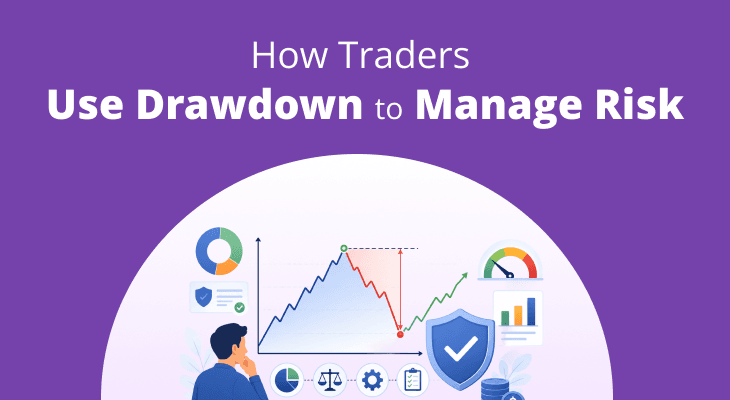
How Traders Use Maximum Drawdown to Manage Portfolio Risk?
 August 19, 2026 | 0 mins read
When evaluating an investment or trading strategy, returns usually receive the most attention. However, returns alone do not tell investors how much risk was taken to achieve them. Two portfolios may deliver the same annual return, but one may have experienced far steeper losses during market downturns. This is where max drawdown becomes useful. It measures the largest decline in the value of a portfolio, trading account, or investment from its highest point to its lowest point before a new peak is reached. Instead of focusing only on profits, it shows the worst historical loss an investor would have experienced by staying invested.
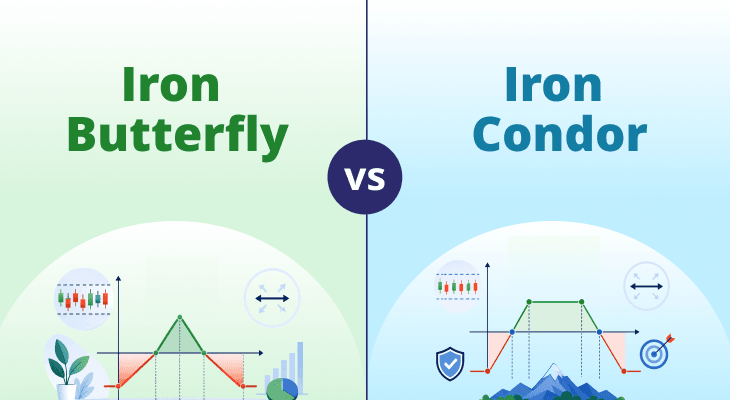
Iron Butterfly vs Iron Condor: Which Strategy Is Better?
August 19, 2026 | 0 mins read
Options trading is not always about predicting the next big market move. At times, the market trades within a narrow range, creating opportunities for strategies that benefit from stability rather than direction. Two of the most widely used neutral strategies are the iron butterfly strategy and the iron condor options strategy. While both strategies use four option contracts and defined risk, they do not behave in the same way. Differences in strike selection, profit range, and risk-reward dynamics can significantly affect trading outcomes. Understanding the difference between an iron condor and an iron butterfly can help you select a strategy that matches your market expectations and trading objectives.

Iron Condor Strategy
August 19, 2026 | 0 mins read
Markets do not always trend strongly. At times, prices remain within a narrow range, making directional trades more challenging. The iron condor strategy is designed for these market conditions. It doesn’t rely on a bullish or bearish outlook. It aims to generate returns when the underlying asset remains within a predefined price range. With clearly defined risk and reward, it has become a widely used approach among traders looking to capitalise on range-bound markets while maintaining controlled exposure.
FAQ
A regular Ponzi scheme is an investment scam where an operator of the scheme pays returns to investors from the capital that other new investors make in the scheme. A person operating a Ponzi scheme will use the capital of one set of investors to pay off another. On the other hand, a Pyramid scheme works based on chain referrals where new investors are inducted with assurances of payment if they introduce other investors to the scheme.