
January 13, 2026 | 8 min read
What is Yield to Maturity (YTM)?
When you step into the world of bonds and fixed-income investing, it quickly becomes clear that returns are not as simple and smooth as they appear. You may see a bond promising a certain interest rate, but the actual return you earn depends on much more than the coupon printed on it. This is where Yield to Maturity (YTM) becomes an essential concept to understand. YTM brings together the bond’s current market price, the interest payments you’ll receive, and the amount you get back at maturity to show your total expected return if you hold the bond until the end of its term.
For investors, this measure is incredibly useful because it reflects the bond’s complete earning potential, not just the periodic income. By learning how YTM works, you gain a clearer picture of whether a bond is attractively priced, how it compares with other fixed-income options, and whether it aligns with your return expectations and risk tolerance.
What is Yield to Maturity (YTM)?
Yield to Maturity (YTM) is a comprehensive measure that tells you the total return you can expect to earn from a bond if you hold it until it matures. Unlike the coupon rate, which only reflects the fixed interest the bond pays each year, YTM factors in every component that influences your real earnings. It considers the bond’s current market price, the interest payments you will receive over its life, and the amount you will get back at maturity. YTM is expressed as an annualised percentage, making it easier to compare different bonds even when their interest rates, prices, and maturities vary.
For example, imagine a bond with a face value of ₹1,000 and an annual coupon of 8%. If you buy it for ₹950 because market prices have fallen, your total return will be higher than the 8% coupon suggests. YTM captures this higher effective return by including both the interest income and the price gain you earn when the bond matures.
This measure is especially valuable because it presents a realistic picture of expected returns. It helps investors evaluate whether a bond is attractively priced, assess the impact of market interest rates, and make informed decisions within a fixed-income portfolio. In essence, YTM bridges the gap between a bond’s market behaviour and its true earning potential.
Yield to Maturity Formula
The Yield to Maturity formula helps you calculate the total return a bond is expected to generate if you hold it until its maturity date. It incorporates the bond’s current price, its coupon payments, and the amount you receive at redemption. Unlike simple interest calculations, the YTM formula accounts for both the income earned over time and any capital gain or loss arising from buying the bond at a price different from its face value.
The general formula is often written as:
P=t=1∑n(1+YTM)tC+(1+YTM)nF
Where:
- P = Current price of the bond
- C = Annual coupon payment
- F = Face value (redemption value)
- n = Number of years to maturity
- YTM = Yield to Maturity
This formula essentially states that the bond’s current price must equal the total present value of all future coupon payments plus the present value of the final redemption amount. Since YTM appears in every discounting step, solving the equation manually is difficult. Most investors, therefore, rely on financial calculators, spreadsheet functions, or iterative methods. These methods compute YTM accurately and save time, especially when dealing with bonds that have long maturities or irregular cash flows.
How to Calculate Yield to Maturity?
Calculating YTM on paper can be challenging because it involves discounting every future cash flow to its present value. However, understanding how the calculation works is important to find the right value. When you calculate Yield to Maturity, you are essentially finding the rate at which the present value of all future payments equals the bond’s current market price.
To determine YTM, you need to consider several components:
Current market price of the bond
This is the amount you pay to purchase the bond today. If the bond trades below its face value, your YTM tends to be higher; if it trades above, your YTM is usually lower. The price you pay directly impacts the return you ultimately earn.Coupon payments
These are the periodic interest payments the bond makes, usually annually or semi-annually. Higher coupon rates contribute more to your total return and therefore influence the YTM calculation favourably.Face value (Redemption value)
The face value is the amount the issuer will repay you at maturity. Your YTM is affected by whether you bought the bond at a discount (below face value) or at a premium (above face value).Time to maturity
This is the number of years or months remaining until the bond matures. The longer the maturity, the more spread-out the coupon payments are, which affects their present value and ultimately the YTM.Capital gain or loss at maturity
If you buy a bond at a price lower than its face value, you gain the difference at maturity. Conversely, if you bought it above face value, you incur a capital loss. YTM includes this gain or loss in its calculation.
Let's understand this with an example.
Consider a bond with the following characteristics:
- Face value: ₹1,000
- Annual coupon: ₹80
- Maturity period: 5 years
- Current market price: ₹950
To find the Yield to Maturity, you must determine the interest rate at which the present value of all future cash flows equals ₹950. These cash flows include ₹80 per year for 5 years, plus a return of ₹1,000 at maturity.
When you apply the calculation, the approximate YTM comes out to 9.3%. This indicates that if you purchase the bond for ₹950 and hold it for the full term, your effective annual return, accounting for both interest income and the price difference at redemption, would be around 9.3%.
Why is YTM Usually Approximated?
Since YTM relies on multiple discounted cash flows, and the interest rate appears repeatedly across the equation, solving it manually through algebra is not simple. This is why most investors rely on:
- Dedicated online YTM calculators
- Excel’s YIELD formula
- Professional bond valuation software
These tools provide quick and accurate results without the need for trial-and-error calculations.
Limitations of Yield to Maturity
Although Yield to Maturity is a valuable measure, it has several limitations that you should consider before relying on it for final investment decisions.
Assumes coupon reinvestment at the same rate
YTM is calculated on the assumption that every coupon payment can be reinvested at the same yield. In real markets, interest rates fluctuate, so reinvesting coupons at the exact YTM is often not possible.Does not account for taxes
The return shown by Yield to Maturity does not include the impact of taxation. If coupon income is taxable for you, the actual return you receive may be lower than the stated YTM.Market conditions influence real returns
YTM assumes you will hold the bond until maturity. If you decide to sell it earlier, your realised return could end up higher or lower depending on prevailing interest rates and market prices.Assumes perfect repayment by the issuer
YTM treats the bond issuer as completely reliable and assumes that all payments will be made on time. For lower-rated or risky bonds, this assumption may create a misleading sense of security.
Does not adjust for callable or puttable features
Some bonds allow you to redeem the bond early. These features change the bond’s behaviour and risk profile, and Yield to Maturity alone is not sufficient to evaluate such instruments accurately.
Why is Yield to Maturity (YTM) Useful?
Here are the points that make this tool significant:
Helps you compare different bonds clearly
Bonds vary in coupon rates, maturity periods, and market prices. Yield to Maturity lets you compare them on the same scale, so you can identify which bond offers a better return for the level of investment.Supports smarter interest rate decisions
When interest rates are expected to rise, shorter-duration bonds with certain YTMs may be more suitable. If rates are expected to fall, higher YTM long-term bonds may become more appealing. YTM helps you position your fixed income holdings more effectively.Shows the bond’s actual earning potential
Yield to Maturity incorporates the bond’s current market price, giving you a more accurate picture of the return you can expect today, not just the interest promised by the coupon. This results in a more realistic and meaningful evaluation.Helps you build a stronger fixed-income portfolio
By comparing YTMs across different bonds, you can choose options that match your financial goals, investment horizon, and risk appetite. This helps you create a stable and predictable income strategy.Explains how discounts and premiums affect returns
Buying a bond at a discount increases the YTM. Buying it at a premium lowers the YTM. This helps you understand how price movements directly influence your overall return.
Conclusion
Yield to Maturity is one of the most important concepts in fixed-income investing because it captures both the income you earn from coupons and the gain or loss from buying the bond at a specific market price. It gives you a realistic view of the return you can expect if you hold the bond until its final maturity date.
While it has limitations, such as assumptions about reinvestment and taxation, YTM remains a reliable benchmark for comparing bonds or evaluating whether the current market price is fair. By learning how to interpret and calculate Yield to Maturity, you strengthen your ability to assess risk, choose suitable fixed-income products, and build a more resilient investment strategy.
More Related Articles
How Traders Use Maximum Drawdown to Manage Portfolio Risk?
 August 19, 2026 | 0 mins read
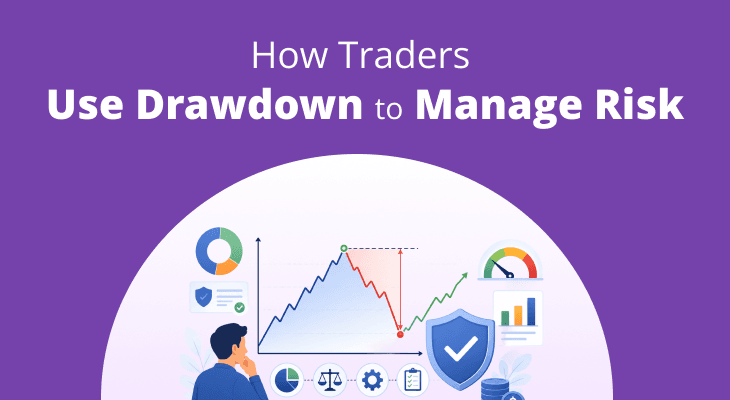
When evaluating an investment or trading strategy, returns usually receive the most attention. However, returns alone do not tell investors how much risk was taken to achieve them. Two portfolios may deliver the same annual return, but one may have experienced far steeper losses during market downturns. This is where max drawdown becomes useful. It measures the largest decline in the value of a portfolio, trading account, or investment from its highest point to its lowest point before a new peak is reached. Instead of focusing only on profits, it shows the worst historical loss an investor would have experienced by staying invested.
Iron Butterfly vs Iron Condor: Which Strategy Is Better?
August 19, 2026 | 0 mins read
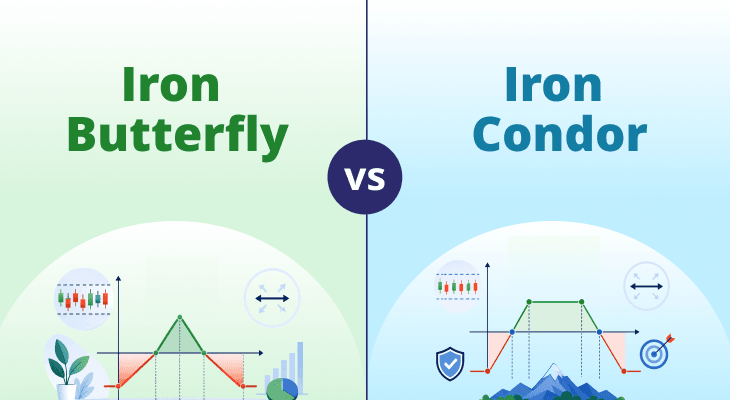
Options trading is not always about predicting the next big market move. At times, the market trades within a narrow range, creating opportunities for strategies that benefit from stability rather than direction. Two of the most widely used neutral strategies are the iron butterfly strategy and the iron condor options strategy. While both strategies use four option contracts and defined risk, they do not behave in the same way. Differences in strike selection, profit range, and risk-reward dynamics can significantly affect trading outcomes. Understanding the difference between an iron condor and an iron butterfly can help you select a strategy that matches your market expectations and trading objectives.
Iron Condor Strategy
August 19, 2026 | 0 mins read
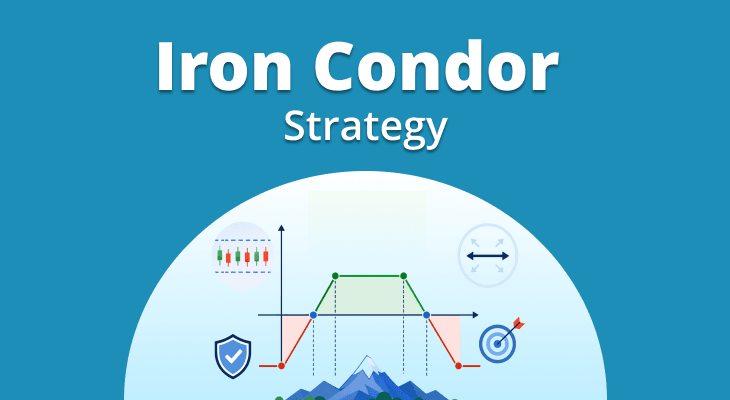
Markets do not always trend strongly. At times, prices remain within a narrow range, making directional trades more challenging. The iron condor strategy is designed for these market conditions. It doesn’t rely on a bullish or bearish outlook. It aims to generate returns when the underlying asset remains within a predefined price range. With clearly defined risk and reward, it has become a widely used approach among traders looking to capitalise on range-bound markets while maintaining controlled exposure.
FAQ
Ask Yield to Maturity is the return you would earn if you bought a bond at its ask price, the price sellers are willing to accept. It reflects the yield based on this higher purchase cost, helping buyers assess true expected returns.