

June 10, 2026 | 5 min read
When Smart Beta Works Better Than the Nifty
Nifty 50 is too concentrated in a few heavyweights, and factor-based portfolios reduce that concentration.
You want a rule-based way to seek ‘better than Nifty’ outcomes (higher returns, lower volatility, or better risk-adjusted returns) without betting on a star fund manager. Smart beta does not beat the Nifty all the time. It can underperform for long stretches when its chosen factor is out of favour in the current market environment in which an investor operates.
What are Smart Beta funds?
Smart beta funds are rule-based strategies that sit between pure passive and fully active investing. Instead of simply tracking a market-cap weighted index like the Nifty 50, they follow a transparent set of rules to tilt towards certain attributes or ‘factors’ such as value, quality, momentum, or low volatility.
Key characteristics:
Rules-driven: Clear, published methodology (no human stock-picking discretion).
Factor-focused: Stocks are selected and weighted based on factors, not just size.
Index-based: Most smart beta funds/ETFs in India track factor indices created by NSE or other index providers.
Smart beta is ‘passive with a twist’: you still track an index, but that index itself is smarter than plain Nifty 50.
How the Nifty 50 index works
The Nifty 50 is a market-capitalisation-weighted index of 50 of the large set Indian companies listed on the NSE. Each stock’s weight in the index is broadly linked to its free-float market capitalisation, so larger companies automatically get higher weights.
Implications of this structure:
Concentration: A handful of large financials, tech, and consumer names can dominate index performance.
Momentum to winners: As certain stocks grow larger, they get a higher weight, so their gains or losses have a bigger impact on the index level.
No tilt to fundamentals: Nifty doesn’t care about valuation, quality, or volatility, it only cares about size.
This is why, in some cycles, a more ‘balanced or factor-tilted approach can behave very differently from the Nifty.
Popular smart beta factors used in India
Some of the most common factors you see in Indian smart beta indices and ETFs are:
Value: Focuses on stocks that look ‘cheap’ on metrics like P/E, P/B, dividend yield, etc.
Quality: Tilts towards companies with strong balance sheets, stable earnings, and better return ratios.
Low Volatility: Gives higher weight to stocks with historically lower price swings.
Momentum: Selects stocks that have shown strong recent price performance.
Equal Weight: Gives the same weight to each stock, reducing concentration in index heavyweights.
Many smart beta indices combine multiple factors, for example, value + quality, or low volatility + quality, to smoothen the impact of any single factor going out of favour.
Types of smart beta ETFs
1. Single-factor ETFs
• Example: Nifty 50 Value 20-based ETF, Low Volatility ETF, or Quality ETF.
• It purely plays exposure to one factor like value or low volatility.
2. Multi-factor ETFs
• Combine two or more factors such as quality, value, and low volatility in a single index.
• Aim to balance return potential with more stable behaviour.
3. Equal-weight ETFs
• Give each stock equal weight instead of size-based weight.
• Reduce overdependence on the top few names in the Nifty.
All these are still rule-based and transparent, but their performance pattern can look quite different from the Nifty 50 over time.
Smart Beta vs Nifty: A Strategic Comparison
Dimension | Nifty 50 (Plain Index) | Smart Beta ETFs/Funds |
|---|---|---|
Construction | Market-capitalisation weighted | Factor-based or equal-weight, rules-driven |
Main driver | Size of companies | Chosen factor(s): value, quality, low-volume, momentum, etc. |
Concentration risk | Higher – top few stocks have heavy weights | Often lower – diversified or capped weights |
Objective | Mirror the market | Improve return, reduce volatility, or enhance risk-adjusted returns |
Tracking vs benchmark | Very tight tracking | Tracks factor index and can diverge meaningfully from Nifty |
When it shines | Broad bull runs driven by large caps | When the chosen factor is in favour for a sustained period |
In practice, smart beta can deliver better risk-adjusted performance or return patterns than Nifty, but only if you’re patient through phases when the factor underperforms.
Risks and limitations of smart beta investing
Smart beta is not a guaranteed upgrade over plain index investing. Key risks include:
Factor cycles: Each factor goes through good and bad periods. A value strategy can underperform growth-focused Nifty phases, and low-volatility strategies can lag in sharp bull markets.
Tracking error vs Nifty: As they track factor indices, smart beta funds can behave very differently from the Nifty, which may feel uncomfortable if you constantly compare them to the headline index.
Concentration within factor: Some factor indices can become concentrated in a few sectors or styles (for example, value indices leaning heavily towards certain cyclical sectors).
Behavioural risk: Investors often enter after a factor has done well and exit after a phase of underperformance, which can destroy the potential advantage.
For smart beta to work in your favour, you need both a suitable product and the discipline to stay invested through full market cycles.
Smart beta strategies can work better than the Nifty when you:
Clearly understand which factor you are buying and why.
Match that factor to your goal (higher return potential, lower volatility, or better diversification).
Give the strategy enough time to play out through multiple market phases instead of judging it on 6–12-month performance.
For many investors, plain Nifty ETFs remain a solid core. Smart beta ETFs can be used as a satellite allocation to fine-tune your portfolio’s risk–return profile, rather than completely replace the Nifty.
More Related Articles

How to Pledge Mutual Funds for Margin?
 August 11, 2026 | 0 mins read
Many investors today hold sizable investments in mutual funds while also actively participating in stock market trading, derivatives, or margin-based strategies. In such situations, investors often face a practical challenge: they may want additional trading margin without liquidating their long-term investments.
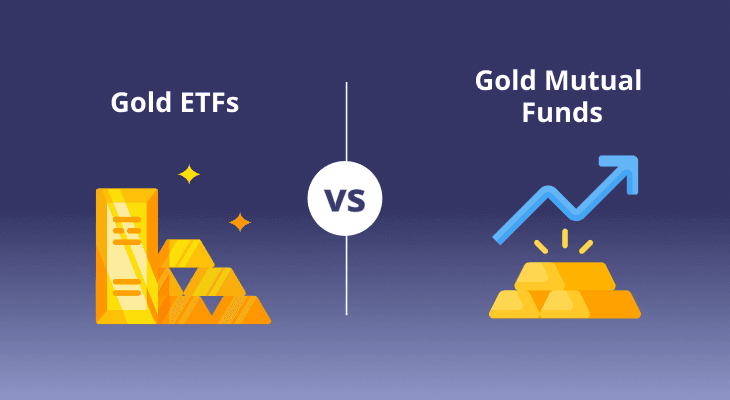
Is Gold ETF better than Gold Mutual Fund?
August 7, 2026 | 0 mins read
Gold has once again become a major talking point among Indian investors. Rising geopolitical tensions, global inflation concerns, central bank buying, and economic uncertainty have pushed gold prices sharply higher in recent years. In 2025 and early 2026, international gold prices repeatedly touched record highs, while domestic gold rates in India also surged due to both global prices and rupee movement.

How to Build a Retirement Plan Using SWP vs Annuity
August 6, 2026 | 0 mins read
Retirement is one of those milestones that seem far away until suddenly they are not. After two decades of advising individuals on their financial futures, one truth keeps surfacing: a retirement plan built on hope rather than structure is a plan waiting to fail.
FAQ
Smart beta ETFs in India are generally structured like other index funds and ETFs, they follow published indices and hold diversified baskets of stocks. The main ‘risk’ is not about safety of the structure, but about factor behaviour. Their returns can differ significantly from the Nifty, both positively and negatively.