

February 20, 2026 | 6 min read
Advantages & Disadvantages of Pledge Shares
Pledging shares is a common practice in the stock market that allows shareholders, especially promoters, to leverage their holdings as collateral for securing loans. While it can offer quick liquidity and financial flexibility, pledging shares also comes with risks. This article explains the concept of share pledging, its benefits, disadvantages, and factors to consider before pledging or investing in companies with high pledged shares.
What is the Meaning of Pledging Shares?
Share pledging is the process of using shares as collateral to secure loans or meet financial requirements. Both retail investors and promoters can pledge shares, but the purpose and implications differ for each.
Retail investors can pledge shares to borrow funds for personal needs, trading, or investments. This enables them to leverage their holdings without liquidating their portfolio. Promoters often pledge shares as collateral to raise large-scale funds for their businesses. This is a common practice among companies for expansion, working capital, or debt repayment.
How Does Share Pledging Work?
The process of pledging shares involves several steps:
Valuation of Shares: Shares are assessed based on their current market price and liquidity.
Haircut Application: A percentage (called a "haircut") is applied to the value of pledged shares, reducing their loanable value. For example, if the haircut is 40% and the shares are worth ₹ 10 lakh, the loan value would be ₹ 6 lakh.
Agreement and Loan Disbursement: A formal agreement is signed between the borrower and lender, and the loan is disbursed based on the assessed value of the pledged shares.
Monitoring of Shares: The lender continuously monitors the share price to ensure that the loan remains adequately secured.
Release or Liquidation: Once the loan is repaid, the shares are released. If the borrower defaults, the lender can sell the shares to recover the loan amount.
How it works for Retail Investors:
Loan Against Securities: Retail investors approach their broker with which they maintain their portfolio of shares.
Loan Disbursement: Based on the value of pledged shares, lenders offer a loan at a set interest rate.
Repayment and Release: Once the loan is repaid, the shares are released back to the investor.
Example:
A retail investor holds shares worth ₹ 5 lakh. If they pledge these shares with a 40% haircut, the loanable value is ₹ 3 lakh. The investor can use this loan for trading without selling their portfolio.
Why Do Promoters Pledge Shares?
Share pledging by retail investors is primarily to gain leverage in the form of a loan to buy more shares that they would not have been able to with their own capital. However, promoters may pledge shares for several reasons:
Business Expansion: To fund projects, acquire assets, or invest in growth opportunities.
Working Capital: To meet short-term financial obligations or maintain smooth operations.
Debt Repayment: To restructure or clear existing liabilities.
Personal Needs: Occasionally, promoters may pledge shares for personal financial requirements.
What is a Haircut in Share Pledging?
You may have heard the term often, and it's already been mentioned in this article as well - ‘haircut’. But what is a haircut? A haircut refers to the reduction in the value of pledged shares to account for market volatility and liquidity risks.
Example Calculation:
Market Value of Shares: ₹ 10 lakh
Haircut Percentage: 30%
Loanable Value = ₹ 10,00,000 × (1 - 0.30) = ₹ 7,00,000
The haircut ensures that the lender has a buffer against price fluctuations in the pledged shares.
How it works for Promoters:
Collateral for Corporate Loans: Promoters pledge a portion of their shares to lenders.
Loan Monitoring: Lenders continuously monitor the share price and the borrower’s ability to repay.
Default Consequences: If the promoter fails to repay, lenders can sell the pledged shares in the open market.
Example:
A promoter owns 1 crore shares of a company trading at ₹ 50 per share. They pledge 20 lakh shares with a 30% haircut, securing a loan of ₹ 7 crore. The funds may be used for a new project or to settle corporate debts.
Advantages of Pledging Shares
Pledging shares can be a strategic financial tool for both retail investors and promoters, offering distinct benefits:
For Retail Investors
Liquidity Without Selling: Allows you to access funds without liquidating your portfolio, enabling you to retain ownership and potential capital gains.
Investment Opportunities: Provides immediate funds for new investments or to average down existing positions in the stock market.
Flexibility: Loans against shares often have flexible repayment terms compared to personal loans.
Leverage Potential: Amplifies your investment capacity, allowing for larger trades or business ventures.
For Promoters
Non-Dilutive Financing: Promoters can raise funds without issuing new shares, maintaining their ownership stake and voting rights.
Supports Business Growth: The funds raised can be used for business expansion, working capital, or debt restructuring.
Efficient Fundraising: Quickly secures large-scale financing by leveraging existing assets without long procedural delays.
Customised Loan Structures: Promoters often receive tailored financing options based on pledged shares' value and company performance.
Disadvantages of Pledging Shares
While pledging can be beneficial, it carries significant risks for both retail investors and promoters:
For Retail Investors
Margin Calls: Falling share prices can trigger margin calls, requiring additional collateral or immediate repayment.
Risk of Asset Loss: Failure to repay the loan can lead to the broker selling off the pledged shares, leading to a permanent loss of assets.
Interest Costs: The loan comes with interest payments that can erode returns if the borrowed funds are not used effectively.
Market Volatility: Dependence on share prices makes this a risky proposition in volatile markets.
For Promoters
Negative Market Sentiment: High levels of pledged shares by promoters can raise concerns among investors about the company’s financial health.
Control Risk: If pledged shares are sold due to non-repayment, promoters risk losing control over the company.
Pressure During Volatility: Share price drops can lead to immediate margin calls, causing financial strain.
Reputational Impact: Frequent or excessive pledging may affect the company’s image, reducing investor confidence and stock valuation.
Both retail investors and promoters should weigh these advantages and disadvantages carefully before pledging shares, ensuring they understand the potential implications in their financial and market contexts.
Conclusion
Pledging shares is a double-edged sword. While it offers quick liquidity and financial flexibility, it also carries significant risks, including potential loss of ownership and market volatility. For investors, analysing the level of pledged shares and understanding its implications is critical before making investment decisions.
More Related Articles
ETF trading rules from 7 September: What changes for retail investors?
 September 7, 2026 | 0 mins read
If there was no trade during the final 30 minutes on the previous day, the exchange will use that day’s last traded price. If there was no trade at all on the previous day, the latest available closing NAV will be used. The base price will also be adjusted for corporate actions, if applicable. From April 1, 2027, SEBI expects stock exchanges and mutual fund AMCs to use the previous day’s closing NAV as the base price after resolving operational issues.

How MSCI rebalancing tested India's Closing Auction System on August 31
September 2, 2026 | 0 mins read
India’s new Closing Auction Session (CAS) processed a record ₹39,718 crore turnover, on 31 August 2026 as MSCI India Index latest index rebalancing took effect at the market close. The event showed that CAS could handle an exceptional concentration of institutional flow. However, there were some sharp, and sometimes counterintuitive, stock moves. This shows that the quality of closing-price discovery is still being tested.
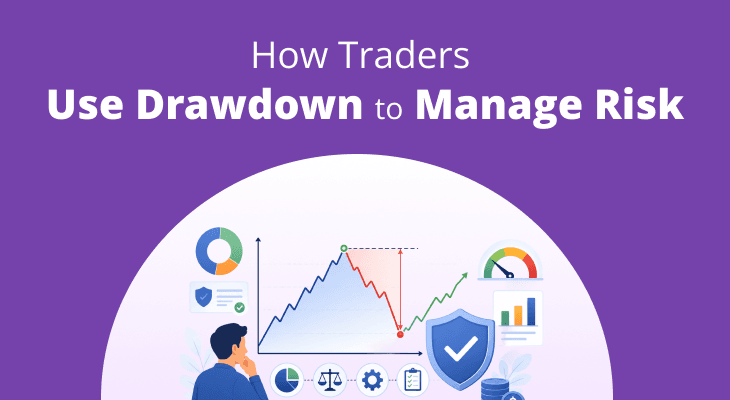
How Traders Use Maximum Drawdown to Manage Portfolio Risk?
August 19, 2026 | 0 mins read
When evaluating an investment or trading strategy, returns usually receive the most attention. However, returns alone do not tell investors how much risk was taken to achieve them. Two portfolios may deliver the same annual return, but one may have experienced far steeper losses during market downturns. This is where max drawdown becomes useful. It measures the largest decline in the value of a portfolio, trading account, or investment from its highest point to its lowest point before a new peak is reached. Instead of focusing only on profits, it shows the worst historical loss an investor would have experienced by staying invested.
FAQ
If the value of pledged shares falls below the lender's acceptable level, the lender may issue a margin call. The borrower must either put up more collateral or pay back a part of the loan. If they fail to do so, the lender can sell the pledged shares to recover the loan.