
July 30, 2026 | 6 min read
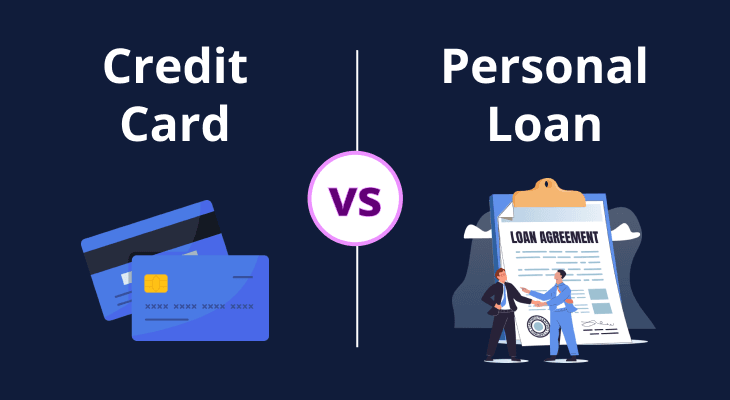
Credit Card Loan vs Personal Loan: Which Option Is Better for Borrowers?
Two borrowers can take the same ₹1 lakh loan and end up repaying very different amounts.
The difference lies in the repayment structure, whether the debt is revolving or fixed, flexible or disciplined.
Individuals typically borrow when liquidity is insufficient, when an expense needs to be spread over time, or when immediate access to funds is required.
A credit loan can be structured in two ways. A personal loan provides a fixed amount with a defined repayment schedule, while a credit card loan allows access to funds within an existing credit limit.
The structure you choose directly influences both the cost of borrowing and the level of control you retain over repayment.
What is a credit card loan?
A credit card loan is a pre-approved facility linked to your card’s available credit. It allows conversion of spends or withdrawal of funds, with repayment through EMIs or revolving balances.
Access is immediate and requires minimal documentation. The cost, however, is significantly higher. Interest rates on unpaid balances can range from 30%-48% annually.
This makes it a useful tool for immediate liquidity, but one that needs careful handling if repayment is not immediate.
What is a personal loan?
A personal loan is an unsecured installment loan where funds are disbursed as a lump sum and repaid through fixed EMIs over a defined tenure.
Interest rates are typically lower, ranging from 10% to 18% annually, depending on the credit profile. Repayment remains predictable, and the total cost is known upfront.
For expenses that require planning or cannot be repaid quickly, this structure provides greater control.
Key differences between credit card loans and personal loans
The distinction between a credit card vs personal loan becomes clearer when viewed across the following core parameters:
Factor | Credit Card Loan | Personal Loan |
|---|---|---|
Eligibility | Pre-approved in most cases | Based on income and credit assessment |
Loan amount | Limited to the credit limit | Higher borrowing capacity |
Tenure | Short to medium term | Medium to long term |
Approval time | Immediate | Hours to days |
Repayment | Flexible or revolving | Fixed EMIs |
A credit card loan prioritises access and flexibility, while a personal loan is built around structured repayment and predictability.
Interest rates: Credit card loan vs personal loan
The cost difference becomes more visible when applied to an actual scenario.
Consider a ₹1,00,000 loan repaid over 12 months. At an interest rate of around 14.25% p.a., a personal loan results in a total interest outgo of roughly ₹7,886 over the year. The repayment remains fixed and predictable across the tenure.
In comparison, if the same amount is carried as a credit card balance, the cost rises significantly. At 36%-48% p.a., the total interest paid is typically upward of ₹20,000.
Over the same tenure, the difference in total interest is substantial. The cost of carrying a credit card balance can be nearly three times that of a personal loan, which makes the repayment structure a key consideration when choosing between the two.
When should you choose a credit card loan?
A credit card loan is appropriate when timing is the priority and the repayment horizon is short. It works well for immediate requirements where access to funds cannot be delayed, and repayment can be completed within a few billing cycles.
It is most effective in situations like:
- Short-term cash flow gaps
- Emergency payments requiring immediate liquidity
- Expenses that can be repaid within one or two billing cycles
Beyond that, the cost structure becomes less efficient and begins to work against the borrower.
Interest rates on credit card loans are typically higher than those on other forms of borrowing, making the repayment window critical. Additional costs, such as processing fees or foreclosure charges, can increase the effective outflow. Any delay in repayment directly affects the credit score and future access to credit.
While EMI conversions ease short-term cash flow, they often raise the overall repayment cost. Having clear visibility on repayment capacity from the outset ensures the loan remains a tool for convenience rather than a source of financial strain.
When should you choose a personal loan?
A personal loan is more appropriate when the borrowing amount is larger, and repayment needs to be spread over time. It is commonly used for medical expenses, home improvement, travel, or consolidation of high-cost debt.
The EMI structure creates discipline and ensures that repayment is aligned with income. It also provides clarity on the total cost from the outset.
For commitments that extend beyond the short term, this structure offers more stability.
At the same time, a personal loan requires careful planning. Interest rates vary based on credit profile, and even small differences can impact the total cost over longer tenures. Prepayment or foreclosure charges may apply, reducing flexibility if income improves or repayment capacity increases.
A longer tenure lowers the EMI but increases the overall interest outflow. Choosing the right tenure and EMI level, aligned with income stability, ensures the loan remains manageable throughout its duration.
Which factors should one consider before taking a loan?
Credit score
A stronger credit profile improves eligibility and reduces personal loan interest rates, directly affecting borrowing costs.
Repayment capacity
Repayments for credit loans should fit within monthly cash flows without creating stress or dependency on future borrowing.
Total cost of borrowing
Evaluation should go beyond headline rates to include effective interest and tenure impact.
Tenure
A longer tenure reduces immediate burden but increases total repayment over time.
These factors determine whether a loan remains manageable or becomes a financial strain.
Conclusion
The choice between a credit card vs personal loan depends on the size of the requirement and the repayment timeline.
Credit card loans provide immediate access and flexibility, but the cost increases sharply if balances are carried forward. Personal loans offer lower personal loan interest, structured repayment, and better visibility on total outflow.
Short-term needs can be managed with flexible credit. Larger or longer commitments require structure and discipline. The outcome is defined less by the product and more by how the repayment is handled.
Here is a quick decision framework that can help you decide between a credit card vs personal loan. Ask yourself these three questions before choosing:
Question | Parameter | Loan type |
|---|---|---|
How much are you borrowing? | Below ₹20,000 | Credit card |
₹20,000 and above | Personal loan | |
How soon can you repay? | 1–2 billing cycles | Credit card |
Over several months | Personal loan | |
What matters more right now? | Immediate access to funds | Credit card |
Lower total interest | Personal loan |
Both options have their place in a borrower’s toolkit. The difference lies in using them while intentionally aligning the loan structure with the size of the need and the ability to repay.
Used correctly, either can work well. The outcome depends less on the product chosen and more on how disciplined the repayment is.
More Related Articles
Financial Planning in the App Era: Managing Money Fully Online
 August 7, 2026 | 0 mins read
India processes nearly half of all real-time digital payment transactions worldwide. Smartphones have replaced passbooks, algorithms have replaced spreadsheets, and the branch visit that once consumed a half-day now takes around 90 seconds.
Why Do Indians Struggle with Financial Planning Despite High Savings?
August 7, 2026 | 0 mins read
India is a nation of savers. The household savings rate consistently hovers around 30% of GDP, one of the highest in the world. Yet millions of Indian families work hard their entire lives, park money in fixed deposits and savings accounts, and still retire with far less than they need. Their discipline with money is real. The gap between that discipline and actual financial growth, however, is equally real.

How to avoid panic selling in stock market volatility
August 6, 2026 | 0 mins read
Believe it or not, the chances of drowning increase when you panic in water. Instead, staying calm, conserving energy, and focusing on swimming back to the edge improves your chances of getting out safely. The same principle applies to investing. Market volatility can trigger fear and anxiety. But if you let these emotions drive your investment decisions and indulge in panic selling, you may end up suffering bigger losses.
FAQ
Personal loan interest is calculated on a reducing balance basis, where interest is charged on the outstanding principal over the tenure.