
August 6, 2026 | 7 min read
SEBI's Closing Auction Session will change how price is calculated in stock market for F&O
From 3 August 2026, SEBI is changing how the stock market decides the closing price for F&O stocks. Instead of an average of the last 30 minutes, a short auction called the Closing Auction Session (CAS) will set one fair price where maximum shares can trade. Trading for F&O stocks will close at a revised timing of 3:40 PM, while the rest of the market will continue to close at 3:30 PM as usual.
The change will start from 3:15 PM on any trading day. The Closing Auction System will run for 15 minutes, and this will help identify the stock’s price far more efficiently. The closing VWAP calculation will also be done based on from trades undertaken between 3:00 pm and 3:15 pm. to be used as a reference for the Closing Auction Session.
What is changing in closing price for F&O stocks?
Earlier, the closing price of a stock was simply the average price of all trades between 3:00 pm and 3:30 pm in the regular session. It was calculated using volume‑weighted average price (VWAP).
Now, for stocks that are eligible to be traded in the F&O segment, the closing price will be discovered through a short auction called CAS between 3:15 pm and 3:30 pm. This single auction price becomes the official closing price.
What happens in CAS for F&O stocks?
Think of CAS as the market’s final round for the day, especially for F&O stocks. Here is what happens in order.
3:00 pm – 3:15 pm: normal trading + reference price
From 3:00 pm to 3:15 pm, trading in all stocks continues as usual. In this 15‑minute window, the exchange calculates the VWAP of each CAS‑eligible stock. This VWAP becomes the reference price for the auction and is used to set the ±3% price band for CAS.
3:15 pm – 3:20 pm: transition into CAS
At 3:15 pm, normal trading in CAS‑eligible F&O stocks stops. Between 3:15 pm and 3:20 pm, you cannot place, modify or cancel orders in these stocks. The exchange uses this short pause to shift all eligible pending limit orders from the regular session into the CAS book and apply the necessary checks and price bands.
3:20 pm – 3:25 pm: Order Entry Session 1
From 3:20 pm to 3:25 pm, Order Entry Session 1 starts for CAS‑eligible stocks.
- You can place market orders, which say ‘buy/sell at whatever price the auction discovers’.
- You can also place limit orders, where you specify the price at which you are willing to buy or sell.
Both types of orders must fall within the ±3% band around the reference price.
During this period, you can place, modify and cancel these orders freely.
3:25 pm – 3:30 pm: Order Entry Session 2
From 3:25 pm to 3:30 pm, Order Entry Session 2 begins.
- Now, only limit orders are allowed. You can place new limit orders or modify or cancel existing ones.
- Market orders are frozen at this point and you cannot change or cancel them once this session starts.
To make last‑second manipulation harder, the order entry window closes at a random time between 3:28 pm and 3:30 pm. Traders do not know the exact second when it will shut, so they cannot reliably time a final push.
3:30 pm – 3:35 pm: order matching and closing price
Once order entry has closed, the exchange moves to order matching, between 3:30 pm and 3:35 pm.
- It looks at all buy and sell orders collected in CAS (including orders carried forward from the regular session and new CAS orders).
- It then finds the single price at which the maximum number of shares can actually trade, given both sides’ quantities.
- This price is called the equilibrium price, and it becomes the official closing price for that stock for the day.
New market closing timing (F&O stocks in cash segment)
Session | Current timing | New timing from 3 August |
|---|---|---|
Pre‑open | 9:00 am – 9:15 am | 9:00 am – 9:15 am (pre‑open framework changes later, but timing same). |
Regular trading (cash) | 9:15 am – 3:30 pm | 9:15 am – 3:15 pm for F&O stocks, other cash stocks continue till 3:30 pm. |
CAS | Not applicable | 3:15 pm – 3:35 pm for F&O stocks. |
Order matching (within CAS) | Not applicable | 3:30 pm – 3:35 pm. |
Derivatives closing (F&O contracts) | 3:30 pm | 3:40 pm. |
Post close cash session | 3:40 pm – 4:00 pm | 3:50 pm – 4:00 pm at the closing price. |
So, the normal trading day for F&O stocks ends at 3:15 pm, not 3:30 pm, and cash‑market closing price comes only after CAS finishes at 3:35 pm.
Which orders get filled first in CAS?
SEBI gives priority to market orders.
- Market vs market: Market buy and sell orders match with each other first at the equilibrium price, in order of time (earlier orders first).
- Remaining market vs limit: Any leftover market orders then match with limit orders, based on price‑time priority.
- Limit vs limit: Finally, remaining limit orders match with other limit orders, again on price‑time priority.
So, if getting filled is more important than exact price, a market order in CAS has the highest chance of execution, if price control matters more, you use a limit order and accept that it may not fully execute.
What changes for you as a retail investor and F&O trader?
If you are a delivery / long‑term investor
For non‑F&O stocks
- For cash‑segment stocks without derivatives, nothing changes for now. Trading still ends at 3:30 pm
- The closing price continues to be calculated using the VWAP of trades between 3:00 pm and 3:30 pm.
For F&O stocks (CAS‑eligible stocks)
- Normal trading in these stocks now stops at 3:15 pm.
- Between 3:15 pm and 3:35 pm, the Closing Auction Session (CAS) runs and decides the closing price through the auction mechanism (not the last 30‑minute average).
- From 3:50 pm to 4:00 pm, a separate post‑close cash session lets you buy or sell at that already‑finalised closing price. This window does not determine the price, it only allows trading at the CAS‑discovered closing price.
If you are an F&O trader
- Your cash‑segment trading in F&O stocks effectively ends at 3:15 pm, after which CAS discovers the closing price.
- F&O derivative contracts themselves continue trading till 3:40 pm, so you can adjust futures and options positions after seeing the CAS closing price.
Which orders types are allowed in CAS?
- Allowed:
- Market orders – buy/sell at whatever price CAS discovers.
- Limit orders – buy/sell at a specific price within the ±3% band.
- Not allowed:
- Stop‑loss orders.
- Disclosed‑quantity orders (where you show only part of your quantity).
- Certain algo orders as per broker rules (many brokers will block algos during CAS windows).
All orders must be within the ±3% band around the reference price, orders outside this band are rejected.
For Example,
If VWAP between 3:00 pm and 3:15 pm in Stock B is ₹1,000, CAS band will be:
- Lower limit: ₹970.
- Upper limit: ₹1,030.
A CAS order at ₹960 or ₹1,050 will not be accepted because it falls outside this allowed ±3% band.
Pending limit orders from the regular session
SEBI does not want you to lose your existing orders when CAS begins.
- Unexecuted limit orders from the normal session are carried into CAS automatically for F&O stocks, except:
- Stop‑loss orders.
- Iceberg/disclosed‑quantity orders.
- Orders outside the CAS price band.
- These carried‑forward limits get higher time priority than new limit orders placed during CAS.
- If you modify such an order in CAS, it loses its old-time priority and is treated like a fresh order.
Example: carried‑forward order
You place a buy limit order for 100 shares of Stock C at ₹500 at 2:55 pm and it isn’t executed by 3:15 pm.
- If ₹500 is within the CAS band, the order moves into CAS automatically.
- If another trader places a new buy order at ₹500 at 3:22 pm, your earlier order will be filled first at the auction price if possible because it has higher time priority.
SEBI’s Closing Auction Session (CAS) changes one crucial thing: how the market agrees on the final price of the day for F&O stocks. Instead of a simple average of late trades, the close will now be set through a focused auction that matches the highest possible volume at a single price. This will make the closing level harder to manipulate and more reflective of real demand and supply.
For long‑term and delivery investors, this means a cleaner closing price feeding into portfolio values, mutual fund NAVs and index levels. For intraday and F&O traders, it means the end‑of‑day auction becomes the real battleground for closing‑price strategies, expiry‑day pay‑offs and risk management. Once you adjust to this new way of finding the closing price, CAS should feel like a fairer, more transparent finish to each trading day.
More Related Articles
ETF trading rules from 7 September: What changes for retail investors?
 September 7, 2026 | 0 mins read
If there was no trade during the final 30 minutes on the previous day, the exchange will use that day’s last traded price. If there was no trade at all on the previous day, the latest available closing NAV will be used. The base price will also be adjusted for corporate actions, if applicable. From April 1, 2027, SEBI expects stock exchanges and mutual fund AMCs to use the previous day’s closing NAV as the base price after resolving operational issues.

How MSCI rebalancing tested India's Closing Auction System on August 31
September 2, 2026 | 0 mins read
India’s new Closing Auction Session (CAS) processed a record ₹39,718 crore turnover, on 31 August 2026 as MSCI India Index latest index rebalancing took effect at the market close. The event showed that CAS could handle an exceptional concentration of institutional flow. However, there were some sharp, and sometimes counterintuitive, stock moves. This shows that the quality of closing-price discovery is still being tested.
How Traders Use Maximum Drawdown to Manage Portfolio Risk?
August 19, 2026 | 0 mins read
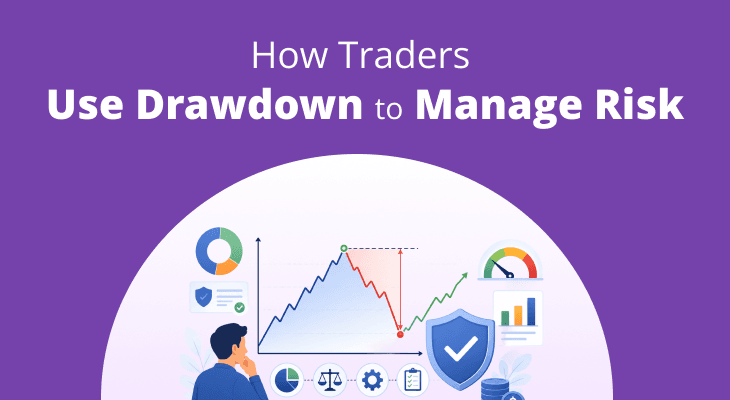
When evaluating an investment or trading strategy, returns usually receive the most attention. However, returns alone do not tell investors how much risk was taken to achieve them. Two portfolios may deliver the same annual return, but one may have experienced far steeper losses during market downturns. This is where max drawdown becomes useful. It measures the largest decline in the value of a portfolio, trading account, or investment from its highest point to its lowest point before a new peak is reached. Instead of focusing only on profits, it shows the worst historical loss an investor would have experienced by staying invested.
FAQ
CAS currently applies only to cash segment for F&O linked equity stocks. For these stocks, the closing price will now be decided through the Closing Auction Session.