
July 3, 2026 | 9 min read
Key Factors Supporting Oil & Gas Sector Growth in 2026
The global oil and gas sector has entered 2026 in a completely transformed landscape. Earlier in the year, the outlook was defined by steady demand growth, disciplined supply, and relatively stable prices. After the Israel-Iran war and the Strait of Hormuz crisis, the same sector now sits at the centre of the biggest oil supply shock in modern history. It is now facing problems of higher prices, tighter balances, and an even stronger focus on energy security. For investors in oil and gas sector stocks, this combination means stronger near‑term earnings potential but also elevated geopolitical, legal, and macro risk.
At the same time, non‑Middle East producers, LNG exporters, and complex refiners outside the Gulf have become strategically more important in the global oil and gas industry list. While the energy transition continues, 2026 has shown that hydrocarbons remain critical to the global economy, and that disruptions and ‘toll politics’ at key chokepoints can quickly reshape both prices and policy.
Energy Demand Outlook
1. Demand Resilience Meets High Prices: Before the war, global oil demand in 2026 was expected to keep rising, mainly because of transport and petrochemical use. After the Strait of Hormuz crisis and the fuel shock, very high prices and slower economic growth are now likely to keep demand flat or softer in some regions. Even so, the world still uses a lot of oil and gas, and these fuels continue to supply most of the world’s energy needs.
2. Emerging Markets Still Drive Underlying Consumption: Emerging economies across Asia, Africa, and Latin America continue to be the structural engine of oil and gas demand, due to urbanisation, infrastructure build‑out, and industrial growth. However, in price‑sensitive, fuel‑importing countries, the 2026 fuel shock is squeezing consumers’ budgets and forcing governments to consider subsidy reforms, fuel taxes adjustments, or demand‑management measures. This creates a split picture: structurally rising underlying demand, but with episodes of demand destruction when prices spike too far.
3. Transport, Industry, and Petrochemicals Remain Key: Transport and logistics still consume a major share of petroleum products, and global trade and aviation activity are recovering despite regional disruptions. Industrial and petrochemical demand for oil and gas, particularly for plastics, fertilisers, and chemicals, continues to provide a strong base for the oil and gas sector. However, some users look at efficiency and electrification options over the medium term.
Crude Price Trends
1. From ‘Stable Band’ to Security Premium
Earlier, many forecasts expected benchmark crude prices to average around a relatively stable band in 2026 under normal supply‑demand conditions. The Israel–Iran conflict and the effective disruption of the Strait of Hormuz have radically changed that picture. Reports are describing it as the largest supply disruption in decades. This has pushed prices higher, embedded a geopolitical risk premium in benchmarks, and increased day‑to‑day volatility.
2. Supply Shock, Rerouting Costs and Hormuz Tolls
Around a fifth of global seaborne oil and meaningful LNG volumes normally pass through the Strait of Hormuz. Iran’s attacks on shipping, mines in the strait, and new ‘toll booth’ regime have slashed normal traffic and made any remaining passage more expensive and politicised. Now ships are required to file detailed declarations, obtain Iranian clearance codes, and in some cases accept Iran’s Revolutionary Guard (IRGC) escorted passage. Alternative export routes, such as pipelines to the Red Sea and bypass ports, can only replace part of the lost capacity and come with higher transport and insurance costs. The combination of lower effective supply, elevated freight, and potential transit fees supports stronger pricing for advantaged producers in the oil and gas sector.
3. Volatility and Legal Overhang as Central Features
Compared to the start of 2026, crude oil prices are now more sensitive to headlines about ceasefire talks, military operations, toll enforcement and sanctions threats. There is also a legal overhang: ships and trading houses that pay Iranian tolls for safe passage risk coming under US sanctions or other compliance scrutiny. It may deter some traffic even when a corridor is technically open. For oil and gas sector stocks, this means earnings upside when prices spike, but also larger short‑term swings in valuations as the market repeatedly reprices both physical and legal risk.
Government Policies
1. Emergency Measures and Energy Security
Following the supply shock, major consuming countries have tapped emergency reserves and coordinated actions to stabilise markets. Many governments have also introduced or expanded short‑term measures such as temporary fuel tax cuts, subsidies, or targeted support to cushion consumers and businesses from higher prices. For instance, the US has proposed a federal ‘Gas Prices Relief Act’ to suspend the gasoline tax, and several US states like Georgia, Indiana, and Kentucky have announced their own gas tax holidays. Ireland has cut fuel taxes and levies to lower pump prices, while the European Commission has proposed allowing EU countries to provide extra subsidies to energy‑intensive sectors hit by the Iran war‑related fuel price spike. These interventions directly affect refining margins, demand patterns, and the revenue outlook for the oil and gas sector.
2. Strategic Shift Towards Diversification
The 2026 crisis has accelerated efforts to diversify supply sources and routes, including more interest in US, Brazilian and West African crude, as well as expanded LNG import capacity in Europe and Asia. Countries are revisiting strategic petroleum reserve policies, shipping security arrangements, and long‑term contracts to reduce dependence on a single chokepoint like the Strait of Hormuz. Bilateral diplomacy now matters more: some nations are negotiating country‑specific arrangements with Iran for passage, while others align more tightly with US security and sanctions policy.
3. Domestic Investment and Incentives
At a national level, countries such as India are pushing for greater domestic exploration and production, refining expansion, and petrochemicals investment, backed by budget allocations and tax incentives. Similar policies, including accelerated project approvals and fiscal sweeteners, can be seen in other producer and importer economies, supporting the medium‑term growth of the oil and gas industry.
4. Policies for Transition and Resilience
Even as governments respond to the immediate crisis, many are also emphasising renewables, energy efficiency, and electrification as long‑term tools to reduce vulnerability to fossil fuel supply shocks. This means policy is now pulling in two directions: supporting hydrocarbons for energy security today, while also pushing investments that can gradually cap or curb oil demand over time.
Refining Margins
1. Strong Demand but Uneven Impact
Global demand for refined products such as diesel, petrol, and jet fuel remains robust, particularly outside the most affected conflict zones. However, refiners that relied heavily on Gulf crude via Hormuz now face supply uncertainty, higher feedstock costs, and potentially lower utilisation, while refiners with access to alternative crude sources are better positioned.
2. Limited Capacity and Regional Cracks
Global refining capacity remains tight after years of closures and few large greenfield projects. The 2026 disruptions have widened regional refining spreads, with cracks in some markets supported by strong local demand and constrained imports. Complex refineries capable of processing varied grades and shifting product slates are benefiting most, widening the performance gap within oil and gas sector stocks.
3. Product Mix and Policy Influence
Refining profitability now depends not only on product mix (e.g., premium fuels, petrochemical feedstocks) but also on how governments respond to the fuel price spike through caps, subsidies, or windfall taxes. Companies that can pivot output quickly and manage regulatory risk are better placed to sustain margins in 2026.
Energy Transition Challenges
1. Transition Under Stress Test
The 2026 Iran–Hormuz crisis has become a real‑time stress test for the global energy transition. It shows how dependent the world still is on traded oil and gas and how quickly geopolitical shocks can destabilise markets. It has also strengthened the argument that renewables, storage, and efficiency improvements are not just climate tools but critical elements of energy security.
2. Investment in Clean Technologies VS Short‑term Fossil Needs
Oil and gas companies continue to invest in carbon capture, hydrogen, and renewable power, even as some projects are re‑phased. At the same time, the 2026 shock has prompted calls for more upstream and LNG investment to ensure supply adequacy, especially outside the Middle East. Balancing short‑term fossil investment with long‑term decarbonisation commitments remains a core strategic challenge for the oil and gas sector.
3. Structural Demand Questions
Fossil fuels still provide most of the global primary energy, but high prices, policy changes, and technology improvements can accelerate the shift toward EVs, heat pumps, and alternative fuels in the years ahead. For investors, this means 2026 may offer strong earnings for many oil and gas sector stocks, even as the long‑term trajectory of oil demand becomes more uncertain.
Risks (Geopolitics)
1. Real‑time Supply Disruptions and Toll Politics
In 2026, geopolitical risk has moved from theory to reality. The Israel-Iran war, attacks on infrastructure in the Gulf, and Iran’s actions in the Strait of Hormuz have disrupted a large share of global oil trade and significant LNG flows. On top of physical attacks and mines, Tehran has attempted to formalise a transit toll and authorisation system, turning Hormuz into a politicised revenue source and a tool of leverage. This mix of physical and regulatory risk is a central driver of today’s price and volatility environment.
2. Strategic Chokepoints, Sanctions and Shipping Risk
The Strait of Hormuz crisis has highlighted how vulnerable key shipping routes are to conflict, mines, and missile attacks. Insurance costs, freight rates, and rerouting through alternative passages have all increased, adding a structural cost layer to energy trade. There is also a sanctions angle. Ships and companies that pay or facilitate Iranian tolls risk exposure to US sanctions, which may deter some traffic even when routes are technically open.
3. Trade, Finance and Country‑level Divergence
Sanctions, export controls, and naval blockades linked to the conflict are reshaping trade routes and market access for some producers. The macro impact is uneven: energy‑importing emerging markets face higher import bills, weaker currencies and tighter financial conditions, while some exporters enjoy a terms‑of‑trade windfall. This divergence matters for demand growth, financing of new projects, and sovereign risk assumptions around the oil and gas industry list.
4. Macro and Currency Volatility
Higher inflation from energy and food prices, weaker growth, and volatile currencies in import‑dependent economies are now part of the risk set investors must monitor. For oil and gas sector stocks, this can translate into more volatile earnings in EM markets, changing tax and subsidy regimes, and shifts in local fuel demand.
In 2026, the oil and gas sector is characterised by strong underlying demand, tight supply, and robust refining margins. But the growth drivers look very different after the Israel-Iran war and the Strait of Hormuz crisis. The world is dealing with an exceptional supply disruption, elevated prices, and a renewed focus on energy security. Even as governments and companies continue to push forward with energy transition plans. For investors tracking oil and gas sector stocks, this year offers a powerful earnings tailwind for well‑positioned producers, refiners, and midstream players. It also brings heightened geopolitical, legal, macro, and long‑term demand risks that must be actively managed.
More Related Articles

How to Calculate Risk-Reward Ratio in Stock Trading?
 October 22, 2026 | 0 mins read
The risk reward ratio compares the amount of money a trader is prepared to risk on a trade with the amount they expect to earn if the trade reaches the target price. Before entering a trade, experienced traders usually estimate two things: the maximum amount they are willing to lose if the trade goes wrong and the potential profit if the trade performs as expected. Comparing these two values helps determine whether the trade offers a favourable balance between risk and reward.

How Rising Oil Prices Impact Stock Market Investments
October 9, 2026 | 0 mins read
A petroleum price hike, driven by rising global crude oil prices, can have far-reaching consequences for the economy and financial markets worldwide. As India imports over 88% of its crude oil requirements, understanding the impact of rising oil prices on stock market investments is essential for investors.
Understanding the meaning and impact of a current account deficit on an economy
October 9, 2026 | 0 mins read
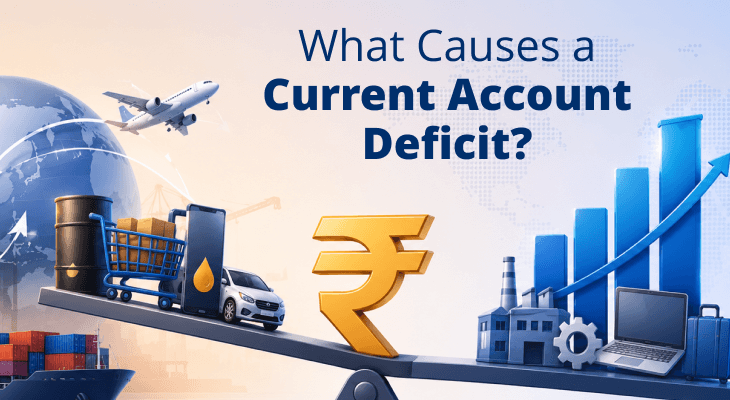
The current account is an important component of a country’s balance of payments. A current account deficit occurs when a country’s total payments to the rest of the world exceed its total earnings from abroad. These payments include imports of goods and services, investment income paid to foreign investors, and current transfers. These earnings include receipts from exports of goods and services, income earned from overseas investments, and current transfers such as remittances. A country’s current account deficit is generally expressed as a percentage of its gross domestic product (GDP).
FAQ
Oil prices are a primary driver of profitability for upstream companies in the oil and gas sector. Higher prices typically boost revenues, cash flows, and valuations for producers, especially those with low lifting costs and exposure to spot markets. However, prices that are too high can dampen demand, trigger government intervention, and raise costs for refiners and consumers, which can eventually weigh on some oil and gas sector stocks.