
February 11, 2026 | 9 min read
Repatriable vs Non-Repatriable Demat Account: Key Differences Explained
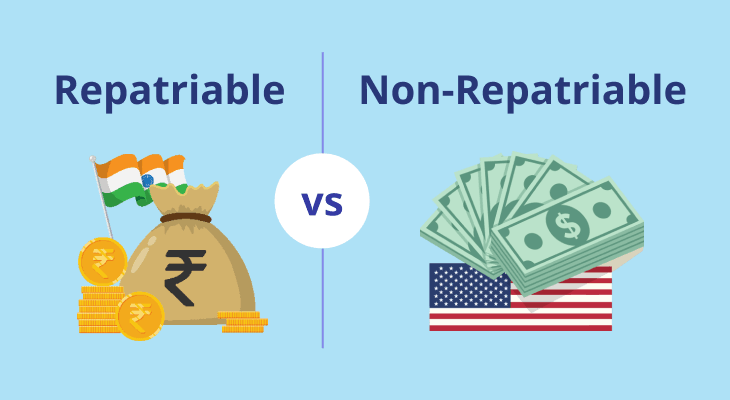
For Non-Resident Indians (NRIs), investing in Indian financial markets requires more than just a demat account. It requires choosing the right type of demat account, based on whether investment proceeds can be taken back abroad or must remain in India. This is where the distinction between a repatriable demat account and a non-repatriable demat account becomes important.
While both account types allow NRIs to invest in Indian shares, mutual funds, and other securities, they differ significantly in terms of fund movement, compliance rules, tax treatment, and long-term financial planning. Understanding these differences helps you avoid regulatory issues and align your investments with your global financial goals.
What Is a Repatriable Demat Account?
A repatriable demat account is a demat account that allows NRIs to freely transfer investment proceeds outside India, after paying applicable taxes. This account is designed for NRIs who want flexibility to move their Indian investment income back to their country of residence.
A repatriable demat account is always linked to an NRE (Non-Resident External) bank account, which holds foreign income or income that is fully repatriable. Because NRE accounts allow unrestricted fund transfers abroad, investments made through a repatriable demat account also qualify for repatriation.
Key characteristics include:
- Investments are made using funds from an NRE account
- Sale proceeds, dividends, and interest are credited to the NRE account
- Funds can be transferred abroad without limits, subject to taxes
- Governed by FEMA and RBI regulations
This type of account is commonly used by NRIs who plan to use their investment returns overseas for expenses, savings, or retirement planning.
What Is a Non-Repatriable Demat Account?
A non-repatriable demat account allows NRIs to invest in Indian securities but restricts the transfer of investment proceeds outside India. The funds generally remain within the Indian financial system.
This account is linked to an NRO (Non-Resident Ordinary) bank account, which typically holds income earned in India, such as rent, dividends, pensions, or business income. While limited repatriation is allowed under RBI rules, it is subject to caps and additional documentation.
Key characteristics include:
- Investments are made using funds from an NRO account
- Sale proceeds are credited to the NRO account
- Repatriation is restricted and capped annually
- Often used for managing India-based income
A non-repatriable demat account is suitable for NRIs who intend to use their investment income within India, such as for family expenses or domestic obligations.
Repatriable vs Non-Repatriable Demat Account: Key Differences
Before choosing between a repatriable and non-repatriable demat account, it is important to understand that the difference is not just about sending money abroad. The distinction affects how you invest, how you plan taxes, how flexible your funds are, and how your long-term financial strategy is shaped as an NRI.
Key Differences Explained
1. Movement of Funds
The most important difference lies in how freely money can be transferred outside India. A repatriable demat account allows investment proceeds, such as sale value, dividends, and interest, to be sent abroad after paying applicable taxes. In contrast, a non-repatriable demat account restricts overseas transfers and usually allows repatriation only up to a specified annual limit, along with additional documentation.
2. Source of Investment Money
Repatriable demat accounts are funded through NRE bank accounts, which hold foreign income or income that is fully repatriable. Non-repatriable demat accounts are funded through NRO accounts, which typically contain income earned in India such as rent, pension, or dividends.
3. Tax and Compliance Requirements
Repatriable accounts usually involve stricter compliance checks because funds are allowed to move outside India. Non-repatriable accounts involve fewer repatriation-related formalities but still require tax deductions at source on certain income.
Also Read: Tax Saving Options: Smart Investments to Save More Taxes | m.Stock
4. Long-Term Financial Planning
If your future expenses, retirement plans, or wealth goals are overseas, a repatriable demat account offers better alignment. If your financial responsibilities remain largely within India, a non-repatriable demat account is often more practical.
Here’s a table that captures the key differences between the two accounts for easy reference. It is important to understand that:
- You cannot mix repatriable and non-repatriable investments in one demat account
- NRIs often maintain both account types for different financial needs
- The choice depends on where you want to ultimately use your investment returns
Basis | Repatriable Demat Account | Non-Repatriable Demat Account |
|---|---|---|
Linked bank account | NRE account | NRO account |
Repatriation of funds | Fully allowed after tax | Restricted and capped |
Source of funds | Foreign income or repatriable funds | Income earned in India |
Use of proceeds | Can be used abroad | Mostly used within India |
RBI restrictions | More compliance-focused | Relatively simpler |
Suitable for | Global investors and overseas planning | Managing India-based income |
Eligibility Criteria
Eligibility rules for both account types are defined by RBI and FEMA guidelines.
Who can open these accounts?
- NRIs and Persons of Indian Origin (PIOs)
- Individuals holding valid overseas residency status
- Joint holding is allowed with another NRI in most cases
Important points to note:
- Resident Indians cannot hold these accounts
- A separate demat account is required for each type
- Proper KYC, overseas address proof, and tax documents are mandatory
Choosing the correct account type at the time of opening helps avoid future restructuring and compliance issues. Different brokers may have varying processes for opening these accounts. It is advised to understand the steps and documentation involved to smoothen the process.
Charges and Compliance
Charges for repatriable and non-repatriable demat accounts are generally similar, but compliance requirements differ.
Common charges include:
- Account opening fees
- Annual maintenance charges (AMC)
- Brokerage and transaction charges
- Custodian and DP charges
Compliance differences:
- Repatriable accounts require closer monitoring of fund sources
- Repatriation requests may involve tax clearance certificates
- NRO-linked accounts may require Form 15CA and 15CB for limited repatriation
From a cost perspective, the difference is not significant. The real distinction lies in documentation and regulatory oversight. Having said that, you should know that while the charge heads may be common, the actual cost amount varies among brokers and investment platforms. It is important to compare the actual costs and adherence to compliance before selecting the right platform.
Benefits of Each Account Type
While both repatriable and non-repatriable demat accounts serve important purposes for NRIs, they also come with certain limitations. Understanding these constraints helps you set realistic expectations and choose the right account structure based on how and where you plan to use your money.
Also Read: https://www.mstock.com/articles/demat-account-for-nri
Benefits of a Repatriable Demat Account
A repatriable demat account offers flexibility and global access, which is crucial for NRIs with international financial commitments.
- It allows you to move your investment proceeds abroad legally and smoothly after tax payment.
- It supports long-term overseas goals such as retirement planning, education expenses, or property purchases outside India.
- It helps keep repatriable assets clearly separated from India-based income, making financial tracking easier.
- It provides peace of mind by ensuring compliance with RBI and FEMA rules while maintaining flexibility.
This account is especially useful for NRIs who actively manage wealth across countries, and for planning education, retirement, or expenses outside India.
Limitations of a Repatriable Demat Account
A repatriable demat account offers flexibility, but it is not entirely friction-free.
Stricter regulatory compliance
Since funds can be transferred outside India, repatriable accounts are subject to tighter RBI and FEMA checks. This can mean more documentation, declarations, and verification, especially during repatriation.Tax must be settled before repatriation
Even though funds are freely repatriable, taxes such as capital gains tax must be paid in India first. Repatriation only applies after tax compliance, which can reduce the final amount transferred.Limited funding sources
Investments can be made only through NRE or FCNR accounts. Income earned in India, such as rent or pension, cannot be directly routed into a repatriable demat account.Operational complexity for beginners
For first-time NRI investors, managing compliance, repatriation rules, and tax filings can feel overwhelming without proper guidance or a reliable investment platform.
Benefits of a Non-Repatriable Demat Account
A non-repatriable demat account is practical and efficient for managing India-linked finances.
- It allows you to invest income earned in India without converting it into repatriable funds.
- It is useful for meeting family expenses, managing rental income, or reinvesting domestic earnings.
- It involves fewer steps when funds are meant to remain within India.
- It helps NRIs maintain financial continuity with Indian markets and obligations.
This account suits NRIs who expect to use most of their investment returns within India.
Limitations of a Non-Repatriable Demat Account
Non-repatriable demat accounts are simpler in structure, but they come with restrictions that can limit flexibility.
Restrictions on overseas fund transfer
Funds from a non-repatriable demat account generally cannot be freely sent abroad. Repatriation is allowed only up to a prescribed annual limit and requires additional approvals and paperwork.Not suitable for global financial goals
If your long-term plans include spending or investing outside India, a non-repatriable account may not align well, as accessing funds overseas can be time-consuming.Tax deduction at source
Income earned through investments linked to an NRO account often attracts higher TDS, which can impact short-term cash flow until tax refunds are processed.Segregation of funds is mandatory
You cannot mix NRE and NRO funds in the same account. This means NRIs often need to maintain multiple accounts, which adds to monitoring and administrative effort.
Which Account Is Right for You? A Practical Checklist
Neither account type is inherently better or worse. Each has limitations that reflect its intended purpose. Many NRIs choose to maintain both repatriable and non-repatriable demat accounts, using each for specific goals. Instead of choosing based only on repatriation, use this checklist to decide correctly.
A Repatriable Demat Account May Be Right for You If:
- You plan to use your investment returns outside India in the future
- Your income source is primarily overseas
- You want flexibility to move funds freely after paying taxes
- You are building long-term global wealth
- You prefer clear separation of overseas and India-based funds
A Non-Repatriable Demat Account May Be Right for You If:
- Your income is mainly earned in India
- You want to support family or expenses within India
- You do not need frequent overseas transfers
- You prefer simpler fund management for domestic use
- You want to reinvest India-earned income locally
Things to Keep in Mind Before Choosing
- You cannot mix NRE and NRO funds in one demat account
- You may need both account types for different goals
- Repatriation involves tax compliance, not tax exemption
- Changing account types later can require new account opening
Also Read: Features & Benefits of a Demat Account - Demat A/C Advantages
Conclusion
The choice between a repatriable and non-repatriable demat account depends on where you want your money to be used in the future. If your goal is global wealth creation and overseas fund access, a repatriable demat account is more suitable. If your focus is managing income and investments within India, a non-repatriable demat account serves the purpose better.
Many NRIs use both account types to separate overseas and India-based financial goals. With a single investment platform like m.Stock, managing multiple demat accounts, tracking investments, and staying compliant becomes simpler and more efficient. Understanding these differences helps you invest with confidence and clarity.
Also Read: Eligibility Criteria to Open a Demat Account - Demat A/C Eligibility
More Related Articles

How to Calculate Risk-Reward Ratio in Stock Trading?
 October 22, 2026 | 0 mins read
The risk reward ratio compares the amount of money a trader is prepared to risk on a trade with the amount they expect to earn if the trade reaches the target price. Before entering a trade, experienced traders usually estimate two things: the maximum amount they are willing to lose if the trade goes wrong and the potential profit if the trade performs as expected. Comparing these two values helps determine whether the trade offers a favourable balance between risk and reward.

How Rising Oil Prices Impact Stock Market Investments
October 9, 2026 | 0 mins read
A petroleum price hike, driven by rising global crude oil prices, can have far-reaching consequences for the economy and financial markets worldwide. As India imports over 88% of its crude oil requirements, understanding the impact of rising oil prices on stock market investments is essential for investors.

Understanding the meaning and impact of a current account deficit on an economy
October 9, 2026 | 0 mins read
The current account is an important component of a country’s balance of payments. A current account deficit occurs when a country’s total payments to the rest of the world exceed its total earnings from abroad. These payments include imports of goods and services, investment income paid to foreign investors, and current transfers. These earnings include receipts from exports of goods and services, income earned from overseas investments, and current transfers such as remittances. A country’s current account deficit is generally expressed as a percentage of its gross domestic product (GDP).
FAQ
Repatriable and non-repatriable demat accounts can be opened by Non-Resident Indians and Persons of Indian Origin who meet RBI and FEMA guidelines. Resident Indians are not eligible. Proper KYC documents, overseas address proof, and tax details are mandatory during account opening.