
September 23, 2025 | 4 min read
Virtual Credit Cards: What Are They?
e-ITR, e-Passport, e-Signature, e-Medical Reports, e-Tickets—the prefix ‘e’ stands for electronic and signifies speed, accuracy, and convenience, among other benefits. A notable addition to this growing list of digital services is the e-credit card, also known as a virtual credit card, introduced in the early 2000s. This article delves into the meaning, features, types, and uses of virtual credit cards.
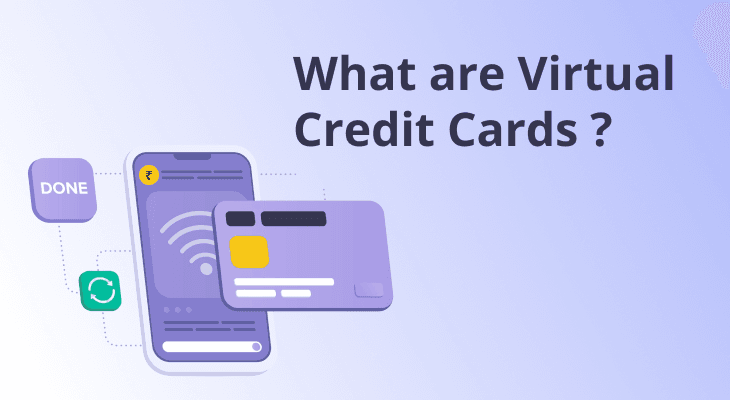
What is a virtual credit card?
Usually offered as an add-on service to your existing credit card, a virtual credit card is a randomly generated temporary card number with a unique CVV and expiry date. It is used for a specific transaction or period. Although it is the digital extension of your physical credit card, it does not allow over-the-counter, offline purchases. These temporary card details can only be used for virtual payments.
Features of a virtual credit card
Here are five key features of a virtual credit card:
Easy availability
To generate a virtual credit card is simple and hassle-free. Most banks allow you to access a virtual credit card through their mobile or internet banking portals. Once approved, you can use this temporary card within the validity window. You do not have to undergo stringent eligibility checks or submit comprehensive documentation to get a virtual credit card. Moreover, it is usually offered free of cost alongside your primary credit card.
Limited validity
Unlike physical credit cards, virtual cards come with limited validity – usually for a single transaction or a few hours or days, depending on the issuer. Each time you generate a virtual credit card, you will receive a new card number with a different CVV and expiry date. Once the validity period is over, these details hold no importance. This temporary nature offers an additional layer of security.
Quick blocking facility
Although the chances of fraud are minimal with virtual credit cards, you can immediately block your card through your issuer’s website or mobile application if you suspect any unauthorised activity.
Controlled spending
Most issuers allow you to set a spending limit on your virtual credit card. This restriction, coupled with the limited validity, helps avoid overspending.
Enhanced safety
The details of a virtual credit card are different from those of your primary physical credit card. Additionally, it has a short validity period, and blocking is easy. Together, these features offer enhanced security while transacting online—a must in today’s world where cybercrime is dangerously common.
Types of virtual credit cards
There are two types of virtual credit cards:
Single-use virtual credit card
As the name suggests, this type of card is generated for a single transaction and expires immediately once the transaction is completed. It offers the highest level of security due to its ultra-short validity.
Multi-use virtual credit card
This type of credit card can be used multiple times within its validity period, which typically ranges from 24 to 48 hours. The card number and CVV remain the same for all transactions made during this time, making it comparatively less secure. That said, it offers greater flexibility and convenience.
Uses of virtual credit cards
Virtual credit cards are versatile and suitable for a wide range of activities. Here are some of their common uses:
Online shopping
The most common use of a virtual credit card is for online shopping because it makes the experience safer, especially while purchasing from new or international websites.
Free trial offers
Paid subscriptions are best managed with virtual credit cards. Many services offer free trials for a limited period before you are charged. Virtual credit cards ensure that you have full control over such expenses. You can sign up without worrying about auto-renewals or hidden charges, as the card expires quickly.
Travel bookings
You can use a virtual credit card to make one-time travel bookings. From hotels to flights to activities and more, everything can be booked without exposing your primary card details to unknown sources.
Safety and fraud protection
Virtual credit cards are less vulnerable to fraud, such as card cloning or theft. Thus, they are a safer alternative to physical cards for online transactions.
Conclusion
A virtual credit card is yet another convenient tool in the digital world. As a secure alternative to traditional cards, it simplifies virtual payments and offers enhanced protection when transacting on unfamiliar or international websites. Whether you want to make a one-time payment, shop safely, or try a subscription service, you can generate a virtual credit card in no time and ensure a seamless experience.
Additional Read: Credit vs. Debit Card: Which One to Use
Additional Read: How Does Loan Against Credit Card Works
More Related Articles

What is Pradhan Mantri Garib Kalyan Yojana?
 July 24, 2026 | 0 mins read
80% of India's 570 million workers are in the informal economy no written contracts, no job security, no social protection. When work stops, so does income. India has long needed a mechanism to deliver direct support to its most vulnerable not through institutions or intermediaries, but straight to the people who need it.

How to compare ₹10 brokerage plans with other brokers in India?
May 26, 2026 | 0 mins read
You may track the online share market closely, follow earnings, and plan entries and trades with precision. But the brokerage cost can shape the share of your profit that you finally get to keep. Low ₹10 brokerage plans at online trading platforms like m.Stock are easily accessible across all segments. But with so many distinct options, picking a suitable one can seem cumbersome.

How to get better customer service from your stock broker in India?
May 21, 2026 | 0 mins read
Good customer service from a top share broker is non-negotiable today. For platforms like m.Stock, this service is integrated directly into the system for daily convenience. It is divided into levels that help you get prompt and accurate support whenever required. It’s supported by transparency in information and how easily you can find answers with minimal effort.