
August 7, 2026 | 10 min read
What is a Commodity Futures Contract?
Commodity prices rarely remain stable. Gold reacts to global inflation trends, crude oil moves with geopolitical developments, and agricultural commodities can swing because of monsoon conditions, export restrictions, or supply shortages. These price fluctuations create uncertainty for businesses that rely on commodities and also create opportunities for traders.
This is where a commodity futures contract becomes important. It allows buyers and sellers to lock in a price today for a commodity transaction that will happen at a future date. While this concept originally evolved to help farmers, manufacturers, and merchants manage price volatility, it has now become a major segment of modern commodity trading.
Today, commodity futures are widely used by hedgers who want price certainty and traders who want to benefit from short-term price movements. In India, exchanges such as Multi Commodity Exchange of India (MCX) and National Commodity and Derivatives Exchange (NCDEX) have made trading commodity futures more structured and accessible.
Understanding how these contracts work can help you see why they play such an important role in financial markets.
Understanding Commodity Futures Contracts
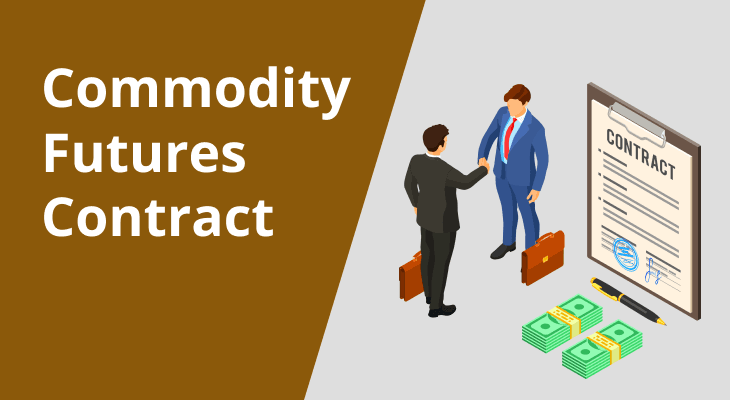
A commodity futures contract is a standardised agreement to buy or sell a specific quantity of a commodity at a predetermined price on a future date. These contracts are traded on regulated exchanges and include standard specifications such as:
- Quantity of the commodity
- Quality standards
- Expiry date
- Delivery location
- Tick size
- Margin requirements
For example, suppose a jewellery manufacturer expects gold prices to rise over the next two months and wants cost certainty. It may enter a gold futures contract today to lock in current prices. Similarly, a farmer expecting a fall in crop prices may use agricultural futures contracts to secure a selling price in advance.
In modern commodity trading, many participants do not hold contracts until physical delivery. Most traders close their positions before expiry and settle profits or losses based on price movements. This is why commodity futures serve two major purposes:
Hedging: Businesses use futures to reduce uncertainty around raw material costs. For example, airlines monitor fuel prices, food companies track wheat prices, jewellers hedge gold price fluctuations, etc.
Speculation: Traders attempt to profit from price changes without taking actual delivery of commodities. For instance, a trader may buy crude oil futures expecting global supply disruptions to push prices higher.
How Do Commodity Futures Contracts Work?
A commodity futures contract follows a standard exchange-traded structure where two parties agree on a future transaction price. Let’s break the process down step by step.
Step 1: Choose a commodity contract
A trader selects a contract such as:
- Gold
- Silver
- Crude oil
- Natural gas
- Copper
- Soybean
Each contract has specific lot sizes and expiry dates.
Step 2: Deposit margin
You do not pay the full contract value upfront. Instead, exchanges require an initial margin, which is only a percentage of the total contract value.
For example, if a gold futures contract is worth ₹6,00,000, and the margin is 10%, you may only need
₹60,000. This creates leverage.
Step 3: Take a position
You can:
- Buy futures if you expect prices to rise
- Sell futures if you expect prices to fall
This flexibility makes trading commodity futures different from many traditional investments.
Step 4: Daily mark-to-market settlement
Futures positions are settled daily. If prices move in your favour, money gets credited to your account. If prices move against you, money gets debited.
Step 5: Exit or hold till expiry
Most retail traders square off positions before expiry. Some hedgers may hold contracts till delivery if they require the actual commodity. This system ensures liquidity, transparency, and efficient price discovery in commodity futures markets.
What Is an Example of a Commodity Futures Contract?
Let’s understand this through a realistic gold futures scenario.
Assume:
Gold futures price = ₹1,50,000 per 10 grams
Contract size = 1 kg (1,000 grams)
Total contract value:
₹1,50,000 × 100 = ₹1,50,00,000
Assume margin requirement = 10%
Margin needed:
₹1,50,00,000 × 10% = ₹15,00,000
Scenario 1: Price rises
After two weeks, the gold price rises to ₹1,55,00,000 per 10 grams, a price increase of ₹5,000 per 10 grams
For 1 kg: ₹5,000 × 100 = ₹5,00,000 profit
Scenario 2: Price falls
Gold falls to ₹1,48,00,000 per 10 grams, a price decline of ₹2,000 per 10 grams.
Loss: ₹2,000 × 100 = ₹2,00,000 loss
This example shows how even relatively small commodity price changes can significantly impact returns because futures contracts involve large contract values.
What Are the Different Types of Commodity Futures Contracts?
Commodity futures are not limited to one product category. Different contracts exist because each commodity behaves differently based on demand patterns, supply chains, storage requirements, and market participants. Understanding these categories helps traders choose contracts that align with their market knowledge and risk appetite.
Precious metals futures
These contracts include commodities such as gold and silver, which are among the most actively traded products on the Multi-Commodity Exchange of India.
Gold futures are commonly used by:
- Jewellers managing inventory costs
- Importers dealing with bullion prices
- Investors seeking inflation hedges
- Traders looking to benefit from price fluctuations
For example, if global inflation rises and investors move towards safe-haven assets, gold prices may increase. Traders may use gold futures to benefit from such movements. Silver contracts often move based on both investment demand and industrial demand because silver is widely used in electronics and solar equipment manufacturing. These contracts tend to attract significant retail participation because pricing information is easily available and liquidity is usually high.
Base metals futures
Base metals contracts include:
- Copper
- Zinc
- Aluminium
- Lead
- Nickel
These commodities are heavily influenced by industrial activity, infrastructure spending, manufacturing growth, and global economic trends. For instance, copper prices often rise when infrastructure activity increases globally because copper is widely used in electrical equipment, construction, and industrial machinery.
A trader following global manufacturing data may choose copper futures if they expect industrial demand to improve. These contracts often attract institutional traders, manufacturers, and experienced commodity participants.
Energy futures
Energy contracts mainly include crude oil and natural gas futures. These are among the most volatile contracts in commodity markets because prices react quickly to:
- OPEC production decisions
- Geopolitical conflicts
- Supply disruptions
- Global economic slowdowns
- Seasonal demand patterns
For example, if major oil-producing nations reduce supply, crude prices may rise sharply. Traders in crude oil futures may attempt to benefit from these rapid movements. Energy contracts can offer large opportunities, but they also require close monitoring because price swings can be sharp.
Agricultural futures
Agricultural futures include products such as:
- Soybean
- Cotton
- Wheat
- Jeera
- Chana
- Mustard seed
These contracts are commonly traded on the National Commodity and Derivatives Exchange.
Agricultural prices are often influenced by:
- Monsoon performance
- Crop production
- Government procurement policies
- Export demand
- Storage availability
For example, weak rainfall may reduce crop output and push prices higher. Farmers, exporters, food processing companies, and traders often use these contracts to manage price fluctuations.
Mini and micro futures contracts
Large contract sizes can make commodity participation expensive for smaller traders. To improve accessibility, exchanges introduced mini and micro contracts.
For example, a standard gold contract may require significant capital, while a mini gold contract allows traders to participate with much lower capital.
These smaller contracts help new traders gain market exposure without taking oversized positions.
What Are the Key Components of a Commodity Futures Contract?
Before trading commodity futures, it is important to understand what exactly a contract includes. Every futures contract follows standardised specifications created by the exchange.
Contract size: This refers to the quantity of commodity covered under one contract. For example, a gold contract may represent 1 kilogram, while mini contracts may represent smaller quantities. This matters because larger contract sizes increase both profit potential and risk exposure.
Expiry date: Every futures contract has a fixed expiry date. This is the last day the contract remains active before settlement occurs. Traders need to monitor expiry timelines because prices can behave differently as contracts approach expiration.
Margin requirement: Instead of paying the full contract value, traders deposit a margin amount. This acts as collateral. For example, if a contract value is ₹10 lakh and the margin requirement is 10%, a trader may need ₹1 lakh to open the position. This creates leverage, which increases both opportunity and risk.
Tick size: Tick size refers to the minimum price movement allowed in a contract. Even small price movements can significantly impact total profit or loss, depending on contract size.
Settlement mechanism: Some contracts are cash settled, where only price differences are adjusted. Others may involve physical delivery if held till expiry. Retail traders usually exit before physical settlement.
Trading hours: Commodity exchanges have specific trading windows, particularly for global commodities such as gold and crude oil that react to international market developments. Understanding trading hours helps traders manage positions more effectively.
What Are the Benefits of Trading Commodity Futures?
Commodity futures serve important purposes beyond short-term speculation.
- Helps manage price risk: Businesses often use futures to reduce uncertainty. For example, a jewellery manufacturer may hedge rising gold prices by locking in costs through futures contracts. This helps improve planning and protect profit margins.
- Provides portfolio diversification: Commodity prices often react differently compared to stocks and bonds. During periods when equity markets struggle, commodities like gold may perform differently. This makes commodities useful for diversification.
- Offers two-way trading opportunities: Traders can benefit in rising markets by buying contracts and in falling markets by selling contracts. This flexibility creates more trading opportunities.
- Leverage improves capital efficiency: Futures allow traders to control large contract values with smaller upfront capital. This makes participation easier, although it should be used carefully.
- Strong liquidity in major contracts: Products such as gold, silver, and crude oil often see strong trading volumes, making entry and exit easier.
- Transparent exchange pricing: Prices are determined through regulated exchanges, which improves transparency compared to informal commodity markets.
What Are the Risks Involved in Commodity Futures Trading?
Commodity trading can offer opportunities, but understanding risks helps traders participate more responsibly.
- Price volatility: Commodity prices can react sharply to global events, weather disruptions, inflation data, or policy decisions. Avoid oversized positions and use stop-loss strategies.
- Leverage risk: Leverage can magnify losses when prices move against you. Use only manageable leverage and avoid deploying all available capital.
- Margin calls: If losses increase, traders may need to deposit additional funds. Maintain extra funds in your trading account.
- Global event exposure: Crude oil, gold, and metals often react to international developments outside Indian market hours. Track major global events and avoid holding positions without preparation.
- Liquidity risk in smaller contracts: Some lesser-traded contracts may have lower volumes. Focus on contracts with stronger liquidity.
- Lack of product understanding: Many traders enter commodities without understanding what drives prices. Study each commodity separately before participating.
How Can You Start Trading Commodity Futures in India?
Starting commodity trading requires more than opening an account. It involves understanding market structure and choosing the right approach.
Open a commodity trading account
Choose a SEBI-registered broker that offers access to commodity exchanges such as the Multi-Commodity Exchange of India and the National Commodity and Derivatives Exchange. Complete KYC verification and activate the commodity segment.
Understand contract specifications
Before placing any trade, review:
- Lot size
- Margin requirement
- Expiry date
- Settlement rules
This helps avoid operational mistakes.
Start with liquid commodities
Many new traders begin with:
- Gold
- Silver
- Crude oil
These contracts typically offer better liquidity and more publicly available market information.
Track market drivers
Every commodity reacts to different factors. Gold may react to inflation and interest rates. Crude oil may react to geopolitical developments. Agricultural commodities may react to weather and crop output. Understanding these drivers improves decision-making.
Use smaller positions initially
Many traders make the mistake of taking large leveraged positions too early. Starting small allows you to learn contract behaviour without exposing too much capital.
Build a trading plan
Define:
- Entry levels
- Exit levels
- Risk limits
- Profit targets
This improves discipline and reduces emotional decision-making.
Conclusion
A commodity futures contract plays an important role in modern financial markets by helping participants manage price risk and discover fair prices.
Whether used for hedging or speculation, commodity futures provide opportunities across metals, energy, and agricultural products. However, success in trading commodity futures requires a strong understanding of contracts, risks, and market drivers.
When approached with discipline, commodity futures can become an important segment within the broader commodity trading activity.
More Related Articles

SEBI Proposes CAS Changes: What Could Change for Derivatives Settlement, IEPs & Timings?
 September 17, 2026 | 0 mins read
A month after introducing the new Closing Auction Session, SEBI has proposed changes after early market feedback raised concerns about derivatives settlement on expiry days, changing auction prices and trading timings. SEBI is not scraping CAS. Instead, it wants to make expiry settlement clearer, improve the auction process and help traders understand that indicative auction prices are not the same as actual traded prices.
ETF trading rules from 7 September: What changes for retail investors?
September 7, 2026 | 0 mins read
If there was no trade during the final 30 minutes on the previous day, the exchange will use that day’s last traded price. If there was no trade at all on the previous day, the latest available closing NAV will be used. The base price will also be adjusted for corporate actions, if applicable. From April 1, 2027, SEBI expects stock exchanges and mutual fund AMCs to use the previous day’s closing NAV as the base price after resolving operational issues.

How MSCI rebalancing tested India's Closing Auction System on August 31
September 2, 2026 | 0 mins read
India’s new Closing Auction Session (CAS) processed a record ₹39,718 crore turnover, on 31 August 2026 as MSCI India Index latest index rebalancing took effect at the market close. The event showed that CAS could handle an exceptional concentration of institutional flow. However, there were some sharp, and sometimes counterintuitive, stock moves. This shows that the quality of closing-price discovery is still being tested.
FAQ
Commodity futures involve leverage and price volatility, which can increase both gains and losses. However, risk largely depends on position sizing, market understanding, and discipline. Traders who use stop losses, avoid excessive leverage, and understand contract behaviour can manage risks more effectively.