

April 17, 2026 | 8 min read
What Does Bear Market Mean?
Ups and downs are a constant part of financial markets, but when prices fall consistently for a longer period, you often hear experts saying the market has turned bearish. But what is a bear market exactly?
Understanding the bear market meaning is essential because these phases are a normal part of financial markets. A bear market occurs whenever securities, especially stocks, drop by 20% or more from their recent highs and persist in a low for an extended period of time. It reflects pessimism, declining confidence, and widespread caution among investors.
While it sounds alarming, it’s important to note that a bear market doesn’t always signal financial doom. These phases are part of the natural cycle of markets, balancing the optimism of bull runs with periods of correction and reality checks. Understanding how they work allows you to make smarter financial decisions.
Understanding Bear Market
A bear market is a protracted period of falling asset prices, typically accompanied by declining economic conditions, job losses, or lowered consumer spending. Unlike short-term dips, these downturns last months or even years.
The phrase bearish means having a negative outlook. When an analyst says they’re bearish, it means they expect the market or a stock to decline further. This outlook often triggers more selling and deepens the fall.
Bear markets are not only prevalent in stock markets. They may have an impact on bonds, commodities, real estate, or even cryptocurrency. The fundamental causes are always the same, which include declining demand and an overall reduction in confidence.
Every major economy has experienced multiple bear markets in the past. Although each one is unpleasant, history also demonstrates that markets bounce back, frequently resulting in new bull runs immediately following settled market conditions.
Why Do Bear Markets Happen?
A bear market doesn’t happen randomly; it is the outcome of several interconnected factors. Here’s the breakdown of the reasons with the real-life examples:
Economic Recession
When the economy enters a slowdown, the overall output measured by GDP starts shrinking. Businesses respond by cutting expenses, laying off employees, or delaying investments. With unemployment rising and consumer demand weakening, corporate earnings decline. As companies struggle to maintain profitability, investors lose confidence in future growth and begin selling stocks, which accelerates the market downturn.
The Great Recession (2007–2009), after the Global Financial Crisis, was one of the most severe economic downturns since the Great Depression. Triggered by the collapse of the U.S. housing market and the subprime mortgage crisis, the crisis caused major banks to fail, unemployment to climb nearly 25%, and global GDP to decline by more than 10%.
Rising Inflation
Inflation occurs when the prices of goods and services rise steadily. When inflation rises too much, money reduces its intrinsic worth. Central banks often raise interest rates to keep this under control. This makes loans, mortgages, and business financing more expensive. High borrowing costs lead to reduced spending and discourage businesses from growing, ultimately slowing down the economy.
The stagflation of the 1970s, which was caused by oil price shocks and loose monetary policy, is one example which illustrates this point. The economy was stagnant due to inflation rates in the double digits and high unemployment. In the early 1980s, Fed Chair Paul Volcker raised interest rates to almost 20% to bring back stability. During this time, both the stock market and the bond market performed terribly. However, it eventually led to decades of stronger economic growth.
Global Shocks
External shocks to financial markets frequently take the form of natural disasters, pandemics, wars, or abrupt political unrest. They raise commodity prices, upset supply chains, and cast doubt on the stability of the economy.
One of the most rapid bear markets in history was brought on by the COVID-19 pandemic in 2020. Lockdowns halted international trade, travel, and production, causing the S&P 500 to drop more than 30% in just 33 days. Oil prices collapsed, unemployment surged worldwide, and investors rushed to safe assets like gold and U.S. Treasuries. The crash demonstrated how abrupt shocks can upset even the strongest economies, even though markets recovered swiftly because of significant government stimulus.
Overvaluation
Stock prices frequently rise considerably more quickly than company earnings during extended bull runs. This causes a discrepancy between market valuations and actual performance. Investors start selling when they discover that prices are not supported by fundamentals. A bear market develops if this downturn becomes widespread, turning optimism into pessimism and causing inflated stocks to pull the market as a whole downstream.
The Dot-Com Bubble (2000–2002) is one of the real-life examples that fits the situation. The Dot-Com Bubble saw technology companies with little to no earnings valued at billions due to investor hype around the internet. When reality set in, the Nasdaq fell nearly 77% from its peak, wiping out trillions of dollars in market value. Many startups went bankrupt, though survivors like Amazon and Google eventually grew stronger. The episode reinforced the dangers of chasing speculative gains without fundamentals.
Liquidity Tightening
Liquidity refers to the ease with which money flows in the economy. Central banks sometimes reduce liquidity to curb inflation by raising interest rates or limiting the money supply. This makes borrowing costlier for both businesses and individuals. With less cash in circulation and tighter credit conditions, spending slows down, and investor appetite for riskier assets like stocks diminishes.
As demand falls, markets enter a downward spiral. In 2022, the U.S. Federal Reserve raised interest rates aggressively to combat inflation that had reached 40-year highs. This was the sharpest monetary tightening since the 1980s. Mortgage rates doubled, borrowing costs for businesses soared, and technology stocks in particular experienced steep declines. The S&P 500 lost nearly 20% that year, marking its worst performance since the 2008 crisis. Investors shifted money into bonds and safer assets, reflecting a clear bearish environment.
Phases of a Bear Market
Bear markets unfold in four stages, each with its own characteristics. Understanding these phases can help you anticipate the cycle.
Initial Phase
The initial stage usually begins with stock prices at elevated levels and strong investor confidence. Optimism dominates, but as some investors start booking profits, cracks appear in the rally. The shift is subtle at first, but it signals the beginning of weakening momentum.
Second Phase
This is the hardest part of the cycle. Prices start to drop sharply, trading volumes shrink, and companies' profits fall short of expectations. Indicators of the economy that were once strong are starting to turn adverse. Fear spreads, and plenty of investors exit the market in a panic. This is often called capitulation.
Third Phase
As prices reach more attractive levels, speculators and risk-tolerant investors begin re-entering the market. Their activity pushes certain stocks and volumes slightly higher, creating temporary rebounds. However, overall confidence is still fragile, and the recovery is not yet sustained.
Fourth and Last Phase
In the final phase, the pace of decline slows down, and stock prices begin to stabilise. Positive economic signals or encouraging corporate news gradually bring long-term investors back. This renewed confidence lays the foundation for a transition into a bull market.
How Bear Markets Affect the Market
The bear market meaning stretches beyond stock prices; it impacts businesses, consumers, and economies as a whole. Let’s look at the broader consequences:
- Investor Psychology: Decision-making is dominated by fear. Rather than waiting for a recovery, many investors lock in losses by selling at the bottom.
- Corporate Profits Shrink: Companies experience lower demand, which results in reduced revenues, layoffs, and dividend payments. Projects for expansion are delayed or scrapped.
- Wealth Effect Declines: As portfolios shrink, people feel deprived and cut back on spending, which slows down economic recovery.
- Credit Tightening: Banks become more cautious when lending, which makes it more difficult for people and businesses to borrow funds for expansion or investment.
- Global Spillovers: In today’s interconnected economy, a bear market in one region can impact others through trade and investment flows.
What Can Investors Do During Bear Markets?
As challenging as a bear market may feel, there are strategies to manage it smartly:
Don’t Panic Sell
Emotional choices result in irreversible losses. Don't sell just because you're afraid. Determine if your investments support your long-term objectives.
Focus on Defensive Sectors
Due to steady demand, sectors like utilities, consumer staples, and healthcare typically do better during downturns. It’s advisable to keep your focus on these sectors.
Prioritise Quality
Strong businesses with sound cash flows and balance sheets typically bounce back more quickly. It can be profitable to purchase them at a discount.
Diversify Investments
Don't depend on stocks alone. During recessions, fixed-income instruments, bonds, and gold can help balance the risks in your investment portfolio.
Use Dollar-Cost Averaging
Regardless of market conditions, making modest, consistent investments over time helps reduce volatility and build wealth.
Conclusion
To sum up, the bear market is a prolonged period of falling asset prices, often caused by economic weakness, inflation, or global uncertainties. While these periods create anxiety, they are a natural part of the market cycle.
Remember, bearish means more than just negativity. It reflects the cautious behaviour of investors reacting to real economic conditions.
By understanding the phases, the impact, and the right strategies, you can prepare yourself to face bear markets with confidence. And the best part? Bear markets test your patience, but they also teach discipline. By adopting the strategies, you turn a difficult period into an opportunity for future growth.
Also Read: Bull vs Bear Market - Know the Key Differences Between Them
More Related Articles

How Rising Oil Prices Impact Stock Market Investments
 October 9, 2026 | 0 mins read
A petroleum price hike, driven by rising global crude oil prices, can have far-reaching consequences for the economy and financial markets worldwide. As India imports over 88% of its crude oil requirements, understanding the impact of rising oil prices on stock market investments is essential for investors.
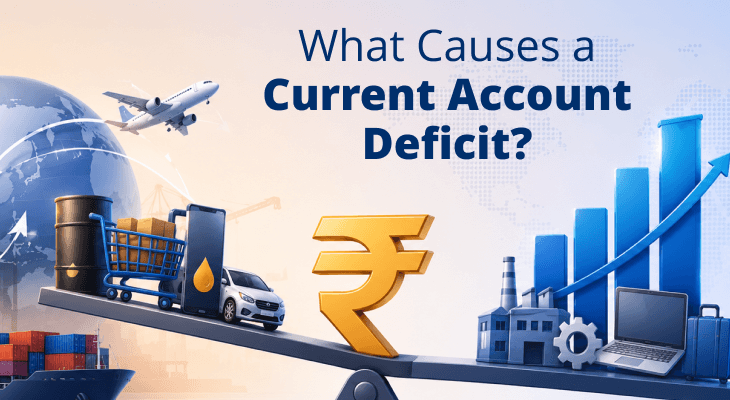
Understanding the meaning and impact of a current account deficit on an economy
October 9, 2026 | 0 mins read
The current account is an important component of a country’s balance of payments. A current account deficit occurs when a country’s total payments to the rest of the world exceed its total earnings from abroad. These payments include imports of goods and services, investment income paid to foreign investors, and current transfers. These earnings include receipts from exports of goods and services, income earned from overseas investments, and current transfers such as remittances. A country’s current account deficit is generally expressed as a percentage of its gross domestic product (GDP).
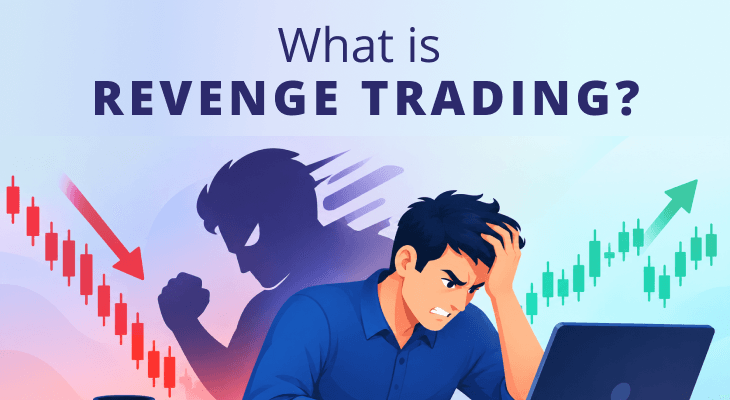
Revenge trading meaning explained: Causes, impact, and how to avoid it
October 9, 2026 | 0 mins read
in revenge trade, they are often driven by emotions such as anger, frustration, fear, or disappointment rather than sound analysis. In the process, they overlook carefully planned trading strategies designed around their financial goals, investment horizon, and risk appetite. More often than not, revenge trading results in further losses, creating a vicious cycle that becomes increasingly difficult to escape.
FAQ
A bear market is a more profound, longer downturn of 20% or more that has a substantial impact on investor confidence, whereas a correction is a brief decline of roughly 10% that typically lasts weeks.