

February 4, 2026 | 9 min read
What Do You Mean by Capital Appreciation?
Capital appreciation is one of the most important ideas in investing, especially if your goal is to grow wealth steadily over time. Whether you invest in shares, mutual funds, property or gold, the value of your investment can rise or fall based on market conditions. When the value rises, you experience capital appreciation.
Most beginners focus only on returns, but understanding capital appreciation helps you build a smarter strategy, choose better investment products, and set realistic expectations. This guide breaks down the concept in a simple, practical and insightful manner so that you can apply it confidently in your investment journey.
What Is Capital Appreciation?
Capital appreciation refers to the increase in the value of an investment over time. It occurs when the current market price of an asset becomes higher than the price at which you originally purchased it.
Examples of assets where appreciation occurs
- Shares
- Mutual funds
- Real estate
- Gold
- Exchange-traded funds (ETFs)
- Bonds (in some cases)
Simply put, if you bought something at a certain price and it is now worth more, the difference is your capital appreciation.
Capital appreciation is influenced by:
- Company growth and profitability
- Market sentiment
- Demand and supply
- Economic conditions
- Interest rate cycles
- Sector performance
While some assets appreciate quickly, others grow slowly and steadily over long periods. That is why long term investors often prioritise capital appreciation over short term price fluctuations.
Factors Driving Capital Appreciation
Capital appreciation does not happen randomly. The value of an asset rises due to a combination of economic, business-specific, and behavioural factors. When you understand these drivers clearly, you become better at selecting assets that hold long term growth potential. Below is a detailed explanation of the key factors, along with examples that show how each one influences appreciation across different asset classes.
A. Company or Asset Performance
One of the strongest drivers of capital appreciation is the actual performance of the company or asset behind the investment. When a company reports rising profits, stable earnings, consistent cash flows, and has a healthy balance sheet, investors develop confidence in its long-term prospects. This leads to higher demand for its shares.
Example
If a company’s profit increases from ₹500 crore to ₹900 crore within three years, investors might view it as a sign of efficient management, strong operations, and future growth potential. As demand for that company’s share rises, its market price moves upward, resulting in capital appreciation for shareholders.
Performance-based appreciation also occurs beyond shares.
- Real estate appreciates when infrastructure improves around a locality.
- Gold appreciates when global currency weakness increases its demand.
- Mutual funds appreciate when portfolio companies collectively grow earnings.
Performance is therefore the foundation of sustainable appreciation.
B. Market Sentiment
Even if fundamentals are stable, market sentiment can strongly influence appreciation. Sentiment refers to how investors collectively feel about the market or a specific asset class. When optimism increases, investors buy more aggressively, pushing prices upward.
Example
A new government policy supporting manufacturing may trigger a positive sentiment wave in sectors like capital goods and engineering. Even before profits increase, share prices may appreciate simply because investors expect growth in the future.
Sentiment affects all asset classes:
- Positive sentiment for gold during uncertainty boosts gold prices.
- Positive sentiment for real estate during interest rate cuts can accelerate appreciation.
Sentiment often amplifies short-term appreciation, although long-term growth still depends on fundamentals.
C. Economic Growth
A growing economy usually leads to strong capital appreciation across assets. When GDP rises, employment improves, businesses expand, and consumer spending increases. Healthy economic conditions also encourage companies to invest more, innovate, and widen their market share.
Example
If India’s GDP grows from 6.0% to 7.5%, sectors like banking, IT, infrastructure, and automotive often see higher business activity. Their profits increase, attracting investors and leading to asset appreciation.
Real estate also benefits from economic growth because rising incomes increase demand for homes, pushing property prices up.
Economic cycles play a major role in determining how fast and how long appreciation continues.
D. Inflation
Inflation may sound like a negative factor, but it indirectly supports capital appreciation. As the general price level of goods and services increases over time, the prices of hard assets like gold, real estate, and even certain commodities also rise to maintain their real value.
Example
When construction costs rise due to inflation, property prices in many cities also increase. Similarly, gold becomes more expensive during times of high inflation because it acts as a store of value, offering natural appreciation over time.
For equities, moderate inflation helps companies increase revenues, which eventually supports higher share prices. However, extremely high inflation may reduce real returns, even if the asset has appreciated on paper.
E. Interest Rates
Interest rates influence investor behaviour and the attractiveness of different asset classes. When interest rates fall, borrowing becomes cheaper. Companies expand faster, real estate becomes more affordable, and equity markets tend to rise.
Example
During a low interest-rate cycle, home loan EMIs usually fall, resulting in increased demand for property. This increased demand pushes property prices up, leading to appreciation.
In equity markets, lower interest rates improve profitability and reduce debt servicing costs for companies, which supports higher share valuations.
On the other hand, high interest rates can slow appreciation because investors may shift money from equities to debt.
F. Scarcity and Demand
Some assets appreciate simply because supply is limited while demand keeps growing. Scarcity increases perceived value, making the asset more attractive over time.
Example
A residential area in a prime location with limited land availability may see property prices double within a few years. Similarly, gold is limited in supply globally, and rising demand from investors and central banks contributes to steady appreciation.
Certain niche sectors, such as speciality chemicals or renewable energy, may also experience strong appreciation due to demand exceeding supply capacity. Scarcity-based appreciation tends to be long term and steady.
G. Time Horizon
Time is one of the most underrated factors driving capital appreciation. Long-term investing allows you to benefit from business cycles, compounding, reinvestment of profits, and the natural expansion of the economy.
Example
If you invest ₹1 lakh in an equity mutual fund, it may not show meaningful appreciation in the first year due to volatility. But over 10–15 years, the same fund may grow significantly due to compounding and consistent market expansion.
Time helps smooth short-term volatility and unlock appreciation that would otherwise be impossible to achieve through short-term trading.
Long horizons especially benefit:
- Equity shares
- Equity mutual funds
- Real estate
- Gold held for many years
Time is, therefore, one of the most powerful contributors to capital appreciation.
Capital Appreciation vs Capital Gain
Many beginners confuse these two terms, but they are not the same. Capital appreciation refers to an unrealised increase in value, whereas capital gain is the realised profit after selling the asset.
Capital Appreciation
- It happens while you still hold the investment.
- The increase is not locked in yet.
- It shows how much your investment has grown so far.
Capital Gain
- It occurs when you sell the investment at a higher price.
- It results in actual profit.
- Taxation applies at this stage.
The table provided below captures the key differences between capital appreciation and capital gain.
Aspect | Capital Appreciation | Capital Gain |
|---|---|---|
Definition | Increase in value of an investment while holding it | Profit made when the asset is sold |
Status | Unrealised | Realised |
Tax Applicability | No tax until sold | Tax applies based on asset type & holding period |
Example | NAV of a fund increases from ₹100 to ₹120 | Selling fund units at ₹120 after buying at ₹100 |
Purpose | Measures growth potential | Helps calculate actual profit |
Examples of Capital Appreciation
Example 1: Shares
You buy shares of a company at ₹500 per share.
After one year, the price increases to ₹650.
Capital appreciation = ₹650 – ₹500 = ₹150 per share.
Example 2: Mutual Funds
You invest in a mutual fund with a NAV of ₹20.
A few years later, the NAV becomes ₹35.
Capital appreciation = ₹35 – ₹20 = ₹15 per unit.
Example 3: Real Estate
You purchase a flat for ₹50 lakh.
After five years, its value rises to ₹70 lakh.
Capital appreciation = ₹20 lakh.
Example 4: Gold
Gold price rises from ₹45,000 to ₹57,000 per 10 grams.
Capital appreciation = ₹12,000.
These examples show how appreciation works across various asset classes.
Investing for Capital Appreciation
Most wealth creation strategies revolve around growing capital over time. Here are the investment options best suited for capital appreciation:
A. Equity Shares
Shares have historically delivered the highest appreciation over long horizons. They benefit from corporate growth, innovation, and economic expansion.
B. Equity Mutual Funds
These funds diversify across companies and sectors, helping reduce risk while offering strong appreciation potential.
Also Read: Different Types of Equity Mutual Funds to Invest
C. Equity ETFs
Ideal for low cost, market-linked appreciation, especially when tracking major indices like Nifty50 or Sensex.
D. Real Estate
Property values generally rise over time, offering long term appreciation.
Also Read: Equity vs Real Estate: Which Investment Is a Better Option? | m.Stock
E. Gold and Gold ETFs
Gold provides appreciation during inflation, economic uncertainty, or currency depreciation.
Also Read: What is a Gold ETF Fund? Meaning, Features & Taxation | m.Stock
F. Hybrid Funds
These funds balance appreciation with stability by mixing equity, debt and gold.
Tips to maximise capital appreciation
- Stay invested for the long term.
- Diversify across asset classes.
- Avoid panic selling during corrections.
- Choose products suited to your goals and risk appetite.
- Use SIPs to benefit from rupee cost averaging.
- Opting for a single platform, like m.Stock, that allows you to invest in a diverse range of capital-appreciating products can help you track your portfolio better.
Also Read: What are Hybrid Funds - Hybrid Mutual Funds Meaning & its Types
Risks and Challenges
Capital appreciation is not guaranteed. Asset values fluctuate, and multiple factors can impact returns.
Key risks to be aware of
- Market volatility: Prices may fall temporarily before rising.
- Economic slowdowns: Earnings growth can slow or even be reduced, affecting the underlying valuation of a stock.
- Interest rate cycles: High rates can reduce price appreciation.
- Sector or regulatory changes: Industries can be affected by new laws, which in turn could impact equity valuations.
- Global uncertainties: Crises, pandemics, or geopolitical risks impact markets.
Managing risk through diversification and disciplined investing is essential.
Key Takeaways
- Capital appreciation means your investment value has increased.
- Appreciation is unrealised unless the asset is sold.
- It is different from capital gain, which is realised profit.
- Equity, mutual funds, gold and real estate are popular for appreciation.
- Long term investing, discipline, and diversification enhance the chances of appreciation.
Conclusion
Capital appreciation is the foundation of long term wealth creation. By choosing the right investments and staying invested through market cycles, you allow your money to grow steadily. Whether you prefer equity funds, gold, property, or diversified portfolios, a thoughtful approach helps you maximise appreciation while managing risk.
With platforms like m.Stock, you can easily explore a wide range of investment options designed for capital growth, track your portfolio effortlessly and build wealth with confidence.
Also Read: Real Estate Funds - Meaning, Benefits & Features | m.Stock
More Related Articles

How Traders Use Maximum Drawdown to Manage Portfolio Risk?
 August 19, 2026 | 0 mins read
When evaluating an investment or trading strategy, returns usually receive the most attention. However, returns alone do not tell investors how much risk was taken to achieve them. Two portfolios may deliver the same annual return, but one may have experienced far steeper losses during market downturns. This is where max drawdown becomes useful. It measures the largest decline in the value of a portfolio, trading account, or investment from its highest point to its lowest point before a new peak is reached. Instead of focusing only on profits, it shows the worst historical loss an investor would have experienced by staying invested.
Iron Butterfly vs Iron Condor: Which Strategy Is Better?
August 19, 2026 | 0 mins read
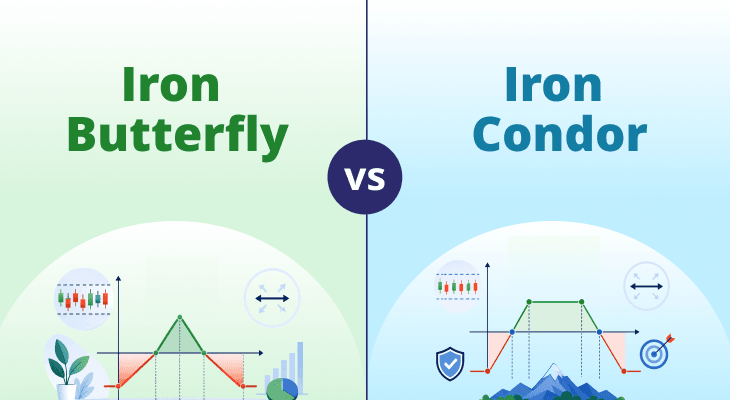
Options trading is not always about predicting the next big market move. At times, the market trades within a narrow range, creating opportunities for strategies that benefit from stability rather than direction. Two of the most widely used neutral strategies are the iron butterfly strategy and the iron condor options strategy. While both strategies use four option contracts and defined risk, they do not behave in the same way. Differences in strike selection, profit range, and risk-reward dynamics can significantly affect trading outcomes. Understanding the difference between an iron condor and an iron butterfly can help you select a strategy that matches your market expectations and trading objectives.

Iron Condor Strategy
August 19, 2026 | 0 mins read
Markets do not always trend strongly. At times, prices remain within a narrow range, making directional trades more challenging. The iron condor strategy is designed for these market conditions. It doesn’t rely on a bullish or bearish outlook. It aims to generate returns when the underlying asset remains within a predefined price range. With clearly defined risk and reward, it has become a widely used approach among traders looking to capitalise on range-bound markets while maintaining controlled exposure.
FAQ
Capital appreciation is calculated as the difference between the current value of an asset and its purchase value.
Formula: Current Value – Purchase Value.
If you bought a share for ₹200 and it is now priced at ₹260, your capital appreciation is ₹60.