

January 13, 2026 | 7 min read
Market Sentiment: Meaning, Types And Importance Explained
If you have ever noticed markets rising despite weak economic news or falling sharply even when companies report good earnings, you have witnessed the power of market sentiment. Market sentiment refers to the overall mood, emotions, and expectations of investors at a given moment. It explains why markets sometimes behave irrationally and why certain trends accelerate quickly while others fade.
Understanding market sentiment is essential for every market participant. It helps you interpret price movements, gauge risk levels, identify opportunities, and decide when to be cautious. Since markets are shaped by people who buy and sell based on fear, greed, expectations, and assumptions, sentiment acts as a real-time reflection of how these emotions influence prices.
This guide explains what market sentiment is, the types of sentiment, how to measure it, how traders use sentiment analysis, and the challenges of relying on sentiment. You will also learn useful ways to track current market sentiment directly on m.Stock.
What Is Market Sentiment?
Market sentiment describes the general attitude investors have towards the financial markets. It shows whether investors feel optimistic, pessimistic, confident, fearful, neutral, or uncertain about future price movements.
Key points to understand
- Market sentiment is a psychological factor that influences buying and selling decisions.
- It is not always based on fundamental analysis or real numbers. Sentiment often reflects emotion-driven behaviour.
- Sentiment can be bullish, bearish, or neutral depending on how market participants interpret information.
- Although sentiment is intangible, it has a strong impact on price trends, momentum, volatility and liquidity.
For example, if investors expect strong GDP growth or positive corporate earnings, they tend to buy aggressively. Prices rise and sentiment becomes bullish. If investors worry about inflation, geopolitical tensions, or uncertain policy decisions, they may exit stocks. Markets fall, and sentiment becomes bearish.
Why Market Sentiment Matters?
Market sentiment impacts short-term price movements more strongly than many other factors. Even fundamentally strong stocks can fall during widespread panic, and weak stocks can rise during phases of extreme optimism.
Here is why sentiment is important for investors and traders:
1. Predicts Near-Term Market Direction
Sentiment helps you understand whether the broader market is positioned for buying pressure or selling pressure. This helps with short-term decision-making.
2. Helps You Identify Market Turning Points
Extremely bullish sentiment often indicates overconfidence, which can precede corrections.
Extremely bearish sentiment may reflect panic selling, which sometimes signals market bottoms.
Also Read: Bull vs Bear Market - Know the Key Differences Between Them
3. Influences Volatility and Risk Levels
High fear typically increases volatility because more investors try to exit quickly.
High confidence reduces volatility because investors are comfortable holding positions.
4. Guides Trading Strategies
Traders often use sentiment to decide when to use trend-following strategies and when to switch to contrarian strategies.
5. Provides Context Beyond Fundamentals
Sentiment explains why markets can rise or fall even if fundamental metrics remain unchanged. It captures the emotional side of investing.
Types of Market Sentiment
Market sentiment can be broadly classified into three categories. Understanding each type helps you identify what phase the market is currently in.
1. Bullish Sentiment
A bullish sentiment reflects optimism. Investors expect prices to rise and are comfortable taking risks.
Key traits
- Higher buying volumes
- Positive news impact grows stronger
- Increased participation by retail investors
- Greater interest in mid-cap and small-cap stocks
- Strong momentum across sectors
What typically causes bullish sentiment
- Positive economic data
- Strong corporate earnings
- Policy reforms
- Growing FPI or DII inflows
- Improved global market cues
2. Bearish Sentiment
A bearish sentiment reflects pessimism. Investors expect prices to fall and prefer to reduce exposure.
Key traits
- Higher selling pressure
- Negative news impact grows stronger
- Decline in speculative trading
- Shift towards safe assets like gold, bonds or cash
- Reduced risk appetite across sectors
What triggers bearish sentiment
- Recession fears
- Geopolitical tensions
- Weak global markets
- Rising interest rates
- Sharp fall in earnings
3. Neutral or Mixed Sentiment
Sometimes markets do not show clear optimism or pessimism. Prices may move sideways.
Characteristics
- Lower volatility
- Balanced buying and selling
- Investors wait for major events or data
- Consolidation phases before breakout or breakdown
How to Measure Market Sentiment?
Market sentiment may be emotional, but it can be measured using indicators, market data, and behavioural signals. Analysts track several quantitative and qualitative tools to understand what investors are thinking.
Below are some of the most popular ways to measure current market sentiment.
1. Volatility Index (VIX)
The VIX measures expected volatility in the near term. It is often called the fear index.
- High VIX means high fear and bearish sentiment.
- Low VIX indicates stability and possibly bullish sentiment.
For example, when VIX rises sharply, markets usually correct because investors expect more uncertainty.
2. Market Breadth Indicators
Breadth indicators examine how many stocks are moving up versus how many are falling. These indicators show whether the broader market supports the trend.
Examples:
- Advance-Decline Line
- Percentage of stocks above 200-day average
- Market-wide position limits
If most stocks rise, the market shows strong bullish sentiment even if the indices are flat.
3. Moving Averages and Price Trends
When markets trade above key moving averages like the 50-day or 200-day average, sentiment is usually positive. When markets fall below these averages, sentiment often turns negative.
4. Options Market Sentiment
Options trading gives clear clues about investor expectations.
Indicators include:
- Put-call ratio
- Implied volatility
- Options premiums
- Skew in option pricing
For instance, a high put-call ratio may indicate growing fear among traders.
5. Trading Volume
Volume confirms sentiment strength.
- Rising prices with high volume show strong bullish sentiment.
- Falling prices with high volume signal strong bearish sentiment.
6. News and Social Media Sentiment
Modern sentiment analysis relies on:
- Social media trends
- News headlines
- Analyst commentary
- Search trends
Artificial intelligence tools scan thousands of posts to determine whether the mood is positive or negative.
Trading Strategies Using Market Sentiment
Market sentiment is not just for understanding the market. Traders actively use it to make trading decisions. Below are some of the most common strategies.
1. Trend-Following Strategy
When sentiment is strongly bullish or bearish, traders follow the momentum.
How it works
- Buy stocks that show strong upward movement during bullish sentiment.
- Short-sell stocks that show weakness during bearish sentiment.
- Use moving averages, breakout levels and volume to confirm the trend.
This strategy works best when sentiment is clear and strong.
2. Contrarian Strategy
Contrarian traders take the opposite side of extreme sentiment.
When it works
- When sentiment is extremely bullish, markets may be overheated. Contrarians may take profits or short-sell.
- When sentiment is extremely bearish, markets may be oversold. Contrarians may buy quality stocks at discount prices.
Extreme fear or extreme greed often creates the best contrarian opportunities.
3. Sentiment-Based Options Strategies
Sentiment can be used to build options strategies such as:
- Straddles during high volatility expectations
- Bull call spreads in bullish sentiment
- Bear put spreads in bearish sentiment
These strategies protect against risk while letting traders benefit from sentiment-driven market moves.
4. Sector Rotation Strategy
Sentiment affects some sectors more than others.
- In bullish sentiment, cyclical sectors like banking, auto, and capital goods perform well.
- In bearish phases, defensive sectors like FMCG, healthcare and utilities perform better.
By rotating sectors, traders align their portfolios with prevailing sentiment.
Limitations of Market Sentiment
While sentiment is extremely useful, it also has limitations. You should not rely solely on sentiment to make investment decisions.
- Sentiment Can Be Emotional and Irrational: Markets often overreact to news. Sentiment can quickly shift from extreme optimism to extreme fear without any change in fundamentals.
- False Signals Are Common: Sometimes sentiment indicators give contradictory signals. For example, the put-call ratio may suggest fear while prices continue rising.
- Difficult to Predict the Exact Turning Point: Sentiment analysis can highlight extreme conditions, but it cannot predict when the reversal will happen.
- Market Manipulation Can Influence Sentiment: Fake news, rumours, and coordinated buying or selling can temporarily distort sentiment.
- Short-Term Focus: Sentiment analysis works well for short-term trading but may not always align with long-term investing goals.
How to Track Market Sentiment on m.Stock
Platforms like m.Stock provide tools and market data that help you understand current market sentiment easily. Here is how you can use m.Stock to stay ahead:
- Monitor Indices and Sector Trends: Live index movements reflect collective market behaviour. Widespread declines or rallies show strong sentiment shifts.
- Track Volume Data: Volume spikes on stock charts help identify whether sentiment is strengthening or weakening.
- Use Technical Indicators: Indicators like RSI, MACD, moving averages, and support or resistance zones help interpret sentiment visually.
- Observe Options Data: The options chain allows you to track implied volatility, open interest, and put-call ratios for sentiment signals.
Read Market Updates and Insights: Daily updates give you a snapshot of the current market mood and what is driving it.
By combining these tools, you get a clearer sense of ongoing sentiment and can align your strategy accordingly.
Conclusion
Market sentiment influences nearly every move in the share market. Whether you are a beginner or a seasoned trader, understanding investor psychology gives you a major advantage. Sentiment helps you interpret short-term trends, identify potential risks, and make informed decisions during uncertain conditions.
However, sentiment should always be combined with fundamental analysis and risk management. It is a guide, not a guarantee. When used smartly, it can help you navigate volatile markets, build better strategies, and avoid common behavioural mistakes.
Also Read: Greed and Fear in Trading: How Emotions Shape the Market
More Related Articles

How Rising Oil Prices Impact Stock Market Investments
 October 9, 2026 | 0 mins read
A petroleum price hike, driven by rising global crude oil prices, can have far-reaching consequences for the economy and financial markets worldwide. As India imports over 88% of its crude oil requirements, understanding the impact of rising oil prices on stock market investments is essential for investors.

Understanding the meaning and impact of a current account deficit on an economy
October 9, 2026 | 0 mins read
The current account is an important component of a country’s balance of payments. A current account deficit occurs when a country’s total payments to the rest of the world exceed its total earnings from abroad. These payments include imports of goods and services, investment income paid to foreign investors, and current transfers. These earnings include receipts from exports of goods and services, income earned from overseas investments, and current transfers such as remittances. A country’s current account deficit is generally expressed as a percentage of its gross domestic product (GDP).
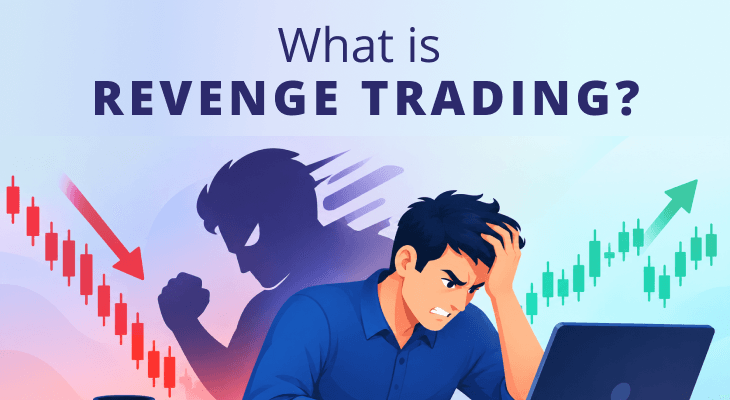
Revenge trading meaning explained: Causes, impact, and how to avoid it
October 9, 2026 | 0 mins read
in revenge trade, they are often driven by emotions such as anger, frustration, fear, or disappointment rather than sound analysis. In the process, they overlook carefully planned trading strategies designed around their financial goals, investment horizon, and risk appetite. More often than not, revenge trading results in further losses, creating a vicious cycle that becomes increasingly difficult to escape.
FAQ
Market sentiment affects buying and selling behaviour, which directly influences stock prices. Positive sentiment encourages investors to buy, pushing prices higher. Negative sentiment causes selling pressure, leading to price declines. Even if fundamentals remain unchanged, sentiment can drive short-term movements due to fear, greed or expectations about future performance.