
February 26, 2025 | 7 min read
What is a Limit Order and How Does it Work?
Traders and investors immerse themselves in the stock market with two basic aims: either they want to sell stocks at a profit, the highest possible price they can get at any given time, or they want to buy stocks low so they can sell them high sometime in the future. While placing an order to buy or sell assets and securities, the most common being stock in the equity markets, investors and traders use a “limit order” method to hedge risk and get the best prices possible.
The control and management of stock market trading is a complex process. However, placing a limit order makes the process simple and convenient, based on an investor’s advanced study of the stock placed in the limit order. A useful way to navigate the procedure of buying and selling stocks is the limit order system that permits traders and investors to have some control over prices in the stock market and when to transact. For traders and investors, gaining knowledge of the limit order technique of trading is important, especially staying updated about how this works.
What is a limit order?
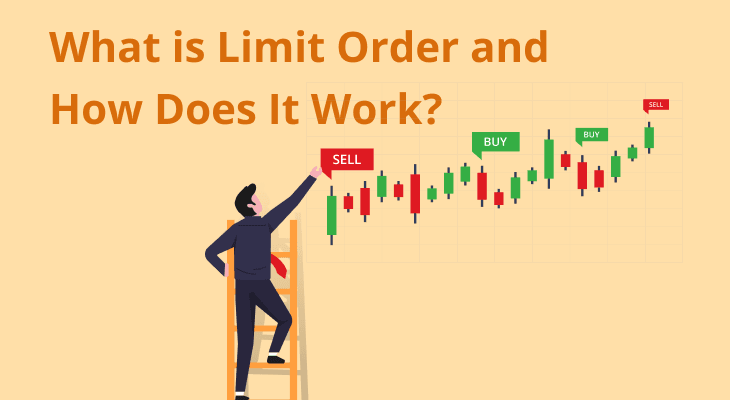
A limit order permits investors to buy or sell a stock at a set price or a better price than the one set. In case the investor places a buy limit order, the order is only carried out at the limit price set or below the limit price set. For sell limit orders, the order is exercised only if the stock reaches the sell limit price or is anywhere above the set limit price. Simply put, a limit order is a stipulation that permits investors to have higher control over stock prices when they wish to transact in the stock market.
Certain things to note about a limit order are critical to understanding how this method works in trading. For instance, limit orders for stocks do not come with a 100% guarantee of execution. This is because buy limit orders are carried out in a chronological manner and it is not certain that a buyer will definitely find a seller willing to sell at the price stipulated in the given limit order. Moreover, different kinds of limit orders can be placed. For instance, a day order is a limit order that is placed in a day trading session and must be exercised within a single trading day, or by the end of the trading day in which it was placed. In case the limit price is not achieved, the order is cancelled or expired.
Whether an investor places a buy limit order or a sell limit order, the order is only put into action at a specific time and when a set price is reached. However, for certain limit orders, such as market limit orders, there is no period specified in the order. Rather, the limit order to buy or sell a stock is placed when the stock reaches the best possible market price.
Key Points to Know About Placing Limit Orders
Understanding the answer to the question, “What is a limit order?” is critical to go further in your grasp of limit orders and how they work. Now that you have some basic information, here are key elements to know how limit orders work in stock trading:
Execution in Same Trading Session: Typically, when a limit order is placed by an investor, it must be carried out within the same trading day, that is, the same trading session. For instance, if a buy limit order has been issued to buy 10 shares of a company at ₹90 per share, the limit order will be exercised only if the share price of ₹90 is reached. Otherwise, the order stands cancelled and does not get carried over to the next day.
No Guarantee of Orders Exercised: As limit orders are bound by price limits and time limits (day trading session limits), there is no guarantee that a limit order will be filled. In case prices set by the order are not achieved, the order will expire or be cancelled by your broker.
What is meant by a trading session?
Since a limit order, whether it is a buy limit order or a sell limit order, is generally limited in its execution by a single trading session, you should know what a trading session means. In India, and typically around the world, one trading session means one day of trading in the stock market. So, when you ask, “What is a limit order in stocks?”, the answer would likely be that it is a buy limit order or sell limit order that must be executed when a stipulated order price of the said stock is reached within the current trading session.
Trading sessions in the Indian stock market begin at 9.15 a.m. and last till 3.30 p.m. Typically, trading sessions are open on weekdays, Monday to Friday. However, in some cases, such as on festival days, the Securities & Exchange Board of India (SEBI) schedules trading sessions on holidays too.
When should you place a limit order?
Limit orders can be placed when investors are not in a rush to purchase or sell stock. Limit orders are not exercised immediately after you place them, since a price has to be realised, your bid or ask price. Typically, limit orders are given when main support or resistance levels exist, which permits investors to get optimal prices in terms of buying and selling. Investors are also allowed to divide purchase and sale orders into smaller and multiple orders. In this way, investors achieve average costs that are effective in trading.
Besides the above, you must have enough experience to gauge when and where to place your limit order price. In case a buy limit order is placed on the very low side, it may not get carried out. This wouldn’t be of any advantage to investors and the same goes for a sell limit order being placed too high. Once investors gain experience, they can choose the potentially profitable price and expect orders to be exercised.
Benefits of Using Limit Orders
The major benefit that investors have when placing a limit order is that they can place a limit order at the highest price at which orders can be opened or closed. If the price of the stock reaches the level stipulated in the order, the order is exercised effectively. Consequently, a limit order permits you to carry out trades at clearly defined price levels while there is no need for you to constantly check the price of the stock.
Furthermore, the process of placing a limit order gives you an edge when it comes to convenience. You can place a limit order before or after market trading hours since some brokerages permit this. In case the order is not filled or expires, it cannot be carried out in the subsequent trading session.
Conclusion
Limit orders may be considered when investors wish to prevent a missed trading opportunity. Nonetheless, limit orders are not without their limitations. Consequently, it is crucial to keep in mind that the tactic that safeguards you from high losses, can also prevent you from getting returns. In very volatile markets, for instance, a limit order may be the reason that investors fail to take advantage of the limit order opportunity since limit orders may be filled too quickly or not filled at all.
The idea to leverage a limit order is to set a limit on your order that lies beyond or outside daily shifts in price. Additionally, you may want to consider that the price you set is at a limit at which you are happy with the result. Either way, investors must exert some control over the prices of stocks while they buy or sell them. Setting limit orders may be a way to do this.
More Related Articles
Understanding the meaning and benefits of the systematic trading system
 October 23, 2026 | 0 mins read
A systematic trader is an individual who uses a predesigned and backtested trading strategy to buy and sell financial instruments such as stocks, futures, currencies, or commodities. Instead of relying on gut feelings or emotions, they use a systematic trading system built on predefined rules, quantitative analysis, and technology to make trading decisions.

Muhurat Trading 2026: Will stock market be open on 8th November Sunday?
October 23, 2026 | 0 mins read
Muhurat Trading 2026 will be held on Sunday, 8 November 2026, on Diwali Laxmi Puja. NSE and BSE will open their equity markets for a special afternoon session, with continuous trading beginning at 2:20 pm IST. Trading in securities not covered by the Closing Auction Session (CAS) will continue until 3:30 pm, while continuous trading in CAS-eligible securities will end at 3:15 pm. For investors, Muhurat Trading combines a long-standing Diwali tradition with an opportunity to participate in the stock market. Here is a guide to the date, timings and session structure for 2026.

How stock market psychology influences investment decision-making
October 23, 2026 | 0 mins read
Stock market psychology refers to the collective emotions, sentiment, and behavioural biases that influence the buying and selling decisions of investors. Rather than relying on fundamental and technical analysis, investors may sometimes react based on emotions, which can influence market movements.
FAQ
There are two different kinds of limit orders. Limit orders may be placed by investors while purchasing or selling assets or securities, such as stocks. A buy limit order is placed when an investor wishes to buy a stock and stipulates that it will be purchased, and the order executed at the specified price or below it. A sell limit order is placed by an investor, and this stipulates that a stock will be sold when it reaches a particular price or rises above the stipulated price. In either case, the investor decides when a particular stock will be purchased or sold depending on the limit price that they determine. Therefore, the transaction comes with a guarantee to be carried out at the limit price or a price that is better than the limit price.