

May 29, 2026 | 11 min read
How to Rollover Futures in India: Step-by-Step Guide
When you trade futures, expiry dates are more than routine deadlines. They actively shape your positions, costs, and overall trading strategy. As futures contracts have a fixed validity, you must decide before expiry whether to close your position or extend it by rolling over into the next contract. Being aware of rollover in futures is crucial if you want to stay invested seamlessly, control trading costs, and avoid last-minute exits. This blogwalks you through how futures rollover works in India, the right time to do it, the costs involved, and the risks you need to manage.
What Is Rollover in Futures?
Rollover in futures is the process of carrying an open futures position from the current contract into the next expiry when you want to stay invested beyond the contract’s end date. Since every futures contract has a fixed expiry, continuing the same trade requires you to exit the expiring contract and re-enter a new one with a later maturity. Rollover is not an automatic extension of your existing position. It is a deliberate trading action that keeps your market view intact while changing only the contract month. Traders typically rollover when their outlook on the underlying asset remains valid and they prefer continuity over closing the trade.
In essence, rollover allows you to:
- Maintain exposure without facing settlement on expiry
- Shift into a more liquid contract as expiry approaches
- Manage positions smoothly across monthly contract cycles
Why Do Traders Rollover Futures Contracts?
Traders do not rollover positions out of habit. They do it to preserve strategy continuity while managing timing, liquidity, and costs as expiry approaches. When the market view remains intact, but the contract is nearing expiry, a future contract rollover becomes the most practical option.
Here’s why traders choose to rollover:
1. To Preserve the Trade Thesis
If your bullish or bearish outlook hasn’t changed, a future contract rollover lets you continue the same trade beyond expiry. You exit the expiring contract and re-enter the next one, keeping exposure intact without altering your strategy.
2. To Manage Expiry Timelines
Futures contract rollover dates are fixed and predictable in India. Traders plan rollovers ahead of expiry to avoid last-day volatility, widening spreads, and settlement-related pressures that can distort prices and execution quality.
3. To Control Rollover Cost
Every rollover involves a price difference between contracts. Traders assess the rollover cost, the premium, or the discount of the next-month contract before deciding whether extending the position still makes economic sense.
4. To Stay in Liquid Contracts
Liquidity typically shifts to the next expiration well before the actual expiration date. Rolling over early helps you trade in contracts with higher volumes and tighter bid–ask spreads, reducing execution risk and slippage.
5. To Support Positional Trading
Positional traders often hold views across multiple weeks or months. Regularly managing futures contract rollover dates allows them to carry positions forward systematically while monitoring costs and margin requirements.
Used thoughtfully, rollover is not a routine task. It’s a strategic decision that balances conviction, timing, and rollover cost to keep trades efficient and controlled.
Futures Contract Rollover Dates in India
In India, futures rollover revolves around clearly defined expiry timelines. It is essential to track dates well in advance rather than reacting at the last moment. Every futures contract follows a fixed monthly expiry cycle, and rollover decisions are usually made before the actual expiry day. Both stock futures and index futures typically expire on the last Thursday of the contract month. If that Thursday is a trading holiday, the expiry is shifted to the previous trading session. These dates effectively act as the anchor points for future contract rollover dates in India.
However, experienced traders do not wait until expiry to rollover. Liquidity begins migrating to the next-month contract several sessions earlier, often three to five trading days before expiry. This transition period is where most rollovers take place, allowing you to avoid sharp price swings, wider spreads, and last-day volatility. By aligning rollover decisions with liquidity rather than just calendar dates, you gain better execution, lower costs, and greater control over your futures positions.
When Should You Rollover a Futures Contract?
There is no single perfect rollover day, but timing matters.
Most traders tend to rollover:
- 3 to 5 trading days before expiry, when liquidity starts shifting
- When volumes in the next-month contract overtake the near-month contract
- When bid–ask spreads in the current contract begin widening
Rolling over too early may increase costs, while rolling over too late may expose you to sharp expiry-day volatility.
Why Do Traders Rollover Futures Contracts?
Traders don’t rollover positions out of habit. They do it to preserve strategy continuity while managing timing, liquidity, and costs as expiry approaches. When the market view remains intact, but the contract is nearing expiry, a futures contract rollover becomes the most practical option.
Here’s why traders choose to rollover:
1. To Preserve the Trade Thesis
If your bullish or bearish outlook hasn’t changed, a futures contract rollover lets you continue the same trade beyond expiry. You exit the expiring contract and re-enter the next one, keeping exposure intact without altering your strategy.
2. To Manage Expiry Timelines
Futures contract rollover dates are fixed and predictable in India. Traders plan rollovers ahead of expiry to avoid last-day volatility, widening spreads, and settlement-related pressures that can distort prices and execution quality.
3. To Control Rollover Cost
Every rollover involves a price difference between contracts. Traders assess the rollover cost, the premium, or the discount of the next-month contract before deciding whether extending the position still makes economic sense.
4. To Stay in Liquid Contracts
Liquidity typically shifts to the next expiration well before the actual expiration date. Rolling over early helps you trade in contracts with higher volumes and tighter bid–ask spreads, reducing execution risk and slippage.
5. To Support Positional Trading
Positional traders often hold views across multiple weeks or months. Regularly managing futures contract rollover dates allows them to carry positions forward systematically while monitoring costs and margin requirements.
How to Rollover Futures in India?
Rolling over a futures position in India is a straightforward process, but it needs to be done with timing and execution in mind. The goal is to carry your existing market view into the next expiry while keeping costs and risk under control. Executing each step carefully reduces cost, slippage, and expiry-related risk.
Step 1: Reconfirm Your Trade View
Before initiating a rollover, reassess your market outlook. If your bullish or bearish view on the underlying asset remains valid, rolling over seems reasonable. If not, exiting the position may be the better decision.
Step 2: Identify the Next Expiry Contract
Check the available contract months and confirm the upcoming expiry. Understanding futures contract rollover dates helps you plan the shift before liquidity dries up in the near-month contract.
Step 3: Monitor Liquidity and Spreads
Observe trading volumes and bid–ask spreads. Rollover should be done when liquidity has clearly shifted to the next-month contract to ensure smooth execution and minimal slippage.
Step 4: Exit the Current Futures Contract
Square off your position in the expiring contract at the prevailing market price. This step is necessary because futures contracts cannot be carried beyond their expiry date.
Step 5: Enter the Next-Month Futures Contract
Open a new position in the next expiry contract with the same quantity and direction. This completes the future contract rollover and maintains uninterrupted market exposure.
Step 6: Evaluate Rollover Cost and Margins
Compare prices between the two contracts to assess the rollover cost. Also check margin requirements, as they may differ between expiries and affect your available capital.
Step 7: Use Spread or Rollover Tools (If Available)
Many trading platforms offer spread-based rollover features that execute both legs together. Using these tools can reduce execution risk and ensure better price alignment.
What Is Rollover Cost in Futures?
Rollover cost is the price difference between the near-month contract and the next-month contract at the time of rollover.
- If the next-month contract is priced higher, you incur a positive cost
- If it is priced lower, rollover may work in your favour
The cost is closely linked to market structure:
- In contango markets, rollover cost is usually negative
- In backwardation markets, rollover may offer a benefit
Apart from price differences, transaction charges, brokerage, and taxes also add to the total rollover cost.
Example of Futures Contract Rollover
Let’s walk through a simple, practical example to understand how a futures contract rollover works in real trading conditions.
Rollover Calculation Formula
Rollover Cost = Price of Next-Month Futures − Price of Current-Month Futures
Suppose you are holding a long position in a stock futures contract that is nearing expiry.
- Current-month futures price (June): ₹1,500
- Next-month futures price (July): ₹1,530
To rollover the position:
- You sell the June futures at ₹1,500 to close the expiring contract.
- You buy the July futures at ₹1,530 to open the next-month contract.
Rollover Cost = 1,530 − 1,500 = ₹30 per unit
This ₹30 represents the rollover cost (excluding brokerage, taxes, and exchange charges). Your market view remains unchanged, but your effective entry price increases due to the higher-priced next-month contract. If the July futures had traded at ₹1,480 instead, the rollover would have resulted in a ₹20 benefit, illustrating how rollover impact depends on market structure.
Risks Involved in Futures Rollover
Rolling over futures is a practical way to maintain positions beyond expiry, but it is not without risk. These risks often stem from timing, market structure, and costs rather than price direction, making them easy to overlook if rollover is treated as routine.
1. Accumulating Transaction Costs
Every rollover requires closing one contract and opening another, resulting in repeated brokerage, exchange fees, and statutory charges. Over multiple rollovers, these costs compound and can significantly reduce net profitability, especially for traders holding long-term positional futures.
2. Rollover Cost Impact
When the next-month contract trades at a premium, the price difference becomes a rollover cost. In markets with persistent contango, this repeated cost can steadily erode returns, even if the underlying asset moves in your expected direction.
3. Liquidity Decline Near Expiry
Liquidity in the expiring contract often dries up close to expiry as traders shift to the next month. Rolling over too late can force execution at unfavourable prices due to wider bid–ask spreads and limited order depth.
4. Execution and Slippage Risk
Rollover involves two separate trades executed in quick succession. In volatile markets, price movement between the exit and entry can lead to slippage, increasing the effective rollover cost and disrupting planned trade economics.
5. Changing Margin Requirements
Margin requirements can vary between contract months due to volatility or exchange adjustments. If margins increase unexpectedly during rollover, you may need additional capital or be forced to reduce position size at short notice.
Factors Affecting Rollover Decisions
Deciding whether to rollover a futures position is not automatic. It depends on a mix of market conditions, costs, and strategy alignment. Evaluating these factors helps you decide if extending the trade is still relevant or not.
1. Market View and Trade Conviction
Your outlook on the underlying asset is the starting point. If the original trade rationale remains valid, rollover may be justified. If market conditions have changed, exiting the position may be wiser than extending exposure.
2. Rollover Cost Structure
The price difference between the current and next month's contract directly affects profitability. A high rollover cost can dilute returns, especially if you plan to hold the position across multiple expiries.
3. Liquidity Across Expiries
Liquidity typically shifts to the next contract before expiry. Rollover decisions should factor in trading volumes and bid–ask spreads to avoid slippage and poor execution in illiquid contracts.
4. Futures Contract Rollover Dates
Knowing futures contract rollover dates helps you plan effectively. Rolling over too late can expose you to expiry-day volatility, while rolling too early may increase costs due to wider price gaps.
5. Margin and Capital Availability
Margin requirements may change between contract months. Before rolling over, ensure you have adequate capital to meet revised margins without straining your trading account or forcing position adjustments.
6. Volatility and Event Risk
Upcoming events, such as results, policy announcements, or macro data, can impact volatility. Elevated uncertainty may influence whether you choose to rollover or close the position before expiry.
Conclusion
Rollover is an essential part of futures trading, but it should never be treated as a routine action. Understanding how rollover works, when to execute it, and how rollover costs affect profitability allows you to carry positions forward with control rather than compulsion. By tracking futures contract rollover dates, monitoring liquidity shifts, and reassessing your market view before every rollover, you can avoid unnecessary costs and expiry-day risks. Whether you trade index or stock futures, a well-timed rollover helps preserve strategy continuity while managing capital efficiently.
Also Read: Option Expiry & Rollovers | Duration, Premiums & Strategy
More Related Articles

How Rising Oil Prices Impact Stock Market Investments
 October 9, 2026 | 0 mins read
A petroleum price hike, driven by rising global crude oil prices, can have far-reaching consequences for the economy and financial markets worldwide. As India imports over 88% of its crude oil requirements, understanding the impact of rising oil prices on stock market investments is essential for investors.
Understanding the meaning and impact of a current account deficit on an economy
October 9, 2026 | 0 mins read
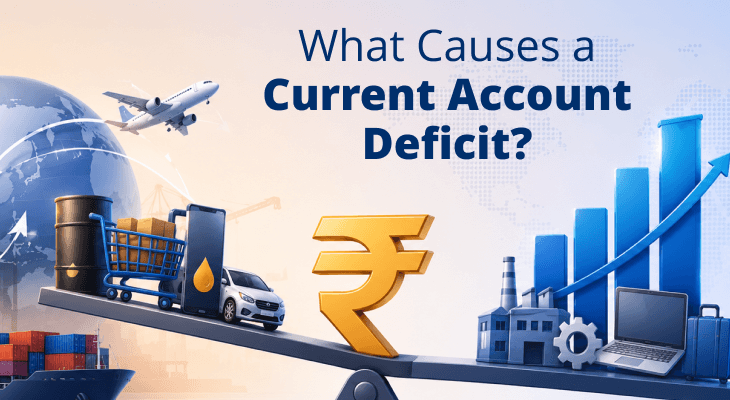
The current account is an important component of a country’s balance of payments. A current account deficit occurs when a country’s total payments to the rest of the world exceed its total earnings from abroad. These payments include imports of goods and services, investment income paid to foreign investors, and current transfers. These earnings include receipts from exports of goods and services, income earned from overseas investments, and current transfers such as remittances. A country’s current account deficit is generally expressed as a percentage of its gross domestic product (GDP).

Revenge trading meaning explained: Causes, impact, and how to avoid it
October 9, 2026 | 0 mins read
in revenge trade, they are often driven by emotions such as anger, frustration, fear, or disappointment rather than sound analysis. In the process, they overlook carefully planned trading strategies designed around their financial goals, investment horizon, and risk appetite. More often than not, revenge trading results in further losses, creating a vicious cycle that becomes increasingly difficult to escape.
FAQ
No, futures rollover is not compulsory. Before expiry, you can either exit your position or carry it forward through rollover. If no action is taken, the contract is settled as per exchange rules. Rollover remains a strategic choice, not a mandatory requirement.