

July 10, 2026 | 7 min read
Auto Sector Results 2026: Stability or Volatility Ahead?
The Indian automobile industry has entered FY27 with strong momentum, supported by resilient demand, policy support, and structural shifts like electrification. However, as you assess auto sector stocks, you will notice that growth is not uniform. The sector reflects both stability in domestic demand and volatility arising from global headwinds. Understanding these dynamics is essential if you want to interpret automotive sector trends and make informed investment decisions. This blog will guide you in exploring the important aspects of the auto sector, such as sector overview, demand, and other important factors.
Sector Snapshot
FY26 marked a phase of strong yet uneven growth for the Indian automobile industry. The sector delivered a notable outperformance, with the BSE Auto index rising nearly 32%, compared to around 8.5% growth in the Sensex. This rally was not concentrated in a few names. Nearly 40 auto companies generated over 20% returns, indicating broad-based participation across auto sector stocks. Within this, select players stood out. SML Isuzu delivered approximately 185% returns, while Force Motors gained around 121%, reflecting strong earnings visibility and investor confidence.
From an operational standpoint, demand trends remained robust across segments:
- Passenger Vehicles: Retail sales grew by nearly 13%, supported by premiumisation and strong urban demand
- Two-Wheelers: Registered around 13.4% growth YoY, driven by rural recovery and festive demand
- Industry Revenue: Auto OEMs saw a healthy year-on-year revenue expansion throughout FY26, with the domestic industry's overall retail touching a historic 2.96 crore units (+13.30%).
On the policy front, the government has continued to strengthen the sector’s long-term outlook. The Union Budget 2026 focuses on:
- Infrastructure development to boost logistics and vehicle demand
- Incentives to accelerate EV adoption in India
- Manufacturing support to enhance domestic capabilities
This combination of strong market performance and policy backing highlights a key shift in automotive sector trends.
Demand Trends
Demand in FY26 has remained resilient, supported by improving macro conditions and evolving consumer behaviour. However, growth is not uniform across segments. Instead, you are seeing a mix of premiumisation, rural recovery, and replacement-led demand shaping the sector.
1. Premiumisation Continues To Drive Value
The passenger vehicle segment continues to benefit from a clear premiumisation trend. SUVs and higher-end variants are gaining share, contributing to value growth. Passenger vehicle sales recorded nearly 19.2% retail growth, reflecting strong urban demand and preference for feature-rich models.
2. Rural Demand Shows Strong Recovery
Rural demand has improved significantly, especially for two-wheelers. The sales grew by approximately 12.5% to 13.4% YoY, indicating a revival in entry-level mobility demand.
3. Financing And Affordability Remain Key Drivers
Vehicle financing continues to play a critical role in sustaining demand. Interest rate levels, loan availability, and credit conditions directly influence purchasing decisions. Any tightening in financing conditions can impact entry-level segments more significantly.
4. Fuel Prices And Ownership Cost Influence Buying Behaviour
Fuel price volatility has made buyers more conscious of overall ownership costs. This has influenced vehicle choice and is gradually supporting EV adoption in India, especially among urban consumers and commercial fleet operators seeking cost efficiency.
5. Demand Supported By Strong Revenue Momentum
The strength in demand is also reflected in financial performance. Auto OEMs, excluding Tata Motors, delivered a historic 13.30% full-year retail expansion in FY26, maintaining record-breaking, multi-segment market momentum across the entire country.
EV Transition
The transition towards electric mobility is steadily reshaping the Indian automobile sector. While internal combustion engine vehicles continue to dominate, EV adoption in India has entered a phase of measurable scale and growth.
1. EV Adoption Is Expanding Across Segments
Electric vehicle adoption has accelerated over the past few years. Total EV sales in India crossed 2.3 million units in 2025, accounting for nearly 8% of all vehicle sales. These figures indicate a clear shift of individuals towards EVs. Two-wheelers continue to dominate this transition, contributing over 56% of total EV sales. On the other hand, three-wheelers and commercial fleets are also witnessing strong uptake.
2. Strong Growth Momentum in Registrations
EV registrations have increased significantly, rising to 24.52 lakh units in FY26 from 19.68 lakh units in FY25, reflecting sustained demand momentum with a 24.6% year-on-year growth. In addition, overall EV penetration reached approximately 8.5% of total automotive sales for the full fiscal year of FY26, highlighting a steady rise in market share across segments driven primarily by two-wheelers and three-wheelers.
3. Policy Support Continues To Drive Growth
Government initiatives remain a key catalyst. Incentives under schemes such as FAME, along with Production Linked Incentive schemes for batteries and auto components, are supporting both demand and localisation. India has also set a clear long-term target of achieving 30% EV share in total vehicle sales by 2030, reinforcing policy commitment towards clean mobility.
4. Cost Advantage is Supporting Consumer Shift
Lower running and maintenance costs continue to make EVs attractive, particularly for high-usage segments. This is evident in the rapid electrification of fleet operators and last-mile delivery services, where cost efficiency directly impacts profitability.
Commodity Prices Impact
Commodity prices continue to play a critical role in shaping the profitability of the automobile sector. Even when demand remains strong, fluctuations in input costs can directly influence margins and pricing strategies across auto sector stocks.
1. Key Raw Materials Remain Volatile
The sector depends heavily on commodities such as steel, aluminium, and rubber. In FY26, prices of these inputs remained volatile due to global supply dynamics and geopolitical factors. This created cost pressures for manufacturers, particularly in mass-market segments where pricing flexibility is limited.
2. Margin Sensitivity Remains High
Auto companies operate with cost-sensitive business models. Any sharp increase in raw material prices can compress margins quickly. While easing commodity prices in certain periods offered temporary relief, overall volatility continued to impact earnings visibility.
3. Limited Pricing Power in Entry Segments
Manufacturers often face constraints in passing on cost increases, especially in two-wheelers and entry-level vehicles. Price-sensitive consumers in these segments limit the extent to which companies can fully transfer higher costs, affecting profitability.
4. Strategic Cost Management By Companies
To manage rising input costs, companies have adopted multiple strategies:
- Selective price hikes across premium variants
- Cost optimisation through supply chain efficiencies
- Increased localisation of components
- Focus on higher-margin products
These measures have helped partially offset the impact of volatile commodity prices.
Export Outlook
Exports continue to play an increasingly important role in the growth trajectory of the Indian automobile sector. While domestic demand remains strong, global markets are now contributing meaningfully to overall volumes and revenue, shaping broader automotive sector trends.
1. Export Volumes Show Strong Growth Momentum
India’s automobile exports crossed 5.3 million units in FY25, registering nearly 19% growth, driven by strong demand across passenger vehicles, two-wheelers, and commercial vehicles. This momentum has carried into FY26, with the sector recording double-digit export growth in the first half of the year. It reflects rising global acceptance of India-manufactured vehicles.
2. Segment-Wise Export Performance Remains Strong
- Passenger Vehicles: Exports reached a record 0.91 million units in FY26, growing 17.5% year-on-year
- Two-Wheelers: Exports stood at around 5.18 million units, registering 23.4% growth
- Three-Wheelers: Export volumes grew significantly by 50.1%, supported by last-mile mobility demand
This highlights that export growth is broad-based but led primarily by two-wheelers and small vehicles.
4. Emerging Markets Drive Demand
Regions such as Africa, Latin America, and parts of Asia continue to be key export destinations. Demand in these markets is driven by affordability, fuel efficiency, and the suitability of India-made vehicles for local conditions.
5. Export Growth Supported By Policy Push
Government initiatives such as export promotion schemes, logistics improvements, and localisation efforts are strengthening India’s position in global markets.
6. Global Risks Continue To Influence Outlook
Despite strong growth, exports remain sensitive to external factors:
- Geopolitical tensions affecting trade routes and supply chains
- Currency fluctuations are impacting competitiveness
Conclusion
The Indian auto sector in FY26 reflects a mix of strong growth and evolving challenges. Robust demand, premiumisation, and rising EV adoption in India continue to support long-term expansion. However, commodity price volatility and global uncertainties still influence overall sector performance. You will notice that growth is becoming more segmented, with each category responding to different drivers. This makes tracking automotive sector trends essential for better decision-making. For investors, auto sector stocks offer opportunities. However, they require a balanced approach that considers both structural growth drivers and cyclical risks shaping the sector’s future trajectory.
More Related Articles

How Traders Use Maximum Drawdown to Manage Portfolio Risk?
 August 19, 2026 | 0 mins read
When evaluating an investment or trading strategy, returns usually receive the most attention. However, returns alone do not tell investors how much risk was taken to achieve them. Two portfolios may deliver the same annual return, but one may have experienced far steeper losses during market downturns. This is where max drawdown becomes useful. It measures the largest decline in the value of a portfolio, trading account, or investment from its highest point to its lowest point before a new peak is reached. Instead of focusing only on profits, it shows the worst historical loss an investor would have experienced by staying invested.
Iron Butterfly vs Iron Condor: Which Strategy Is Better?
August 19, 2026 | 0 mins read
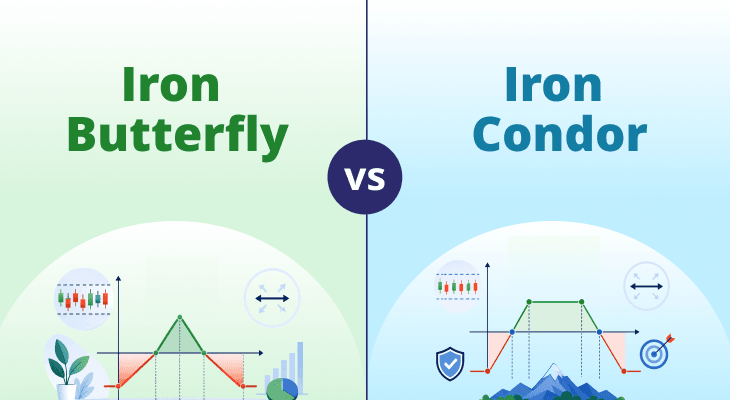
Options trading is not always about predicting the next big market move. At times, the market trades within a narrow range, creating opportunities for strategies that benefit from stability rather than direction. Two of the most widely used neutral strategies are the iron butterfly strategy and the iron condor options strategy. While both strategies use four option contracts and defined risk, they do not behave in the same way. Differences in strike selection, profit range, and risk-reward dynamics can significantly affect trading outcomes. Understanding the difference between an iron condor and an iron butterfly can help you select a strategy that matches your market expectations and trading objectives.

Iron Condor Strategy
August 19, 2026 | 0 mins read
Markets do not always trend strongly. At times, prices remain within a narrow range, making directional trades more challenging. The iron condor strategy is designed for these market conditions. It doesn’t rely on a bullish or bearish outlook. It aims to generate returns when the underlying asset remains within a predefined price range. With clearly defined risk and reward, it has become a widely used approach among traders looking to capitalise on range-bound markets while maintaining controlled exposure.
FAQ
Companies such as SML Isuzu and Force Motors stood out, supported by operational efficiency and segment tailwinds, and delivered multibagger returns due to strong earnings growth and demand momentum. However, such returns remain stock-specific and depend on execution, valuation, and broader market conditions. However, past performance does not guarantee future returns, and this is not a recommendation to invest in any specific stock.