

July 10, 2026 | 8 min read
Difference Between Sensex and Nifty Explained
In the Indian equity market, a broad view of performance is usually captured through two key indices: BSE Sensex and NIFTY 50. Both are widely followed and often referenced as indicators of market direction, but they are not identical in structure or interpretation. Each index is designed to represent a segment of the market, using its own selection criteria.
As a result, while they may often move in the same direction, the extent and drivers of that movement can differ. This distinction becomes more relevant when you move beyond general observation and begin to engage with the market more actively.
If you are just watching the market, the difference may not matter much. But the moment you start considering investing in equity, or Nifty and Sensex trading more seriously, the distinction starts becoming relevant. So instead of treating them as two versions of the same thing, it helps to understand what each one represents, how they’re calculated, and where the difference between Sensex and Nifty lies.
What is Sensex?
Sensex is the key index of the Bombay Stock Exchange (BSE). It tracks 30 of the largest and most actively traded companies listed on the exchange.
That number, 30, is the first thing most people notice. It’s relatively smaller compared to Nifty. But these are not random companies. They are selected based on market capitalisation, liquidity, and sector representation.
Sensex has been around far longer. It was introduced in 1986, and its base year goes back to 1978-79 with a base value of 100. That’s why you will often see references to long-term Sensex performance when discussing Indian markets historically.
Now, the way Sensex is calculated matters. It uses the free-float market capitalisation method. This means only shares available for public trading are considered, not promoter holdings.
So when Sensex moves, it reflects the combined movement of these 30 companies based on their weight in the index.
For you, as someone who tracks markets, the Sensex gives a quick sense of how large, established companies are performing. It’s more concentrated, which means individual stocks can have a noticeable impact on the index.
What is Nifty?
Nifty, commonly known as Nifty 50, is the main index of the National Stock Exchange (NSE) and includes 50 leading companies.
Compared to the Sensex, the Nifty is a broader market index. It covers more companies and slightly more sectors. That gives it a wider representation of the market.
Nifty was introduced later, in 1996, with a base date of 3rd November 1995 and a base value of 1,000. It also uses the free-float market capitalisation method, similar to Sensex.
The calculation involves taking the total free-float market value of all 50 companies and comparing it with the base period. The structure is similar, but the scale and coverage are different.
In terms of trading, Nifty plays a bigger role. Most derivatives trading in India happens on Nifty. That’s why Nifty trading is more common among active traders.
If you are looking at the market as a whole, Nifty tends to give a slightly broader view compared to Sensex. Not drastically different, but enough to matter in certain situations.
Difference Between Sensex and Nifty
The difference between Sensex and Nifty becomes clearer when you break it down across a few key aspects. On the surface, both look similar because they move with the market, but structurally, they are not identical.
1. Number of Constituents
Sensex includes 30 companies, while Nifty tracks 50. This makes Nifty broader in terms of coverage. A larger basket usually means slightly better diversification, while Sensex remains more concentrated.
2. Stock Exchange
Sensex is the benchmark index of the Bombay Stock Exchange (BSE). Nifty belongs to the National Stock Exchange (NSE). Both exchanges operate independently, which is why both indices exist.
3. Base Year and Base Value
Sensex has a base year of 1978–79 with a base value of 100. Nifty uses 1995 as its base year with a base value of 1,000. This difference mainly matters when looking at long-term historical performance.
4. Sector Representation
Nifty covers a wider range of sectors compared to Sensex. While both include major industries, Nifty’s broader composition gives it slightly more balanced exposure.
5. Liquidity and Trading Activity
While Nifty used to entirely dominate derivatives trading, BSE has successfully revived its Sensex derivatives segment. Nifty trading volumes are significantly higher, especially in options and futures, but Sensex now commands a decent market share and liquidity on its weekly expiry products consisting of the Sensex and Bankex.
6. Market Representation
Sensex reflects a more concentrated set of large-cap companies. Nifty spreads weight across more companies, making it a bit more representative of the broader market.
7. Usage Among Investors
For benchmarking portfolios, both are used. However, Nifty is more commonly referenced in fund performance and index investing.
8. Impact of Individual Stocks
As the Sensex has fewer stocks, individual companies can have a slightly higher impact on its movement. Nifty, being broader, tends to dilute this effect.
9. Index Management
Nifty is managed by NSE Indices Limited, while Sensex is managed by the S&P BSE Index Committee. The methodology is similar, but governance is different.
Why are Sensex and Nifty Different?
The difference exists because both indices were created with slightly different objectives and timelines.Sensex came first. It was designed to represent the performance of leading companies listed on the BSE. At that time, the market itself was smaller and less diversified. Nifty came later, when the NSE was introduced as a more modern, electronic exchange. It was built with broader participation in mind. More companies, more sectors, and more liquidity.Over time, both indices evolved. They adopted similar calculation methods, particularly the free-float market capitalisation approach. But their structure remained different. Another reason is trading behaviour. The NSE became the preferred platform for derivatives. As a result, Nifty became more actively traded.
How to Use Sensex and Nifty in Trading Strategies?
If you’re involved in active trading, Nifty usually becomes more relevant. Most options and futures trading happens on Nifty. Liquidity is higher, spreads are tighter, and execution is smoother.
For short-term strategies, Nifty trading gives more flexibility. You’ll find more participation, which helps in price discovery. Sensex trading exists as well, but it is less active in comparison. That doesn’t make it irrelevant, just less preferred for frequent trading.
For longer-term investors, both indices can be used as benchmarks. If your portfolio is performing better than Nifty or Sensex over time, that gives you context. Some investors prefer tracking both. Sensex for a more concentrated view, Nifty for a broader one.
So how you use them depends on what you’re doing. Trading, investing, or simply tracking market direction.
Similarities Between Sensex and Nifty
Despite all the comparisons, there are several areas where Sensex and Nifty align closely. That’s why they often move in the same direction and are both treated as market indicators.
1. Benchmark Indices
Both Sensex and Nifty are benchmark indices. They represent the overall direction of the Indian stock market and are widely used as reference points.
2. Free-Float Methodology
Both indices use the free-float market capitalisation method. Only publicly available shares are considered, which makes the calculation more realistic.
3. Large-Cap Focus
Both indices consist primarily of large, well-established companies. These companies are leaders in their respective sectors and have significant market influence.
4. Overlapping Stocks
Many companies are common to both indices. Large names like banks, IT firms, and FMCG companies often appear in both Sensex and Nifty.
5. Market Movement Reflection
When the market rises or falls, both indices usually reflect the same trend. Differences in movement are generally minor.
6. Periodic Rebalancing
Both indices are reviewed periodically. Companies can be added or removed based on performance, liquidity, and eligibility criteria.
7. Use in Index Funds and ETFs
Both Sensex and Nifty are used as the base for index funds and ETFs. This allows investors to track market performance passively.
8. Role in Investment Decisions
Investors use both indices to compare portfolio performance. If your returns are beating Sensex or Nifty, it provides useful context.
9. Sensitivity to Global Factors
Both indices respond to global events such as interest rate changes, geopolitical developments, and capital flows.
10. Overall Purpose
At their core, both Sensex and Nifty serve the same purpose. They act as indicators of market performance, even though their composition differs.
How are Sensex and Nifty Levels Calculated?
Both indices follow a similar approach, even though they track different numbers of companies.
First, the market capitalisation of each company is calculated. That is simply the share price multiplied by the number of shares. Then, only the free-float portion is considered. This excludes promoter holdings and locked-in shares. Once you have the free-float market capitalisation of all constituents, they are aggregated.
Finally, the index value is derived by comparing the current market capitalisation with the base market capitalisation. So while the structure differs slightly, the calculation method for both Sensex and Nifty remains aligned.
Which Index Should You Follow?
This question comes up often, but the answer depends on what you’re trying to do.
If you are into derivatives or short-term trading, Nifty is more relevant. Liquidity and volume make a difference. If you’re looking at long-term trends or historical performance, Sensex has a longer track record.
Many investors simply track both. Not because they need to, but because it gives a slightly different perspective. In reality, you don’t need to choose one over the other. Both reflect the same market, just with slightly different coverage.
Conclusion
Sensex and Nifty are often mentioned together, but they are not identical. The difference between Sensex and Nifty comes down to structure, coverage, and usage. Sensex is more concentrated and older. Nifty is broader and more actively used in trading.
For you, the choice is not about picking one. It’s about understanding what each one represents. Once that’s clear, both indices become useful tools rather than just numbers on a screen.
More Related Articles
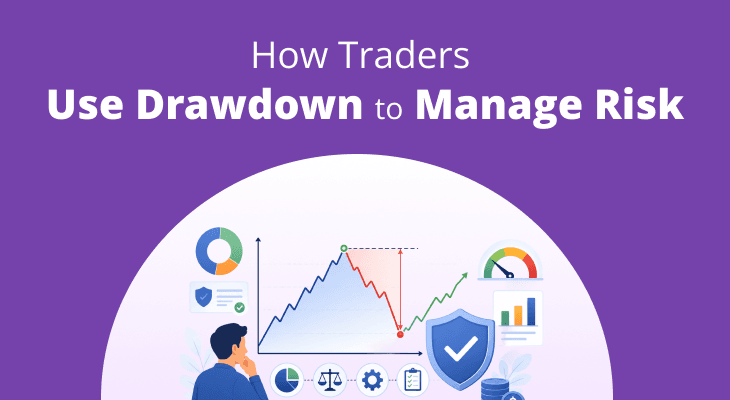
How Traders Use Maximum Drawdown to Manage Portfolio Risk?
 August 19, 2026 | 0 mins read
When evaluating an investment or trading strategy, returns usually receive the most attention. However, returns alone do not tell investors how much risk was taken to achieve them. Two portfolios may deliver the same annual return, but one may have experienced far steeper losses during market downturns. This is where max drawdown becomes useful. It measures the largest decline in the value of a portfolio, trading account, or investment from its highest point to its lowest point before a new peak is reached. Instead of focusing only on profits, it shows the worst historical loss an investor would have experienced by staying invested.
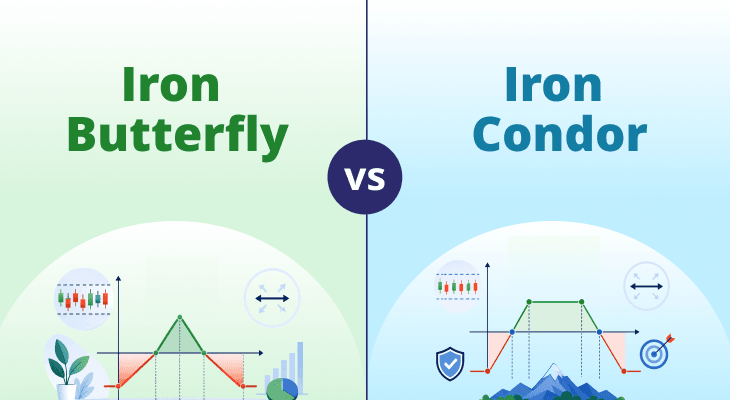
Iron Butterfly vs Iron Condor: Which Strategy Is Better?
August 19, 2026 | 0 mins read
Options trading is not always about predicting the next big market move. At times, the market trades within a narrow range, creating opportunities for strategies that benefit from stability rather than direction. Two of the most widely used neutral strategies are the iron butterfly strategy and the iron condor options strategy. While both strategies use four option contracts and defined risk, they do not behave in the same way. Differences in strike selection, profit range, and risk-reward dynamics can significantly affect trading outcomes. Understanding the difference between an iron condor and an iron butterfly can help you select a strategy that matches your market expectations and trading objectives.

Iron Condor Strategy
August 19, 2026 | 0 mins read
Markets do not always trend strongly. At times, prices remain within a narrow range, making directional trades more challenging. The iron condor strategy is designed for these market conditions. It doesn’t rely on a bullish or bearish outlook. It aims to generate returns when the underlying asset remains within a predefined price range. With clearly defined risk and reward, it has become a widely used approach among traders looking to capitalise on range-bound markets while maintaining controlled exposure.
FAQ
Nifty is more widely used in trading because of its strong liquidity in derivatives. Most futures and options contracts in India are based on Nifty, which makes execution smoother. Higher participation also leads to tighter spreads and better price discovery for traders.