
July 10, 2026 | 7 min read
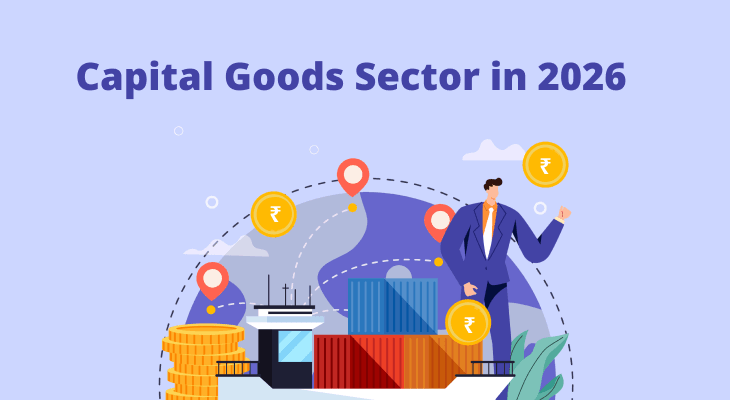
Capital Goods Sector in 2026: What is Driving Stronger Performance
If you have been tracking markets closely, you have likely noticed how the capital goods sector has moved from being cyclical and uncertain to one of the strongest performers in recent years. As you step into 2026, this momentum is not accidental. It is backed by structural shifts in policy, investment, and demand. In simple terms, when a country builds more roads, factories, railways, and power plants, capital goods companies sit right at the centre of that growth. And right now, India is building aggressively. This blog breaks down what is driving this shift, how the capex cycle in India is evolving, and what it means for the sector’s outlook in the coming years.
Sector Overview
The capital goods sector forms the backbone of industrial and economic development. It includes companies that manufacture equipment and machinery used to produce other goods or deliver essential services across industries. The sector’s growing importance is also visible in recent data. Capital goods output under the Index of Industrial Production (IIP) recorded around 16% year-on-year growth in April 2026, reflecting strong demand momentum. This sector spans a wide range of segments, such as:
- Industrial machinery
- Power equipment
- Construction equipment
- Engineering and project services
- Defence manufacturing
Many leading capital goods companies operate across multiple verticals like EPC (engineering, procurement, and construction), automation, and heavy engineering. This diversification allows them to serve industries such as infrastructure, energy, manufacturing, and transportation. What makes this sector important is its direct link to economic activity. When industries expand capacity or invest in new projects, demand for equipment and engineering services rises. This demand, in turn, drives growth for the sector.
Government Capex Push
The government’s aggressive spending has become one of the strongest drivers of the capital goods sector. What stands out is not just the intent, but the scale and consistency of capital expenditure over the years.
Key Numbers You Should Know
- Capital expenditure grew from ₹3.07 lakh crore in FY19 to ₹5.92 lakh crore in FY22, marking a 92% increase
- The capital outlay expanded 4.2 times from ₹2.63 lakh crore in FY18 to ₹11.21 lakh crore in FY26 (BE)
- The Union Budget 2026–27 proposes ₹12.2 lakh crore in capital expenditure, showing continued expansion
- Effective public capital expenditure for FY26 is estimated at ₹15.48 lakh crore, reflecting broader investment impact
- Capital expenditure for FY2025–26 alone stands at ₹11.21 lakh crore, around 3.1% of GDP
- Public capex has increased significantly from about ₹2 lakh crore in FY15, highlighting a long-term commitment
- Capital goods output under IIP recorded 16% year-on-year growth in April 2026, indicating strong demand on the ground
Policy Support Strengthening the Sector
Beyond spending, the government has introduced targeted measures that directly benefit capital goods companies:
- ₹10,000 crore allocation for a container manufacturing scheme over five years
- New initiatives like Hi-Tech Tool Rooms and the Construction Equipment scheme to boost domestic manufacturing
- Five-year tax exemptions for companies supplying capital goods to manufacturing units, especially in electronics
- Customs duty exemptions on capital goods used in lithium-ion batteries and critical mineral processing
This level of capital expenditure does more than just fund projects. It creates a multiplier effect across the economy. At the same time, consistent government spending reduces uncertainty. Companies can plan capacity, invest in technology, and scale operations with better visibility of future demand. This improves order book strength and execution efficiency. Most importantly, this sustained push anchors the broader capex cycle in India.
Infrastructure Demand
Infrastructure demand has emerged as a key driver of the capital goods sector in 2026. The scale and pace of project execution across sectors have significantly increased, creating steady demand for equipment and engineering services. Here are the key segments where this demand is most visible:
Key Segments
Demand is spread across multiple areas. This reduces concentration risk and supports a wider set of capital goods companies:
- Transport: Expansion of highways, expressways, metro rail, and freight corridors continues to drive demand for construction equipment, signalling systems, and engineering solutions.
- Energy: Growth in renewable energy, along with upgrades in transmission and distribution, is increasing demand for turbines, transformers, and grid equipment.
- Urban projects: Investments in water supply, waste management, and urban mobility are creating opportunities for EPC-driven companies.
- Industrial infra: Development of manufacturing hubs, industrial corridors, and logistics parks is driving demand for machinery, automation, and material handling systems.
Execution Focus
A key shift is the move from planning to execution. As projects progress:
- Equipment orders increase
- Engineering contracts translate into revenue
- Maintenance demand also rises
This improves revenue visibility for capital goods stocks and reduces uncertainty.
Multiplier Effect
Infrastructure projects create demand across multiple layers:
- Construction equipment
- Electrical and mechanical systems
- Automation solutions
- After-market services
This ensures that growth in the capital goods sector spreads across sub-segments rather than remaining isolated.
Long-Term Visibility
Infrastructure projects typically run over several years. This provides capital goods companies with:
- Strong order book visibility
- Better cash flow planning
- Opportunities for capacity expansion
It also strengthens the broader capex cycle, as sustained infrastructure activity encourages further investment.
Private Sector Investment Revival
The recovery in private investment has added a strong layer of support to the sector. Growth is no longer dependent on one driver. As companies regain confidence, they are committing capital towards expansion. This is making the capex cycle more broad-based and sustainable. Here are the key factors driving this revival:
1. Stronger Balance Sheets
Companies are entering this phase with lower debt and improved cash flows. Over the past few years, many have reduced leverage and strengthened profitability. This gives them the confidence to invest in long-term projects. This, in turn, supports steady order inflows for engineering and equipment providers.
2. Capacity Expansion
Rising demand has pushed utilisation levels higher across industries. Businesses are expanding existing plants and setting up new facilities to avoid bottlenecks. This creates consistent demand for machinery, project execution, and industrial equipment across the ecosystem.
3. Manufacturing Push
Sectors like electronics, chemicals, and auto components are seeing fresh investments as India strengthens its manufacturing base. Companies are not only expanding capacity but also upgrading technology. This is driving greater demand for advanced machinery and specialised engineering solutions.
4. New-Age Sectors
Areas such as data centres, renewable energy, and electronics manufacturing are attracting significant private investment. These sectors require specialised equipment and infrastructure, opening up new opportunities beyond traditional industrial segments.
5. Diversified Demand
Investment activity is now spread across multiple industries rather than concentrated in a few areas. This reduces reliance on a single sector and creates a more stable and diversified order pipeline for companies operating in this space.
6. Strengthening the Cycle
With both government and private players investing, the overall investment cycle becomes more balanced. This improves long-term visibility and reduces the stop-start nature that earlier cycles often faced.
Risks (Execution Delays)
While the outlook remains strong, execution risks can affect how smoothly the capital goods sector delivers on its growth potential. Large projects often involve multiple stakeholders, long timelines, and regulatory dependencies, which can lead to delays.
1. Project Delays
Infrastructure and industrial projects often face delays due to land acquisition issues, environmental clearances, or administrative bottlenecks. When timelines shift, order execution slows down, which directly impacts revenue recognition for companies.
2. Working Capital Pressure
Delayed execution means payments are also pushed back. This can stretch working capital cycles, especially for companies handling large EPC contracts. Higher receivables can affect cash flows and increase dependence on short-term funding.
3. Cost Overruns
Extended timelines often lead to rising input costs, including raw materials and labour. If contracts are fixed-price in nature, companies may not fully pass on these costs, which can put pressure on margins.
4. Supply Chain Disruptions
Delays in sourcing critical components or equipment can slow down project progress. Global supply chain issues or domestic logistical challenges can affect delivery schedules and execution efficiency.
5. Order Book vs Execution Gap
A strong order book does not always translate into immediate revenue. If execution slows, the gap between orders won and orders completed widens, affecting earnings visibility in the short term.
Conclusion
The capital goods sector in 2026 reflects a shift from cyclical recovery to structural growth. Strong infrastructure demand, continued public spending, and a clear pickup in private investment are supporting a broader and more resilient capex cycle in India. This creates sustained opportunities across engineering, manufacturing, and project execution. At the same time, execution efficiency remains critical, as delays can affect cash flows and margins. Companies that maintain healthy balance sheets, deliver projects on time, and secure steady order inflows are better positioned to benefit from this cycle. Overall, the sector continues to mirror India’s long-term economic expansion story.
More Related Articles
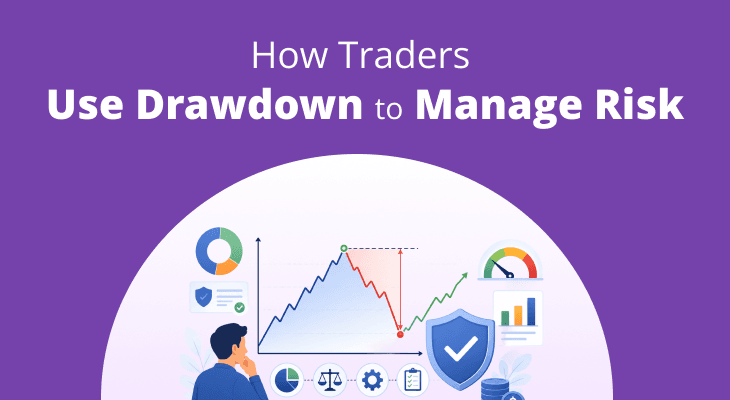
How Traders Use Maximum Drawdown to Manage Portfolio Risk?
 August 19, 2026 | 0 mins read
When evaluating an investment or trading strategy, returns usually receive the most attention. However, returns alone do not tell investors how much risk was taken to achieve them. Two portfolios may deliver the same annual return, but one may have experienced far steeper losses during market downturns. This is where max drawdown becomes useful. It measures the largest decline in the value of a portfolio, trading account, or investment from its highest point to its lowest point before a new peak is reached. Instead of focusing only on profits, it shows the worst historical loss an investor would have experienced by staying invested.
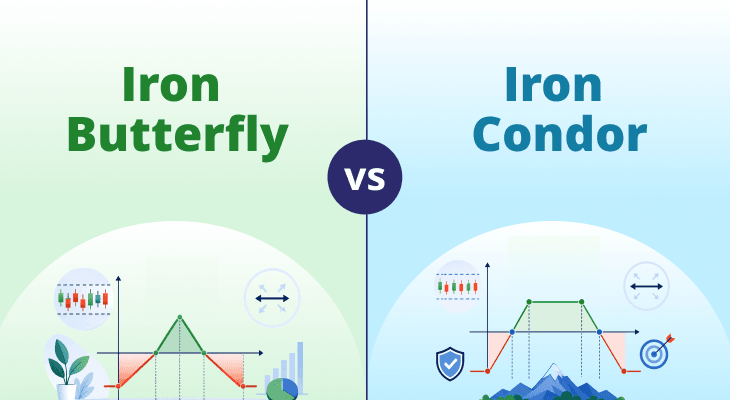
Iron Butterfly vs Iron Condor: Which Strategy Is Better?
August 19, 2026 | 0 mins read
Options trading is not always about predicting the next big market move. At times, the market trades within a narrow range, creating opportunities for strategies that benefit from stability rather than direction. Two of the most widely used neutral strategies are the iron butterfly strategy and the iron condor options strategy. While both strategies use four option contracts and defined risk, they do not behave in the same way. Differences in strike selection, profit range, and risk-reward dynamics can significantly affect trading outcomes. Understanding the difference between an iron condor and an iron butterfly can help you select a strategy that matches your market expectations and trading objectives.
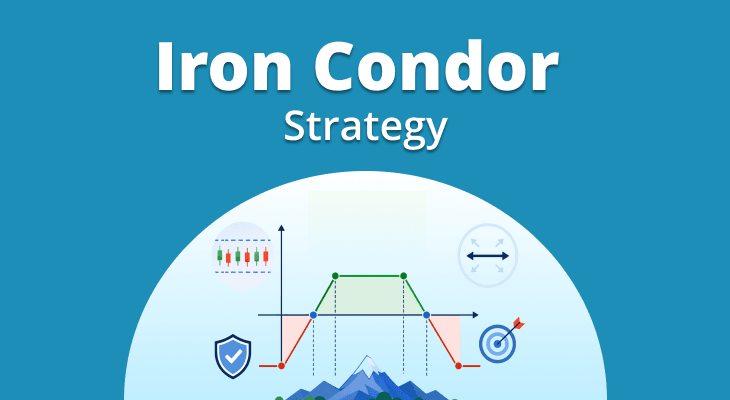
Iron Condor Strategy
August 19, 2026 | 0 mins read
Markets do not always trend strongly. At times, prices remain within a narrow range, making directional trades more challenging. The iron condor strategy is designed for these market conditions. It doesn’t rely on a bullish or bearish outlook. It aims to generate returns when the underlying asset remains within a predefined price range. With clearly defined risk and reward, it has become a widely used approach among traders looking to capitalise on range-bound markets while maintaining controlled exposure.
FAQ
The capital goods sector includes companies that produce machinery, equipment, and tools used to manufacture other goods or deliver services. It supports industries like construction, power, and manufacturing. Growth in this sector often reflects rising investment activity and signals expansion across the broader economy.