
April 24, 2025 | 5 min read
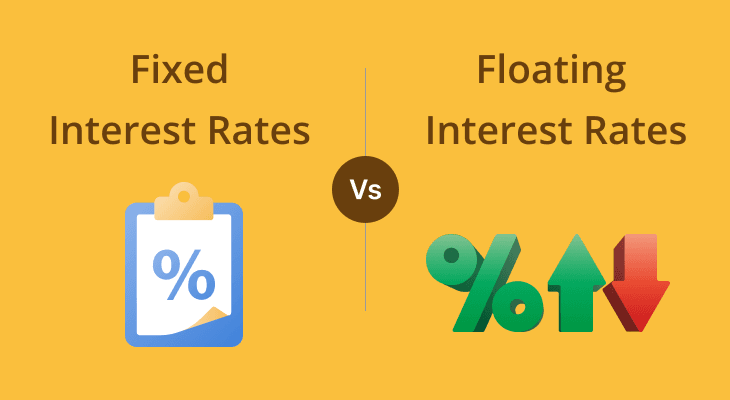
Fixed vs. Floating Interest Rates: Which Is Better?
The interest rate you qualify for on a loan directly impacts how much you repay. However, your borrowing experience is shaped not just by the value of the interest rate itself but also by the type of interest applied. There are two main types - floating and fixed interest rates. Understanding the difference between them can help you choose the one that best suits your needs.
Let’s explore how each works and which might be the right option for you.
What are fixed interest rates?
A fixed interest rate stays fixed for the entire loan tenure, as determined at the time of approval. It does not fluctuate based on changes in the Reserve Bank of India’s (RBI) repo rates, inflation, and other economic factors after the loan is sanctioned.
For example, if you take a loan of ₹5 lakh for five years at an interest rate of 10%, your monthly interest payments and total interest cost will remain unchanged throughout the tenure until the loan is fully repaid.
What are floating interest rates?
Unlike fixed rates, a floating interest rate fluctuates throughout the loan tenure and can change based on market conditions, repo rate changes, and inflation. Loan providers usually set specific intervals for revising these rates, which could be monthly, quarterly, half-yearly, or annually. As a result, your total loan repayment amount may increase or decrease over time. Some lenders adjust your loan tenure instead of modifying the monthly repayment amount when interest rates change.
What are the differences between fixed and floating interest rates?
Here’s a table highlighting the difference between fixed and floating interest rate:
Sr. no. | Points of difference | Fixed interest rates | Floating interest rates |
1. | Fluctuations | Fixed interest rates remain constant throughout the loan tenure and are not affected by market changes. | In contrast, floating interest rates fluctuate based on market conditions. |
2. | Value | Fixed interest rates are generally higher than floating rates at the time of taking the loan. | Floating rates are usually lower initially but can change over time depending on market trends. |
3. | Prepayment and foreclosure | Loans with fixed interest rates often come with penalties for prepayment or foreclosure. | Floating interest rate loans typically do not have such penalties, and you can repay the loan early without additional costs. |
4. | Effect on loan tenure | Fixed interest rates do not impact the loan tenure, as both the interest rate and loan term remain constant. | With floating rates, if market rates rise, the loan tenure may be extended, while a decrease in rates may shorten the tenure. |
How do market conditions impact your interest rate choice?
Market conditions can influence whether a fixed or floating rate is the better option for you. Interest rates for loans can fluctuate based on many factors, such as inflation, monetary policies, and changes in the RBI's repo rate.
For example, in its monetary policy review on February 7, 2025, the RBI reduced the repo rate by 25 basis points, bringing it down from 6.50% to 6.25%. As a result, banks lowered their repo-linked lending rates, making floating interest rate loans more attractive for borrowers.
Fluctuations like these can impact your monthly Equated Monthly Instalments (EMIs) as well as the total interest paid over the loan tenure. If interest rates rise, your EMI may increase, or the loan tenure may be extended. On the other hand, if interest rates fall, your EMIs will be reduced, or the repayment period will be shortened.
Fixed interest rate vs floating interest rate: Which one is right for you?
Choosing between floating and fixed interest rates depends on your financial goals and comfort level with market fluctuations.
A fixed interest rate is ideal if you prefer financial stability and like to plan ahead. Knowing the exact interest rate on your loan allows you to plan your future repayments with more clarity. Since the interest rate remains unchanged, you have better control over your finances and can manage your monthly expenses more effectively. It also provides peace of mind, as there are no unexpected changes in your loan repayment amount or tenure. Additionally, a fixed rate can protect you from rising interest rates and ensure that market fluctuations do not impact your loan repayment. You may also qualify for a lower fixed interest rate if you have a high credit score. This can be a good way to save money with a lower interest rate locked in for the long term.
On the other hand, floating interest rates tend to be lower at the start, which makes them an attractive option if you are looking to cut costs in the beginning. Fixed interest rates are generally 1% to 2.5% higher than floating rates at the time of borrowing. Additionally, loans with fixed interest rates often come with prepayment and foreclosure charges, whereas floating-rate loans typically do not. So, the overall cost of the floating rate loan may be lower if you get a lower rate at the beginning of the term and decide to prepay it before the term ends.
If you are wondering if a fixed or floating interest rate is better, you should carefully evaluate the factors mentioned above and understand how they align with your financial needs, budget, and comfort level. You can also consider speaking with a financial advisor.
Fixed or floating interest rate – which is better?
Both floating and fixed interest rates come with their own advantages and drawbacks. The right choice depends on your financial goals and risk tolerance. While a fixed rate offers predictability, a floating rate can lead to potential savings if market rates decline. Before making a decision, it is essential to research current market conditions and consider the possibility of future rate changes. Understanding these factors can help you choose the most suitable option for your loan.
More Related Articles
What is the FIRE concept in finance & early retirement?
 October 28, 2026 | 0 mins read
The FIRE concept in finance is based on a simple idea: achieve financial independence early so early retirement is possible. To pursue this goal, individuals typically live frugally during their earning years, save diligently, and invest regularly to build a comfortable retirement corpus – one that is capable of supporting their lifestyle after retirement.

Wealth Creation Strategies for Beginners in India
October 23, 2026 | 0 mins read
Wealth creation is the process of building financial assets over time in order to achieve financial security and long-term financial independence. It helps individuals prepare for emergencies, achieve life goals such as buying a home or funding higher education, and enjoy a comfortable retirement. Wealth creation is not just about earning money. It involves careful financial planning, disciplined saving, strategic investing, and effective risk management to grow wealth sustainably over time.
Financial Planning Strategies for Economic Uncertainty
October 23, 2026 | 0 mins read
Financial planning is the systematic process of setting short- and long-term financial goals and creating a structured roadmap to achieve them. It helps you manage your finances effectively while preparing for planned milestones and unexpected events.