

October 9, 2026 | 5 min read
How Rising Oil Prices Impact Stock Market Investments
A petroleum price hike, driven by rising global crude oil prices, can have far-reaching consequences for the economy and financial markets worldwide. As India imports over 88% of its crude oil requirements, understanding the impact of rising oil prices on stock market investments is essential for investors.
What causes rising oil prices in global markets?
Several factors contribute to the global oil price hike. Some of the key drivers include:
- Strong global demand: Economic growth increases the demand for crude oil across industries, manufacturing, and transportation. If demand grows faster than supply, crude oil prices tend to rise.
- Geopolitical risks: Crude oil supply can be disrupted by factors such as political instability in major oil-producing countries or disruptions to key shipping routes, such as the Strait of Hormuz. These disruptions can push oil prices higher.
- OPEC’s decisions: The Organisation of the Petroleum Exporting Countries (OPEC) is a group of major oil-producing nations that influences global oil supply through production quotas. Production cuts by OPEC and its allies (OPEC+) can tighten supply and contribute to higher oil prices.
- Supply disruptions: Geopolitical events, production cuts, labour strikes, or natural disasters can all disrupt oil supply and push prices higher.
- Currency fluctuations: Crude oil is traded in US dollars. When the US dollar appreciates, crude oil becomes more expensive for importing countries, increasing costs.
How does a petroleum price hike affect the Indian economy?
A sustained petroleum price hike can impact the Indian economy in the following ways:
- Higher crude oil import bill: India is one of the largest importers of crude oil. Rising oil prices increase the country’s import bill, putting pressure on the trade balance.
- Wider Current Account Deficit (CAD): A higher import bill can widen the CAD and increase the outflow of foreign currency. This may also put downward pressure on the Indian rupee, making imports more expensive.
- Higher inflation: Rising fuel prices increase transportation, manufacturing, and logistics costs. Businesses often pass these costs on to consumers, leading to higher prices for goods and services.
- Slower economic growth: Persistent inflation can reduce consumer spending and business investment, moderating India’s economic growth.
- Pressure on household spending: Higher prices of petrol, diesel, and LPG reduce disposable income, leaving households with less money to spend on discretionary goods and services.
- Monetary and fiscal policy measures: To manage inflation, the Reserve Bank of India may consider increasing interest rates, making borrowing more expensive for businesses and consumers. The government may also revise fuel taxes or subsidies to ease the impact of a petroleum price hike.
Impact of rising oil prices on stock market investments
Although the overall stock market is influenced by several factors, not just a petroleum price hike, rising oil prices can impact certain sectors and affect investor sentiment.
- Pressure on corporate profits: Higher fuel, transportation, and input costs can reduce profit margins for oil-dependent businesses, potentially affecting their stock prices.
- Investor sentiment: The impact of rising oil prices on inflation and economic growth can make investors more cautious, increasing market volatility.
- Foreign institutional investment: Persistent increases in oil prices may reduce foreign investor confidence, which could lead to lower foreign investment in the country.
- Sector-wise impact: While some companies may benefit from a global oil price hike, others may face rising operating costs and reduced profitability.
Sectors that benefit and sectors that are negatively affected by oil price hikes
Sector |
Upstream oil and gas companies |
Oilfield service providers |
Sectors that may be negatively affected by a global oil price hike |
Aviation |
Oil Marketing Companies (OMCs) |
Automobiles and logistics |
Paint manufacturers |
Tyre manufacturers |
Select Fast-Moving Consumer Goods (FMCG) companies |
How do investors and traders react to oil price volatility?
Oil price volatility often prompts investors and traders to adjust their investment strategies. Some common reactions include:
- Sector rotation: Investors may shift towards sectors that benefit from higher oil prices while reducing exposure to oil-sensitive industries.
- Portfolio rebalancing: Investors may rebalance their portfolios to maintain the desired asset allocation during volatile market conditions.
- Increased trading activity: Oil price fluctuations may create short-term trading opportunities, leading to increased buying and selling activity.
- Closer monitoring of market trends: Investors and traders may closely monitor inflation, geopolitical developments, and global oil price trends to make informed investment decisions.
Risk management strategies during rising oil prices
Here are some investment strategies to help manage the risks associated with rising oil prices:
- Diversification: Diversification is an effective way to reduce sector-specific risk. Invest across different asset classes and sectors that react differently to changes in oil prices.
- Rebalance periodically: Review your portfolio regularly to maintain your desired asset allocation.
- Stay informed: Monitor macroeconomic factors such as inflation, geopolitical developments, and global oil price trends, as they can influence market sentiment.
- Focus on the fundamentals: Instead of reacting to short-term news or emotions, evaluate a company’s business fundamentals before making investment decisions.
- Avoid panic selling and overtrading: Stay focused on your long-term goals and avoid making impulsive decisions due to short-term market fluctuations.
- Continue Systematic Investment Plans (SIPs): SIPs can help manage market volatility by averaging the cost of investment over time through regular investments.
Conclusion
Several factors contribute to a petroleum price hike, each affecting the economy and financial markets differently. Understanding the economic and financial impact of a global oil price hike can help investors make informed decisions and better navigate periods of market volatility.
More Related Articles
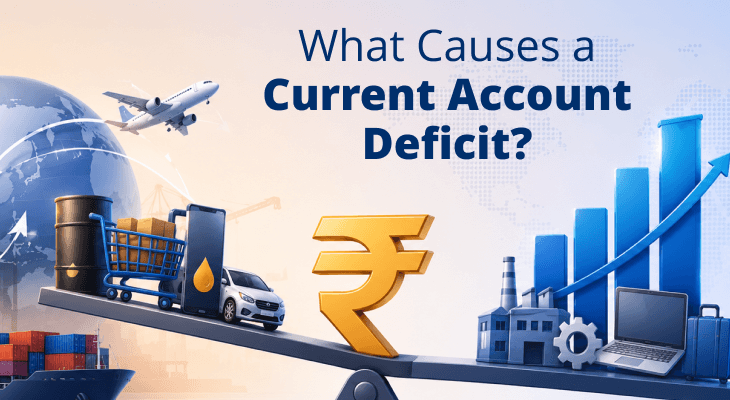
Understanding the meaning and impact of a current account deficit on an economy
 October 9, 2026 | 0 mins read
The current account is an important component of a country’s balance of payments. A current account deficit occurs when a country’s total payments to the rest of the world exceed its total earnings from abroad. These payments include imports of goods and services, investment income paid to foreign investors, and current transfers. These earnings include receipts from exports of goods and services, income earned from overseas investments, and current transfers such as remittances. A country’s current account deficit is generally expressed as a percentage of its gross domestic product (GDP).

Revenge trading meaning explained: Causes, impact, and how to avoid it
October 9, 2026 | 0 mins read
in revenge trade, they are often driven by emotions such as anger, frustration, fear, or disappointment rather than sound analysis. In the process, they overlook carefully planned trading strategies designed around their financial goals, investment horizon, and risk appetite. More often than not, revenge trading results in further losses, creating a vicious cycle that becomes increasingly difficult to escape.

How to Calculate Risk-Reward Ratio in Stock Trading?
October 9, 2026 | 0 mins read
The risk reward ratio compares the amount of money a trader is prepared to risk on a trade with the amount they expect to earn if the trade reaches the target price. Before entering a trade, experienced traders usually estimate two things: the maximum amount they are willing to lose if the trade goes wrong and the potential profit if the trade performs as expected. Comparing these two values helps determine whether the trade offers a favourable balance between risk and reward.
FAQ
Yes, rising oil prices may contribute to short-term market corrections. However, oil prices generally have a limited long-term correlation with the overall stock market, and the impact often varies across sectors.