
October 9, 2026 | 5 min read
Revenge trading meaning explained: Causes, impact, and how to avoid it
As the famous saying goes, “An eye for an eye makes the world blind.” Revenge, as an emotion, is rarely associated with positive outcomes, whether in everyday life or in investing. The same holds true for revenge trading. This article explains the meaning of revenge trading, how revenge trading works, the warning signs to watch for, and practical measures traders can take to avoid it.
What is revenge trading and why does it occur?
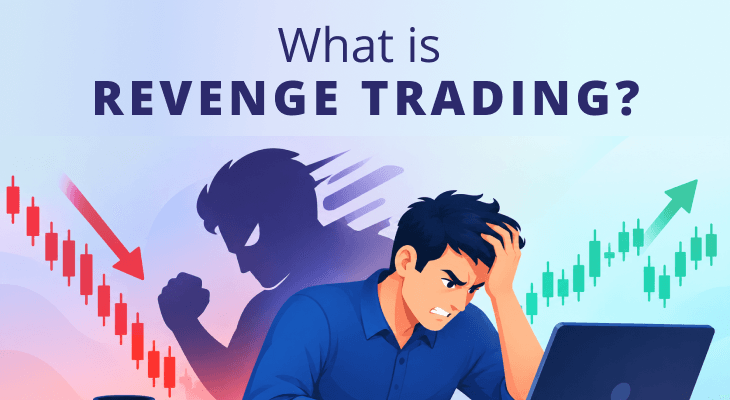
Revenge trading refers to the impulsive act of buying and selling securities with the sole intention of recovering losses from a previous trade. When traders indulge in revenge trade, they are often driven by emotions such as anger, frustration, fear, or disappointment rather than sound analysis. In the process, they overlook carefully planned trading strategies designed around their financial goals, investment horizon, and risk appetite. More often than not, revenge trading results in further losses, creating a vicious cycle that becomes increasingly difficult to escape.
Common warning signs of revenge trading
Recognising the early signs of revenge trading can help traders regain control before emotions lead to costly decisions.
- Immediately entering another trade after a loss: Re-entering the market immediately after losing a trade without a clear trading plan could indicate revenge trading.
- Increasing the position size significantly: If a trader’s next trade is considerably larger than the previous one, they may be attempting to recover losses faster instead of following their predefined position-sizing rules.
- Feeling strong negative emotions while trading: A revenge trade is often driven by anger, frustration, anxiety, or fear. When emotions begin influencing trading decisions more than market analysis, it is usually a warning sign.
- Ignoring risk management practices: Revenge trading not only encourages traders to take on high-risk trades but also makes them justify such decisions. For instance, they may move the stop-loss order farther away or ignore it altogether in the hope that the market will eventually reverse.
- Trading solely to recover previous losses: If a trader enters a new trade solely to recoup earlier losses rather than to achieve their overall trading objectives, emotions are likely driving the decision.
- Disregarding trading rules: Deviating from the predefined trading rules and strategies developed through careful planning is another common indicator of revenge trading.
How revenge trading affects trading decisions and portfolio performance
Impact on trading decisions
- Loss of discipline: Unlike disciplined trading, revenge trading encourages traders to abandon predefined strategies and make impulsive decisions driven by emotions rather than logic.
- Mental fatigue: The stress, anxiety, and frustration associated with revenge trading can impair judgement, reduce focus, and make traders more prone to additional mistakes.
- Slow learning: Instead of reviewing what went wrong and learning from previous mistakes, traders often rush into another trade. This can prevent them from improving their strategy and decision-making process.
Impact on portfolio performance
- Increased risk exposure: Every trader has a risk appetite that may evolve with time. However, revenge trading often pushes traders to take on more risk than they can comfortably manage, increasing the likelihood of substantial losses.
- Higher potential losses: Emotional trades are less likely to be backed by sound analysis, making them more susceptible to poor outcomes and larger losses.
- Portfolio drawdown: Repeated revenge trades can lead to consecutive losses, pushing the portfolio into a deeper drawdown and making recovery significantly more challenging.
Psychological factors behind revenge trading behaviour
Revenge trading is largely an emotional response influenced by several behavioural biases and psychological factors. Here are a few of them:
- Loss aversion: Behavioural finance suggests that people experience the pain of a loss more intensely than the satisfaction of an equivalent gain. This often drives traders to recover losses immediately, even at the cost of taking excessive risks.
- Sunk-cost fallacy: This cognitive bias encourages traders to continue trading despite unfavourable outcomes because they have already invested significant time, effort, or money into the trade.
- Anger, frustration, and ego: Losses can trigger anger and frustration, while ego may make it difficult for traders to accept that the market has moved against them. This combination often fuels revenge trading.
- Fear of Missing Out (FOMO) and shame: The fear of missing out on potential market opportunities and the shame associated with suffering losses can also lead to revenge trading.
How to avoid revenge trading: Risk management and emotional discipline
Revenge trading can be avoided by effectively managing both risk and emotions.
Build emotional discipline
- Accept that losses are a natural part of trading and investing by developing a thorough understanding of how markets work.
- Take a break after a significant loss to regain emotional balance.
- Set realistic profit expectations instead of chasing the market to recoup previous losses immediately.
Follow sound risk management practices
- Create and follow a well-defined trading plan.
- Stick to your trading strategy and avoid impulsive decisions.
- Use stop-loss orders to limit downside risk.
- Set a maximum daily loss limit and stop trading once it is reached.
- Limit the amount of capital you risk on each trade.
- Diversify your portfolio where appropriate.
- Maintain a trading journal to review both successful and unsuccessful trades.
Conclusion
Markets are characterised by ups and downs, making it essential to handle both profits and losses with discipline. Revenge trading, driven by emotions, can lead to consecutive losses and significant portfolio drawdowns. Staying disciplined and following a trading plan can help traders avoid such costly mistakes.
More Related Articles

How Rising Oil Prices Impact Stock Market Investments
 October 9, 2026 | 0 mins read
A petroleum price hike, driven by rising global crude oil prices, can have far-reaching consequences for the economy and financial markets worldwide. As India imports over 88% of its crude oil requirements, understanding the impact of rising oil prices on stock market investments is essential for investors.
Understanding the meaning and impact of a current account deficit on an economy
October 9, 2026 | 0 mins read
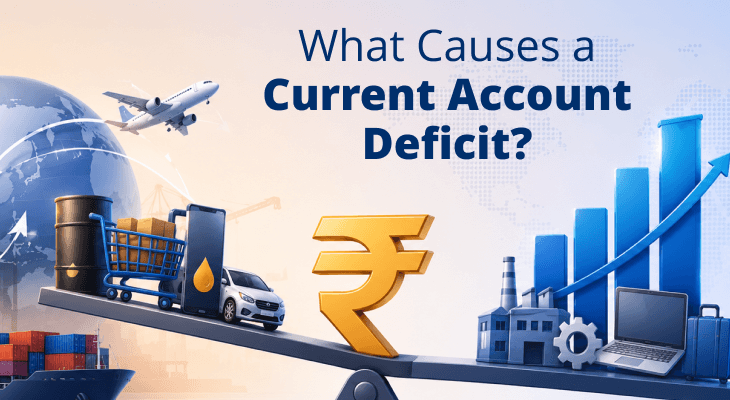
The current account is an important component of a country’s balance of payments. A current account deficit occurs when a country’s total payments to the rest of the world exceed its total earnings from abroad. These payments include imports of goods and services, investment income paid to foreign investors, and current transfers. These earnings include receipts from exports of goods and services, income earned from overseas investments, and current transfers such as remittances. A country’s current account deficit is generally expressed as a percentage of its gross domestic product (GDP).
How to Calculate Risk-Reward Ratio in Stock Trading?
October 9, 2026 | 0 mins read
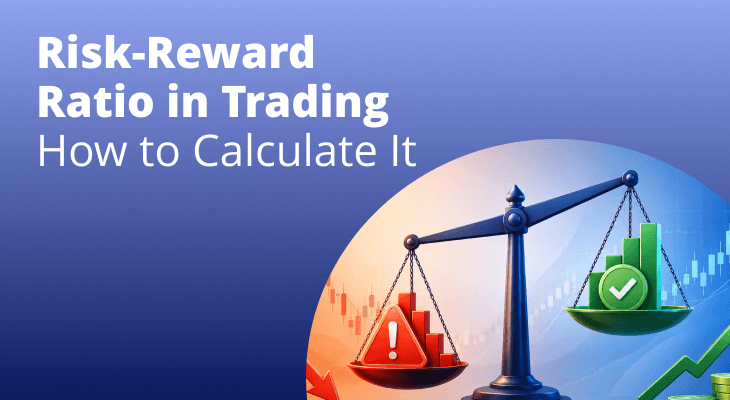
The risk reward ratio compares the amount of money a trader is prepared to risk on a trade with the amount they expect to earn if the trade reaches the target price. Before entering a trade, experienced traders usually estimate two things: the maximum amount they are willing to lose if the trade goes wrong and the potential profit if the trade performs as expected. Comparing these two values helps determine whether the trade offers a favourable balance between risk and reward.
FAQ
Disciplined trading involves making decisions based on predefined rules, market analysis, and risk management strategies. Revenge trading, on the other hand, involves making impulsive decisions driven by emotions after a loss while ignoring those rules.