
March 12, 2026 | 5 min read
How do Trading APIs improve trading efficiency?
Online trading no longer relies solely on screens, clicks and manual decisions. The market we operate in moves every second and reacts to data instantly. This means it rewards speed with consistency, and here is where the trading API can literally change how markets and traders both work.
Instead of placing orders one by one, you can connect your trading account directly to software that acts on your rules. With this, you stay in control, but execution becomes much faster, cleaner and more disciplined.
Let’s make one thing absolutely clear: trading APIs do not replace our trading judgment. They just happen to support it. You still get to decide on your unique strategy, risk limits and timing, while the API removes any friction between decision-making and execution.
If you are an active online stock trader, you will experience greater efficiency and fewer emotional errors when you choose platforms like Trading API. Read on to discover exactly how trading APIs can help improve your trading efficiency.
What is a trading API?
A trading API is a secure bridge that connects your trading account with an external software of your choice, allowing your system to send instructions directly to the exchange through your broker. The magic: you define the logic, and the API only carries it out in real time.
At m.Stock, our API is integrated with smart tools to maximise security. For example, we implement a time-based OTP for secure access and activity tracking.
How does the trading API work in real time?
- You place an order through an API.
- The software will automatically send a request.
- The broker or online trading platform will then verify it and route it to the exchange instantly, without any lag.
- With this, you won’t need to log in repeatedly or manually confirm all trading actions.
What actions can an API perform?
Once you have employed a well-functioning API in trading, it can take over many everyday tasks. This includes:
- Placing buy and sell orders in the stock market trading without lags
- Fetching the real-time market prices
- Tracking order status and trade history
- Managing your positions and margins effectively
How do trading APIs reduce manual effort in daily trading?
Being a manual trader demands your constant attention and focused vigilance. Every delay, oversight, click or missed alert can affect your portfolio. Here, the trading APIs can streamline the process by automating repetitive actions.
- Removing routine execution: Once your rules are set, the API handles execution without repeated input. Hence, you don’t have to log in multiple times or track prices constantly.
- Handling volatility: The API is automated and can follow instructions exactly as written. Furthermore, it doesn’t second-guess or react emotionally during sudden market moves, unlike humans.
- Time saver: If you are an active trader, then you likely track several stocks or contracts simultaneously. So, an API monitors all of them together for you and saves time, while minimising oversight errors.
Also Read: Online Trading: Meaning, Advantages & Basics | Mirae Asset
Why does faster execution matter in active trading?
Whenever you are dealing with high-volume periods, the markets move very quickly. Even a small delay can alter your entry or exit price, which is never desired.
Here’s how trading APIs help:
- Minimising price slippage: Trading APIs place orders instantly when the conditions match. This reduces the gap drastically between intended and executed prices.
- Reacting in real time: APIs act the exact moment a market signal/trigger occurs. Thus, you do not wait for alerts or manual confirmation.
- Supporting your strategies: Yet another advantage of this speed is that it ensures your plan executes as you have designed it. You can also avoid any last-minute changes driven by emotion.
Do trading APIs manage risk more effectively?
Most definitely, they do. Efficiency is not just about speed, but also about the required control. With trading APIs, you get better risk management as these automated systems enforce your limits automatically. For starters, there are pre-defined risk rules.
That way, you can set stop losses, position size limits and exposure caps, all securely within your system, as the API enforces them consistently. Rule-based execution also helps avoid panic exits along with impulsive entries during volatile sessions.
Continuous monitoring can be very tiring, but with APIs watching markets continuously, there’s no risk of distraction or exhaustion.
Can trading APIs support multiple strategies simultaneously?
Running even one strategy manually is demanding. So, it goes without saying that running multiple can be rather impractical. Here’s how API can help you out:
- Handling distinct approaches to markets: You can run short-term trades alongside longer holding strategies with unique rules in place.
- Diversifying your execution: APIs allow for different conditions, instruments and timeframes. The best part? They all operate together without conflict.
- Positional clarity: All trades typically flow through one account view. As a result, this keeps your portfolio’s tracking and reporting simple.
Who benefits the most from using a trading API?
If you require structure and discipline, trading API’s are definitely meant for you. Especially if you trade actively or track multiple instruments at once.
Here’s when you will benefit the most:
- If you follow price movements closely, APIs reduce execution stress.
- If you prefer planning over constant monitoring, APIs support it.
- APIs simplify your tasks while boosting operational efficiency. That too, without removing control or transparency.
Conclusion
One common misconception is that you need to have advanced programming skills to manage trading through APIs. However, that depends on the platform.
For instance, m.Stock provides advanced software that supports 100% customisation and easy 3rd-party integrations, such as Python, with zero recurring or setup costs. So, you don’t need to be an accomplished coder at all.
Our API trading is meant for developers, algo traders and active investors alike. There’s also advanced integration for effortless portfolio management. Moreover, our Model Context Protocol (MCP) further allows you to use AI tools like ChatGPT to analyse the portfolio and aid decision-making.
Are you looking to streamline your trading functions? If so, investing in the m.Stock API trading platform is a good start.
More Related Articles
ETF trading rules from 7 September: What changes for retail investors?
 September 7, 2026 | 0 mins read
If there was no trade during the final 30 minutes on the previous day, the exchange will use that day’s last traded price. If there was no trade at all on the previous day, the latest available closing NAV will be used. The base price will also be adjusted for corporate actions, if applicable. From April 1, 2027, SEBI expects stock exchanges and mutual fund AMCs to use the previous day’s closing NAV as the base price after resolving operational issues.

How MSCI rebalancing tested India's Closing Auction System on August 31
September 2, 2026 | 0 mins read
India’s new Closing Auction Session (CAS) processed a record ₹39,718 crore turnover, on 31 August 2026 as MSCI India Index latest index rebalancing took effect at the market close. The event showed that CAS could handle an exceptional concentration of institutional flow. However, there were some sharp, and sometimes counterintuitive, stock moves. This shows that the quality of closing-price discovery is still being tested.
How Traders Use Maximum Drawdown to Manage Portfolio Risk?
August 19, 2026 | 0 mins read
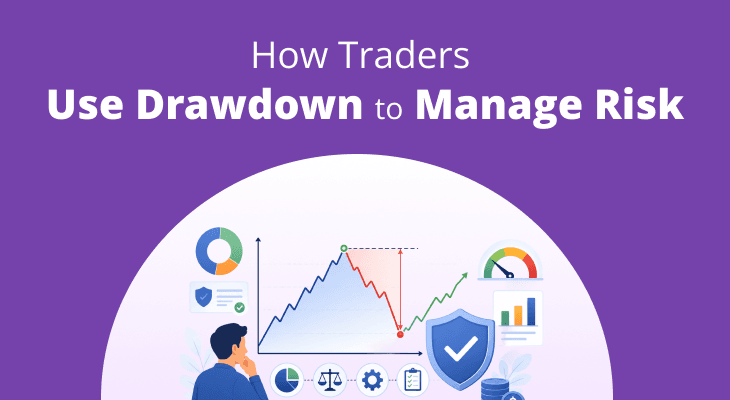
When evaluating an investment or trading strategy, returns usually receive the most attention. However, returns alone do not tell investors how much risk was taken to achieve them. Two portfolios may deliver the same annual return, but one may have experienced far steeper losses during market downturns. This is where max drawdown becomes useful. It measures the largest decline in the value of a portfolio, trading account, or investment from its highest point to its lowest point before a new peak is reached. Instead of focusing only on profits, it shows the worst historical loss an investor would have experienced by staying invested.