
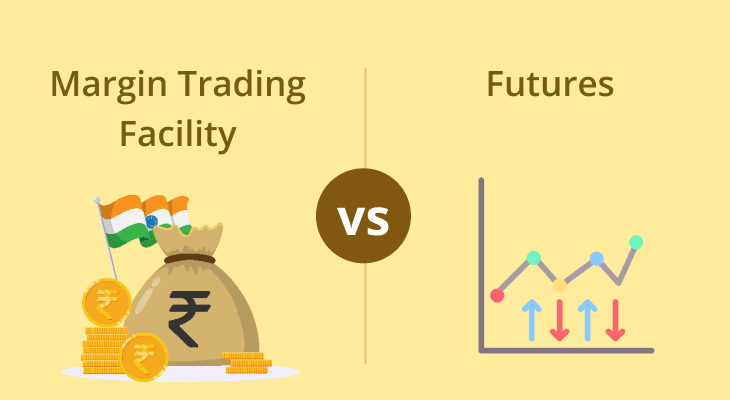
MTF vs Futures: Which Is Better for Leverage in Trading?
Leverage incurs interest because it lets you use your capital more efficiently, giving you greater market exposure. But it’s actually the instrument you choose that defines the outcome, and not just the leverage multiple. When you compare Margin Trading Facility and futures, the distinction becomes clear.
Each approach handles your ownership of the assets, costs, volatility, and associated risks distinctly. If you understand these mechanics, leverage can become a tool rather than a liability.
What does leverage mean in MTF and futures?
Leverage allows you to take a larger market position than your available capital would normally permit. The mechanism, however, differs greatly between Pay Later (MTF) and futures.
Leverage under MTF
Pay Later (MTF) allows you to purchase the listed equity shares by paying a portion of their value upfront. The remaining amount is funded through the margin provided by your broker, which is subject to limits defined for each stock.
For instance, m.Stock’s Pay Later (MTF) starts from 6.99%, and you can get up to 80% margin. With this setup, the shares remain credited to your demat account throughout the holding period.
The features include:
- Exposure linked to actual share ownership
- Leverage capped to manage delivery-market risk
- Daily margin review based on price movement
- Additional funds may be required
Leverage under futures
Futures, in contrast, rely on an entirely contract-based structure. You just have to deposit an initial margin to control a contract whose notional value is much higher. While the position stays open only till the margins remain sufficient.
In this setup:
- There’s a clear separation between exposure and ownership
- You can control larger positions with daily mark-to-market settlements, adjusting gains and losses
- Constant margin discipline is a requirement
Also Read: Leverage & Margin in Futures Trading Explained
How much leverage can you realistically get through MTF?
The leverage offered through MTF completely depends on your broker and the assets pledged. As a result, it will fit your needs if you want efficiency without extreme amplification, for example, at m.Stock, with Pay Later(MTF), you can get funding for up to 80% of the total trade value, depending on the stock.
This ceiling helps reduce systemic risk and protects all parties against sharp corrections in the underlying stock’s price. Hence, MTF works best when price moves unfold gradually, not violently.
What this means for you:
- Less capital needs to be deployed
- You end up retaining the flexibility to hold positions beyond a few sessions
- The funded position will incur interest daily
Do futures provide higher leverage than MTF?
Leverage in futures is based on margin mechanics, not asset ownership. That is what leads to a higher market exposure.
Margin structure in futures:
You need to pay an initial margin and then maintain a minimum margin daily. Gains and losses are settled at the end of each session, and if your margin falls below the required level, the exchange will ask for an immediate top-up.
Leverage:
The leverage ranges are usually higher for Equity futures, as they allow higher exposure. Moreover, the effective leverage will rise during sharp intraday swings.
But this higher leverage can also exacerbate outcomes. This makes futures unsuitable if you are looking at inactive trading.
Also Read: Learn Futures Trading: How Margin Requirements & Leverage Work | m.Stock
How do costs differ between MTF and futures?
Cost structure plays a decisive role, especially when leverage extends holding periods. So your holding period often determines which structure suits you better. Take a look at the costs that you will incur
Cost structure in MTF
By using Pay Later (MTF), you will incur interest on your funded portion for each day the position remains open. Brokerage and statutory charges also apply on these trades.
Over time, the interest may compound and flat markets may reduce the net returns. Therefore, long-term holdings require stronger conviction.
Cost structure in futures
Futures do not involve interest charges. Instead, costs will arise from brokerage, exchange fees, and rollover when the contracts expire. Your strategy length will guide your trading choices better.
Does owning the underlying asset change the leverage decision?
Ownership will alter both your perception of risk and the resulting trading behaviour. Here’s how:
- Asset ownership under MTF: You get to hold the shares in your demat account. This entitles you to receive dividends, bonuses, splits or other credits. Resultantly, corporate actions can soften the drawdowns over time.
- No ownership in futures: Futures, however, expose you only to price movement. Once the contract expires, the position will end regardless of outlook. And this distinction matters significantly if you value alignment with the business, not just the temporary price momentum.
Apart from ownership, here are some other factors, such as market volatility and investment horizons, that affect your trading choices:
Handling market volatility more effectively
Volatility tests your leveraged positions without prior warning. Thus, your risk controls matter as much as market direction.
- MTF in volatile phases: Sharp declines can trigger margin shortfalls, but the upside is that you retain flexibility. You can add funds or convert positions to delivery if your investment view remains intact.
- Futures in volatile phases: Futures react to market changes instantly. Hence, sudden moves can trigger margin calls or forced exits from positions with little room for discretion.
MTF or futures for different time horizons
Time horizon often answers the leverage question more clearly than your trading preferences. For instance, if you’re looking at swing trading or short-term accumulation, Pay Later (MTF) will be more useful. It also works for positions that will last across several sessions or weeks.
Whereas, futures align with your short-term strategies. You can trade futures with defined exit windows as the contracts come with fixed expiries.
Which is actually better for leverage, MTF or futures?
Your choice between futures and MTF depends on multiple factors like unique strategy, time horizon, costs, etc. Futures offer higher leverage, but with the condition of precise risk control.
MTF offers measured leverage with ownership, but with the reward of flexibility and structural stability. To make a sound choice, look at your preferred time horizon, trading style and tolerance for drawdowns.
If you want to apply leverage thoughtfully with transparent pricing and execution tools, consider opening an account with us at m.Stock. Our trading platform and research tools help you make informed trading decisions.
Also Read: Leverage Ratio Formula & Types Explained in MTF | m.Stock
More Related Articles

What does Margin Shortfall mean in MTF?
 April 21, 2026 | 8 mins read
In equity markets today, Margin Trading Facility (MTF) has gained rapid popularity as it empowers you to amplify your purchasing power and potentially enhance your returns. By allowing you to purchase shares worth more than the actual funds you have in your trading account, MTF introduces opportunities and risks in equal measure.
What is the process for cancelling an MTF pledge request?
April 7, 2026 | 6 mins read
When you use Margin Trading Facility or Pay Later (MTF), pledging securities becomes part of how margin works in practice. Still, there are moments when you may want to stop a margin pledge request, reverse it, or simply understand your options before it takes effect. The process is not always obvious, and even minor timing differences can change the outcome for you entirely.
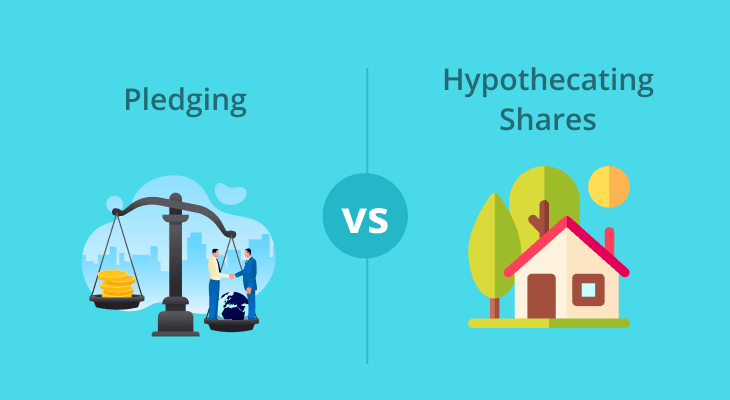
What is the difference between pledging and hypothecating shares?
April 7, 2026 | 7 mins read
When you use shares as security, we often underestimate how much the legal structure behind that arrangement matters. Terms like NSDL margin pledge and hypothecation are quite popular, and as a trader, you must know the distinction between them. A margin pledge and a share hypothecation offer different rights, controls and obligations. If you do not understand how these mechanisms work, you may misjudge your ability to access or manage your own holdings.