
April 7, 2026 | 5 min read
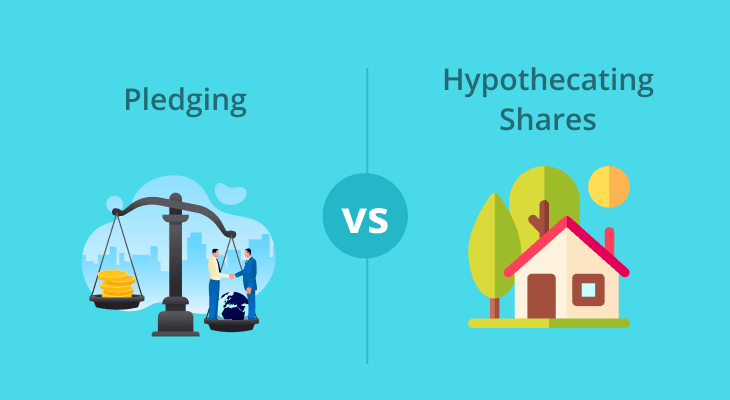
What is the difference between pledging and hypothecating shares?
When you use shares as security, we often underestimate how much the legal structure behind that arrangement matters. Terms like NSDL margin pledge and hypothecation are quite popular, and as a trader, you must know the distinction between them.
A margin pledge and a share hypothecation offer different rights, controls and obligations. If you do not understand how these mechanisms work, you may misjudge your ability to access or manage your own holdings.
In this guide, we will explain both these concepts clearly to help you understand how each structure affects your ownership, control and risk.
What does pledging of shares actually mean in practice?
A margin pledge is an offer to use your shares as security to gain greater buyer power while transferring control to the lender. This shift in possession is what defines the entire arrangement. Possession here does not mean ownership.
Instead, it is a handover or lien, in which your shares are “locked” and “blocked” with the broker until the pledge is repaid. With this, your shares are safe and cannot be used by the broker to finance other trading accounts.
So, while you remain the owner on record, the lender holds the shares. But only until you repay the obligation.
How does a pledge work?
This entire process will happen electronically. But the effect remains the same as physical delivery:
- You initiate a pledge by authorizing your lender to take control of specific shares from your demat account.
- And once the pledge is active, you cannot sell, transfer, or otherwise use those shares.
- The lender holds the pledged shares as protection.
- If you meet your repayment terms, the lender releases the shares back to you.
- If you default, however, the lender can sell the Pledge shares after issuing a notice.
- It will then use the proceeds from the sale to recover dues.
What legal principle governs a pledge?
Your share pledge operates under the bailment principle. You basically deliver goods to secure repayment of a debt. For example, when you need additional margin for trading.
Hence, the control moves to the lender or your broker for a defined period. This legal structure explains why pledging is more secure, especially from the lender’s perspective.
Where is pledging commonly used?
Pledging happens when lenders want direct control over your collateral. For instance, it is common in loans against shares or gold, where the asset value remains central to credit risk management.
How does hypothecation of shares involve you as an investor?
Hypothecation allows you to use your shares as security while retaining possession of them. So unlike pledging, your control does not shift immediately. Instead, the lender creates a legal charge over your shares.
How does hypothecation function?
Your shares remain in your demat account only under hypothecation. As a result, you continue to see them as part of your holdings. However, the lender records a charge so that you can’t dispose of those shares freely.
What happens if you default under a hypothecation agreement?
If you fail to meet your obligations, the lender can invoke the charge. This step allows them to take control of the shares. Once invoked, the lender may sell the shares to recover your outstanding amounts.
Where do you usually encounter hypothecation?
Hypothecation is widely used in margin-based arrangements and asset-backed financing. It also applies to vehicle loans and working capital facilities, where possession remains with the borrower.
For example, when you use m.Stock’s Pay Later (MTF), the shares you buy appear in your demat account under “pledged/hypothecated”.
Also Read: Pledge Shares vs Pay Later (MTF) | m.Stock
How does possession change your rights under pledging & hypothecation?
Possession determines who controls the asset during the security period. This difference will directly affect flexibility, enforcement and financial planning.
Why possession matters for risk management
With a pledge, the lender already controls the shares. This setup reduces their recovery risk. Under hypothecation, though, the lender relies on legal enforcement if default occurs. This reliance explains the procedural differences between the two.
Control versus convenience
Pledging restricts all your activity linked to the shares. Whereas, hypothecation allows continued holding with limitations. This contrast often drives the choice between the two structures.
How do the legal rights and enforcement differ between the two?
Both mechanisms protect lenders, but the route to enforcement differs. Take a look:
Enforcement under a pledge
The lender can sell your pledged shares after giving a notice if you fail to or do not maintain the required margins. And since possession already rests with the lender, the process remains relatively direct.
Enforcement under hypothecation
The lender must first invoke the charge in order to sell. Only then can they take control and proceed with the sale of your shares. This additional step explains why hypothecation involves more procedural safeguards.
When does pledging make more sense than hypothecation?
Pledging suits arrangements when a lender needs immediate control. For instance, it can be due to higher exposure or high asset volatility. So, for you, it works well when you don’t require ongoing liquidity or trading flexibility during the security period.
Pledging is favourable for you when your certainty outweighs the need for convenience. At m.Stock, you can easily pledge your securities such as stocks and ETFs, and get up to 87.50% instant margin. That too with ₹0 pledge creation charges.
When is hypothecation usually the preferred structure?
Hypothecation is suitable when retaining possession matters to you. It balances operational flexibility with lender protection. Therefore, this structure supports arrangements in which the continuity of your ownership remains important.
Conclusion
Whether your shares are pledged or hypothecated, both affect your ownership. In fact, it also helps you assess control, liquidity and downside risk. It clarifies what actions you can actually take and what happens during default.
Before you enter into any arrangement, you should review the security structure carefully. This clarity helps align your borrowing decisions with long-term investment planning.
Do you want to explore investing tools such as Pay Later (MTF), Pledge Shares and more, with transparent processes? Open an account with us at m.Stock and enjoy zero account opening fees to manage your investments with confidence and clarity.
Also Read: What is the Charge on Pledging? m.Stock
More Related Articles

How Long Can Beginners Hold Shares Using MTF?
 August 11, 2026 | 0 mins read
Many investors enter the stock market with strong conviction about certain stocks, but may not always have enough capital to buy the desired quantity outright. This is where Margin Trading Facility (MTF) has become increasingly popular in India.

How to Add Funds to Your MTF Position Easily?
August 11, 2026 | 0 mins read
Margin Trading Facility (MTF) has become a widely used trading feature among investors who want greater buying power in the stock market without paying the full transaction amount upfront. Instead of funding the entire purchase independently, you contribute an initial margin while the broker finances the remaining portion.
Margin Trading Facility (MTF) vs Personal Loan: Which is Smarter for Leveraged Investing?
July 3, 2026 | 0 mins read
Many investors reach a point where they want to invest more than their available capital. At that stage, you may consider borrowing to invest. Two common ways to do this are using a Margin Trading Facility (MTF) through your broker or taking a personal loan from a bank.