

April 7, 2026 | 5 min read
What is the impact of market conditions on OSB strategies?
If you have ever tried option trading, you must know that every option strategy responds to its environment. Whether markets move sharply, drift sideways or remain unusually calm, it impacts your trading choices.
When you use an Option Strategy Builder, your success depends on how accurately those strategies reflect the prevailing conditions. Direction, volatility, time decay and liquidity all influence outcomes in ways that traders often underestimate.
Why do market conditions matter in option strategy building?
Market conditions are crucial as they determine how option prices behave long before your strategy reaches expiry. Even small shifts in volatility or sentiment can significantly impact your strategy outcomes. Here is how:
What is the direct relationship between conditions and pricing?
Option premiums adjust continuously based on expected movements, not just on actual price changes. Rising volatility can inflate premiums, while calmer conditions tend to compress them.
A free option strategy builder can help you visualise these shifts clearly. It also allows you to see how pricing reacts before you commit funds.
Why static thinking can lead to mismatched strategies
Markets evolve faster than static strategies can adapt. Furthermore, a setup that’s built for trending conditions struggles during consolidation phases.
Strategy builder options or OSBs allow you to modify strikes and expiries as the conditions change in real time, thereby reducing your reliance on fixed assumptions.
How does market direction shape OSB strategy selection?
Direction acts as the structural backbone of any option strategy you employ. Without absolute clarity about direction, your strategy selection can become speculative.
Structuring trades for bullish phases
In upward-moving markets, OSBs frequently highlight call-based spreads rather than outright calls. Bull call spread balances optimism with cost control. And this will become visible when payoff ranges are mapped visually.
Positioning during bearish movements
When markets weaken, however, put spreads or protective structures often appear more efficient. An option strategy builder (OSB) will show you how downside protection behaves across price ranges. As a result, it will help you avoid overpaying for insurance.
Managing sideways conditions effectively
Range-bound markets reward these strategies that benefit from limited movement. OSBs often reveal income-oriented approaches, such as covered calls or iron condors. And this is where stability supports your returns.
What role does implied volatility play in OSB decisions?
Implied volatility is more influential than the price direction. For instance, it affects everything, from your entry cost and risk exposure to profit potential.
Navigating elevated volatility
High volatility inflates your option premiums, which obviously favours sellers. Here, OSBs can help you see how wider payoff ranges bring sharper losses your way.
Adjusting expectations
When volatility is low, option prices are lower. However, it also limits your immediate opportunities. OSBs illustrate how limited movement constrains profits, and that helps you avoid unrealistic expectations in these phases.
Comparing volatility-driven scenarios
Most strategy builders let you test your strategies under evolving volatility assumptions. This feature highlights how sensitive your chosen structure is to shifts in volatility.
The influence of time decay on OSB-based strategies
In contrast to implied volatility’s visible impact, time decay operates in the background. But it’s consistent and becomes unavoidable as expiry approaches.
- Theta as a daily influence: Every day reduces option value, especially for your out-of-the-money positions. Hence, OSBs show how quickly value declines under stable prices.
- Choosing between expiries: Shorter expiries amplify decay but also limit your capital exposure. At the same time, longer expiries reduce your daily decay but increase your upfront cost.
- Aligning duration with conviction: Does your market view lack urgency? Then, OSBs show longer durations, generally more forgiving than short-term ones.
Do liquidity and interest-related factors matter in OSB outcomes?
Yes, liquidity and macro inputs also influence your trades. For starters, when the open interest is high, the bid-ask spreads also tighten. Here, OSBs help you identify liquid strikes and lower your slippage.
Interest rates also influence your option pricing for longer maturities. Plus, the call and put valuations are affected by dividend expectations. OSBs smartly integrate such factors into your projections.
How do OSBs help you adjust strategies when markets shift suddenly?
Unexpected shifts actually test your trading discipline more than skill. Moreover, OSBs can help you respond methodically when used correctly.
- Structured adjustments: When volatility rises, OSBs allow rolling positions and adjusting strikes. You can also extend the option expiries while showing updated payoff profiles. This clarity discourages any reactive decisions on your end.
- Visualising potential risk: Payoff diagrams show your potential losses across price ranges. That too, even before you act.
- Scenario evaluation: Some builders also support historical simulations. This offers you invaluable insight into how your strategies would have fared under similar conditions in the past.
How should you approach OSB strategies as a retail participant?
OSBs support your F&O trading decisions, but they don’t eliminate risk in any way. It’s your discipline that ultimately determines outcomes. Here’s what you can do:
Avoid unnecessary complexity
Multi-leg strategies often appear attractive to traders on charts. However, OSBs reveal how complexity also increases your execution risk and monitoring effort.
Contextualise returns and losses
Every strategy inevitably experiences drawdowns. OSBs help you understand the potential downsides of your trades. This keeps your expectations grounded rather than optimistic.
Stay aligned with broader conditions
Rather than incorporating frequent strategy changes, OSBs encourage measured adjustments. You can ensure they’re aligned with prevailing market behaviour.
Conclusion
Direction, volatility, time decay and liquidity all these factors define how your structures perform in practice. An Option Strategy Builder helps you adapt thoughtfully and offers clarity instead of certainty.
Do you want to apply structured decision-making with transparent risk views? Start your trading journey with m.Stock and explore options strategies with defined costs and clear execution, all while you maintain full control over your decisions.
More Related Articles
How Much Risk Should You Take in Your 20s, 30s, 40s & 50s?
 July 24, 2026 | 0 mins read
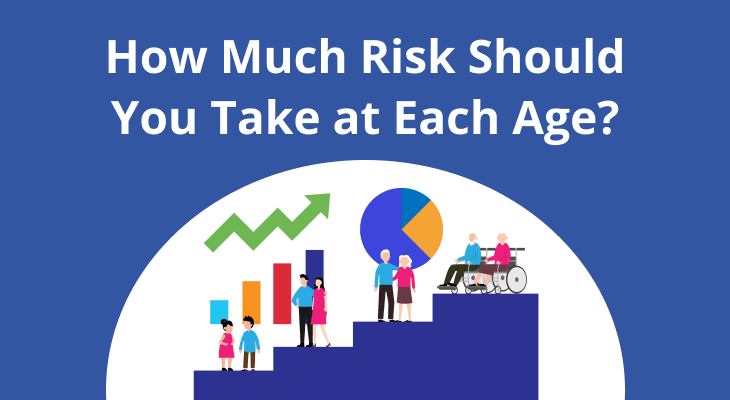
Risk is the price one has to pay for return. The higher the potential gain, the more uncertainty you take on to get it. Every investment carries some degree of that uncertainty the question is how much makes sense for where you are in life. A 25-year-old and a 55-year-old looking at the same stock market are in fundamentally different situations. At 25, putting most of your savings into equity mutual funds is a reasonable decision. At 55, the same decision could leave you in a difficult position if markets fall sharply in the years leading up to retirement.

How to Choose the Right Investment Method for Short‑Term Goals
July 24, 2026 | 0 mins read
A short-term goal is any financial target you need to meet within 1-3 years. This could be building an emergency fund, saving for a holiday, making a down payment on a house, or setting money aside for advance tax payments. Because the money has a fixed purpose and a financial need that is not too far into the future. The priority is simple: protect what you have and make sure you have easy access to it when you need it.

What is Rights Entitlement (RE) in the Stock Market?
July 23, 2026 | 0 mins read
At times, your demat account may reflect entries that fall outside the familiar pattern of buying and selling securities. Rights entitlement is one such instance. It appears quietly, and requires timely action on your part. You might notice an extra line item against a stock you already own, tagged differently, priced differently. It is not a bonus, not a split, and not exactly a new investment either. But it does carry value.