
June 10, 2026 | 6 min read
Target date investing: a simpler way to plan long-term investments
Target date investing is a set‑and‑review approach to long‑term investing where your portfolio automatically becomes more conservative as you get closer to your goal year. Target date investing bundles diversification and rebalancing into a single product. So, you spend more time on the goal and less time on day‑to‑day portfolio decisions.
In traditional investing, you decide how much to put in equity, debt, and other assets and then keep rebalancing as markets move and your age changes. Target date investing flips this. Over here, you pick a year that matches your goal (say 2040 or 2050), and the fund handles the asset‑mix glide path for you over time.
Target date investing can be executed through ETFs by starting with a higher allocation to equities when your goal is far away. You can use a basket investing product to help you create the rules for rebalancing. As the target year gets closer, the basket will rebalance automatically based on your pre-set rules and shift money into debt and short‑term instruments to reduce volatility when you need the funds.
What is a target date?
A target date is simply the year in which you expect to start using the money you are investing today. It is not an exact day. It is a practical time‑window for your financial goals.
Examples:
- Retirement at 60 in year 2055 → choose ‘2050–2060’ as target date fund/basket.
- Child’s higher education in 2040 → choose a ‘2040’ as option.
- Financial independence in 2035 → choose a ‘2035’ as fund.
How a target date fund’s glide path works
Most target date funds and target date ETFs follow a glide path like this:
Age now | Approx. target date | Typical equity allocation today | Equity near target date | Key idea |
30 | 2055 | 75%–85% | 30%–40% | Aggressive now, conservative later |
40 | 2045 | 65%–75% | 25%–35% | Balanced growth with risk control |
50 | 2035 | 50%–60% | 15%–25% | Focus on capital preservation |
The exact proportion in equity or debt may differ based on the individual circumstances, but the principle is constant: more growth assets far from the target date, more stability as you get closer.
How to Invest in target date funds?
Target date investing usually happens through mutual funds or target date ETFs listed on exchanges.
Step 1: Define your goal and year
- Retirement at age 60 → check your expected year of retirement.
- Education, house‑down payment, or other long‑term goals → estimate the year you will need the money.
Pick the target date closest to that year (slightly beyond the year if you want to be more conservative).
Step 2: Choose the right target date fund or target date basket of ETFs
When comparing options, look at:
- Glide path: Should you stay in equity for longer or turn conservative earlier?
- Underlying building blocks: Are the components broad-based index funds/ETFs or concentrated active funds?
- Cost: Expense ratio matters a lot over multi‑decade horizons.
- Category: Check whether the product is positioned for retirement, child’s education, or a generic long‑term goal.
Step 3: Decide between lump sum and SIP
You can:
- Invest a lump sum if you received a bonus, inheritance, or EPF transfer.
- Set up a SIP into a target fund(s), which is often the most practical route for salaried investors building toward a specific date.
Either way, the asset allocation inside the target date fund keeps changing as per its glide path, your main job is to keep contributing regularly.
Step 4: Review, but don’t tinker too much
Target date investing is not ‘invest and forget’, it is invested and review occasionally:
- Check every 1–2 years whether the target year still matches your goal.
- If your situation changes (earlier retirement, delayed goal), you can switch to a different target date or adjust overall contributions.
Who Should Consider Target Date Investing?
Target date investing is best suited for investors who:
- Want a single, diversified product instead of managing separate equity, debt, and gold funds.
- Have a clear time‑bound goal (retirement, education, long‑term wealth).
- Prefer a rule‑based approach rather than actively timing markets.
- Are comfortable delegating the asset allocation decisions to a fund manager / rule‑based glide path.
Example: 30‑year‑old planning retirement
For example, you are in your 30s and want to retire at 60, around 2056. Instead of building and rebalancing separate portfolios, you can pick a 2055 as target date and create an ETF basket in which you could invest via a monthly SIP.
- Years 1–15: Fund stays equity‑heavy, capturing growth.
- Years 16–25: Allocation gradually shifts toward high‑quality debt.
- Years 26–30: Portfolio is largely conservative, cushioning volatility around your retirement.
You can still complement this with other funds, but the core retirement piece is handled automatically.
Risks and limitations of target date investing
While target date funds simplify planning, they are not risk‑free.
- Market risk remains
When you invest in target date funds, you still own equity and debt markets. Sharp corrections can hit your portfolio, especially in early years when equity weight is high. - Glide path may not match your risk profile
Some investors are more conservative or more aggressive than the standard template. For example, a ‘2040’ fund might still hold 50% equity in 2038, which could feel too risky for someone very risk‑averse. - One‑size‑fits‑most, not one‑size‑fits‑all
Target date investing assumes a broad pattern of income, savings, and retirement timing. If you are an entrepreneur, have irregular income, or plan very early retirement, you might need more customisation. - Product differences matter
Different target date ETFs can use different indices, credit‑quality in debt, or even include other assets like Real Estate Investment Trust (REITs). The label ‘target date’ does not guarantee identical risk. - Behavioural risk
The biggest risk is still investor behaviour: stopping SIPs after a correction, switching target dates based on fear, or redeeming early.
Target Date Investing vs DIY Portfolio Planning
If you do not use target date funds, you essentially have your own asset allocation plan (DIY): you decide how to shift from equity to debt over time.
Example
Aspect | Target date investing | DIY portfolio planning |
|---|---|---|
Asset mix over time | Pre‑defined glide path, handled inside fund | You must decide and execute shifts |
Number of products | Often 1 core fund / ETF | Multiple equity, debt, hybrid and other funds |
Rebalancing | Automatic or periodic inside fund | Manual, you must track and rebalance |
Customisation | Limited to choice of target year and product | High, but requires knowledge and discipline |
Time/effort | Low ongoing effort | Higher ongoing effort |
When target date investing may be better
- You are early in your investing journey and want to avoid complexity.
- You prefer spending time on your career, not on asset‑allocation spreadsheets.
- You want a ‘default’ core portfolio that you can build around with satellite bets which are extra positions you build on top of you core portfolio.
When DIY (Do It Yourself) planning may be better
- You have significant investing experience and enjoy managing asset allocation.
- You have multiple large, non‑standard goals (for example, staggered retirements, business exits, overseas moves).
- You want granular control over sector, factor or style exposures.
A practical approach many investors use is hybrid: target date funds as the core, plus 1–3 satellite strategies (extra positions you build on top of you core portfolio) you actively manage.
Common misconceptions about target date investing
- Target date investing guarantees returns by the target year
No. They are market‑linked products. The glide path reduces volatility over time, but it does not guarantee a particular return or protect you from losses. - The target date is when I must withdraw everything
Not necessarily. Many investors start using the money around the target date but do not redeem the entire investment at once. Some providers even keep managing the portfolio beyond the target date with a stable, conservative allocation. - All target date funds are the same
They are not. Glide paths, underlying holdings, charges, and risk levels can differ significantly. When investing in target date ETFs or mutual funds, always review the scheme document and glide path illustration. - Target date investing is only for retirement
Retirement is the most common use case, but the same logic can work for long‑term education goals or even multi‑decade wealth‑building.
If I choose the ‘wrong’ year, the strategy fails
Choosing a date five years earlier or later will not break your plan. You can also switch target dates later if your goals shift.
Target date investing offers a structured, rule‑based way to plan long‑term goals without constantly tweaking your portfolio. The basic idea is simple: pick a year that matches your goal, invest in the target date fund or target date ETF aligned to that year. Then let its glide path progressively shift you from growth to stability.
It is not a magic bullet market risk, product selection and your own behaviour still matter but for many investors, especially beginners or busy professionals, target date funds can be an efficient for core, long‑horizon investing.
Also Read: What is an Exchange Traded Fund (ETF)? - m.Stock
More Related Articles

Demand Deposit Explained: Types, Benefits, and How It Works
 July 27, 2026 | 0 mins read
A demand deposit refers to funds kept in a bank account that you can withdraw whenever required without providing prior notice to the bank. Unlike fixed or term deposits, these funds are not locked for a specific duration. This flexibility allows account holders to access their funds instantly for transactions such as payments, transfers, or cash withdrawals. Banks maintain these deposits in accounts that support frequent financial activity.
How Much Risk Should You Take in Your 20s, 30s, 40s & 50s?
July 24, 2026 | 0 mins read
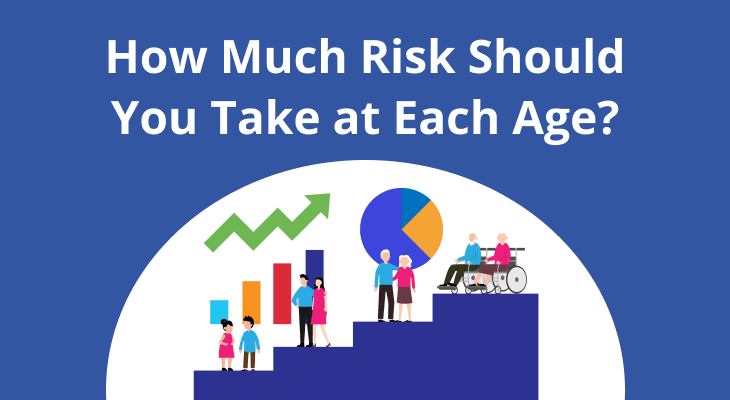
Risk is the price one has to pay for return. The higher the potential gain, the more uncertainty you take on to get it. Every investment carries some degree of that uncertainty the question is how much makes sense for where you are in life. A 25-year-old and a 55-year-old looking at the same stock market are in fundamentally different situations. At 25, putting most of your savings into equity mutual funds is a reasonable decision. At 55, the same decision could leave you in a difficult position if markets fall sharply in the years leading up to retirement.

How to Choose the Right Investment Method for Short‑Term Goals
July 24, 2026 | 0 mins read
A short-term goal is any financial target you need to meet within 1-3 years. This could be building an emergency fund, saving for a holiday, making a down payment on a house, or setting money aside for advance tax payments. Because the money has a fixed purpose and a financial need that is not too far into the future. The priority is simple: protect what you have and make sure you have easy access to it when you need it.
FAQ
Target date funds are not risk‑free, but they are beginner‑friendly because they bundle diversification and automatic rebalancing in a single product. They still invest in the underlying equity and debt instruments through ETFs or mutual funds. So, their value can rise and fall, but the glide path is designed to gradually reduce risk as your goal approaches.