
May 27, 2026 | 4 min read
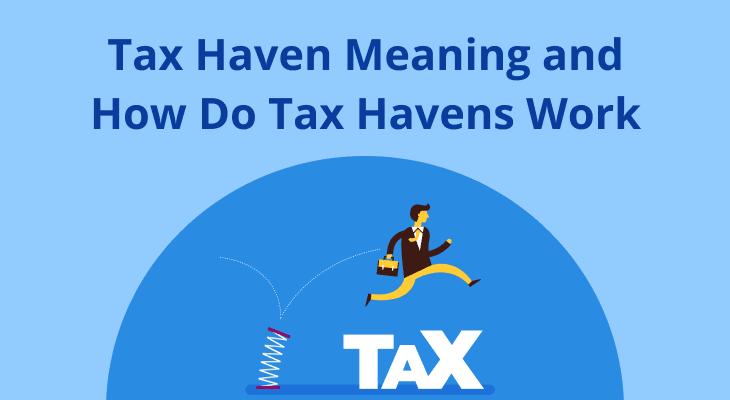
Tax Haven Meaning and How Do Tax Havens Work
There are several legal ways to minimise taxes and maximise take-home returns. A tax haven is often discussed as one such option. But what exactly is it? Is it a provision under the Income Tax Act, a tax-exempt entity, or simply an arrangement of finances to reduce taxes? Let’s find out in this blog.
Tax haven meaning
To understand the meaning of tax haven, consider this: If you earn ₹100 and pay ₹30 as tax, you are living in a relatively high-tax country. However, there are jurisdictions where individuals and businesses may pay ₹5, or sometimes nothing at all, on the same ₹100.
Such countries or jurisdictions are known as tax havens or offshore financial centres. They typically offer nil or very low tax rates to attract foreign individuals and corporations, boosting economic growth.
Key features of tax havens
According to the Organisation for Economic Co-operation and Development (OECD), tax havens generally exhibit specific characteristics:
- No or low taxes: Jurisdictions may impose zero or nominal tax liabilities on individuals and entities.
- Minimal information sharing: Tax havens often have strict secrecy laws that limit scrutiny by foreign tax authorities, ensuring that financial information is not readily shared with external authorities. This protects the identity and details of investors.
- Lack of transparency obligations: Limited disclosure requirements make it difficult to trace ownership and transactions.
- No substantial local presence required: Tax havens do not require a meaningful physical presence within the jurisdiction, allowing businesses to be registered easily and conveniently.
- Stable regulatory environment: Many tax havens offer political and economic stability, which attracts global investors.
How do tax havens work?
Tax havens function as gateways for businesses and individuals seeking to reduce their tax liabilities by shifting income, assets, or business operations from a high-tax country to a low-tax jurisdiction.
This shift can be done in various ways.
Common methods used in tax havens
There are several methods through which individuals and businesses may route funds through tax havens.
Individuals
- Setting up anonymous trusts and numbered accounts
- Investing in high-value real estate
- Purchasing and storing luxury items, antiques, or rare art
Businesses
- Creating shell companies
- Opening offshore bank accounts
- Establishing complex corporate holding structures
- Engaging in false invoicing practices
Examples of popular tax havens
Here are some popular tax havens in the world:
- The United Arab Emirates
- Bermuda
- Luxembourg
- Cayman Islands
- Switzerland
- Isle of Man
Are tax havens legal?
Tax havens themselves are not illegal. Many jurisdictions legally design their tax systems to attract foreign investment. Individuals and businesses can minimise their tax liabilities through such jurisdictions, as long as they do so within the framework of the applicable laws of their home country. Using offshore structures to conceal income or evade taxes is illegal and may attract penalties and prosecution.
India’s measures against tax havens
India has implemented several measures to curb tax evasion and aggressive tax avoidance, particularly involving offshore jurisdictions. Some of the key measures include:
- General Anti-Avoidance Rules (GAAR)
- Black Money (Undisclosed Foreign Income and Assets) Act
- Transfer Pricing Regulations
- Double Taxation Avoidance Agreements (DTAAs) with Exchange of Information clauses
Impact of tax havens on the economy
While tax havens may benefit certain individuals and businesses, they can have broader economic consequences:
- Erosion of the tax base: When individuals and corporations shift profits or assets abroad to reduce taxes, a country’s tax revenue declines. This can limit public spending, potentially slowing down economic growth and development.
- Increased burden for domestic taxpayers: To compensate for revenue shortfalls, governments may increase taxes elsewhere or cut public expenditure. This can shift the burden onto domestic taxpayers, particularly middle- and lower-income groups.
- Rise in illicit financial activities: In jurisdictions with limited transparency, tax havens may create opportunities for money laundering, corruption, and financing of illegal activities.
Tax havens vs tax incentive countries
While the two terms may be used in a similar context, tax havens and tax incentive-based regimes are fundamentally different. Tax havens typically offer zero or very low tax rates, along with benefits such as high levels of secrecy and minimal reporting requirements.
In contrast, tax incentives are specific provisions built into a country’s tax framework to attract targeted industries, investments, or economic activities.
For instance, people often wonder whether there is a tax haven in India. However, India is not a tax haven. Instead, it offers structured tax incentives to foreign nationals and companies, including exemptions for Foreign Portfolio Investors (FPIs), benefits under DTAAs, and incentives for units operating in Special Economic Zones (SEZs), among others.
Conclusion
Tax havens enable individuals and businesses to minimise their tax liabilities, provided they operate within the boundaries of applicable tax laws and disclosure requirements. While they may offer financial flexibility and benefits, their role in the economic development of a country remains debated. Understanding the tax haven meaning helps clarify a complex and misunderstood concept.
Also Read: Updated Income Tax Slabs & Rates for FY 2025-26 | m.Stock
More Related Articles
New tax rules 2026: How to save tax in 2026?
 August 6, 2026 | 0 mins read
The new Income Tax Act, 2025, replaces the long-standing Income Tax Act, 1961, to modernise, simplify, and streamline India’s direct tax system. Effective from April 1, 2026, the new tax rules introduce revised deduction and allowance provisions, rationalised Tax Collected at Source (TCS) rates, updated Income Tax Return (ITR) filing deadlines, and stricter compliance measures.
How to Save Tax Under the New Tax Regime in 2026?
July 29, 2026 | 0 mins read
If you are planning your finances for FY 2026–27 and beyond, understanding the new tax regime of 2026 can help you reduce your tax outgo without relying heavily on deductions. Over the last few years, the government has gradually made the new regime more attractive through revised tax slabs, higher rebates, and simplified filing rules. In this blog, you will learn how to save tax under the new regime, compare it with the old regime, understand the latest slabs, and avoid common mistakes while filing your return.
Income Tax Notice in 2026: Causes, Types & What to Do
July 29, 2026 | 0 mins read
Receiving an income tax notice can feel stressful, especially when you are unsure why it arrived or how to respond. In many cases, the notice is not a penalty but a request for clarification, verification, or correction from the Income Tax Department.
FAQ
Companies use tax havens to minimise their tax liabilities by shifting their business or investments from a high-tax jurisdiction to a no- or low-tax jurisdiction.