
April 1, 2026 | 6 min read
What are the challenges of using Trading APIs?
Modern stock trading is algorithmic and highly automated, and trading APIs assist it. They allow you to connect your trading account directly to software and place orders programmatically. Also, they fetch live or historical market data without any manual intervention.
This automation clearly brings you the required efficiency and speed. But it also introduces a set of challenges that often go unnoticed, especially at the entry stage.
In this article, we explain those challenges clearly so that you can make informed decisions concerning trading APIs and set realistic expectations.
Why does using a trading API require technical skills?
Trading APIs demand more than basic trading knowledge. You must work with programming languages, structured data and technical documentation that leaves only a little room for error. Even a simple strategy requires precise logic, accurate parameters and careful handling of exceptions.
With m.Stock’s Model Context Protocol (MCP), you can connect AI tools like Claude, , to your demat account and use your basic understanding of technical skills to translate your code into API-appropriate commands for automation.
Are order-related errors possible with trading APIs?
You must understand how orders behave once sent through an API. Market orders, limit orders, and stop instructions behave differently in live conditions than in simulations. Here, even a minor coding mistake can lead to repeated orders or unintended exposure.
For instance, your code might be set based on the last traded price, but by the time the API passes it to the exchange, price slippage may have occurred, eating into your profits.
Thus, from a purely system perspective, you must ensure that your application stays compatible with the broker’s API updates. APIs evolve, and version changes can break existing logic if they are left unattended.
m.Stock’s trading API is built with mandatory risk controls for seamless, ultra-low latency connectivity at zero cost. Moreover, we offer unlimited GET requests to ensure you can plan and implement the best strategy.
What are some technical challenges I might encounter?
- Writing stable and readable trading logic
- Debugging live order execution issues
- Interpreting API error responses correctly
- Updating systems after API version changes
How do latency and system reliability affect API-based trades?
API trading depends heavily on the quality of your network and the system uptime. This process explains why.
- Orders first travel from your system to the broker’s server.
- Then, they are sent over to the exchange.
- Any delay in this chain affects execution price, especially during phases of market volatility.
Latency also becomes more visible during high-volume periods, such as market open or major economic announcements. You must know that even a single millisecond can make a difference when prices move rapidly.
Connectivity issues can disrupt order flow, leaving your trades incomplete or unconfirmed. Therefore, all these risks need to be accounted for by actively monitoring order status and handling disconnections calmly.
What are the reasons behind operational risks?
- Network delays
- Temporary API outages or server overload
- Internet or power disruptions on your end
- Slow or delayed order confirmations
What challenges do API rate limits create for traders?
Every trading API enforces certain rate limits to protect the system’s stability. These limits restrict how many requests you can actually send within a specific time window. When the limit is exceeded, the API may throttle your access or block requests temporarily.
What strategies are affected by rate limits?
Rate limits affect strategies that rely on frequent price checks, rapid order updates or high-frequency data calls. That’s because during fast-moving markets, your system may attempt more requests than allowed. And it can, in turn, cause missed trades or delayed actions.
Managing this requires careful planning on your end. Moreover, efficient request handling and smarter data usage can help you stay within permitted thresholds.
Why do API trading strategies sometimes fail in live markets?
Many strategies perform well when backtesting, but struggle once deployed live. Here are some primary reasons for this:
- Overfitting models to historical data: This usually happens due to over-optimisation. When you fine-tune parameters too closely to historical data, the strategy loses flexibility.
- Ignoring transaction costs: Live markets also introduce slippage, liquidity gaps and sudden volatility.
- Failing to account for risks: APIs execute instructions exactly as coded, without discretion. If your logic does not account for adverse conditions, such as low-liquidity periods, losses can escalate very quickly.
- Relying on redundant assumptions: Sound strategy design focuses on robustness rather than perfection, and assumptions tend to change in real time. Thus, testing across multiple scenarios improves resilience.
What security risks should you consider when using trading APIs?
When you are trading with an API, security remains one of the most critical concerns. Mainly because API keys provide direct access to your trading account. If they’re compromised, it can enable unauthorised trades or account misuse.
What precautions can you take?
These security risks can be handled easily by picking a secure API. Additionally, you must store keys securely and avoid embedding them in exposed code. Limiting permissions also works. For instance, you can start by disabling withdrawals where possible, which reduces risk.
Regularly rotating keys adds yet another layer of protection as cyber threats evolve continuously. Please know that even well-designed systems require constant attention to keep your trades and access secure.
Why does automated API trading still need constant monitoring?
Since markets continuously change and APIs also update, you need to handle automation with some responsibility. Moreover, continuous monitoring can help you identify any unusual behaviour early and prevent larger losses.
For this, setting up alerts, logs and dashboards smartly can provide complete visibility into your system’s health. Manual checks are also necessary to validate performance and execution quality.
Conclusion
Trading APIs offer automation and suit all traders who value discipline, structure and systematic execution. However, it needs some preparation. If you lack technical readiness or time for monitoring, manual trading may be a better fit for your approach.
Before adopting APIs, assess your risk tolerance and operational capacity as well. If you’re planning to explore automation, opening an account with m.Stock will provide you with structured API access. You can explore our web platform to understand how API-enabled trading fits into a broader, execution-focused trading setup.
Ultimately, trading APIs are integrative tools, not shortcuts. Hence, their success depends on how carefully you use and supervise them.
Also Read: Regulatory Issues with Trading APIs in India | m.Stock
More Related Articles
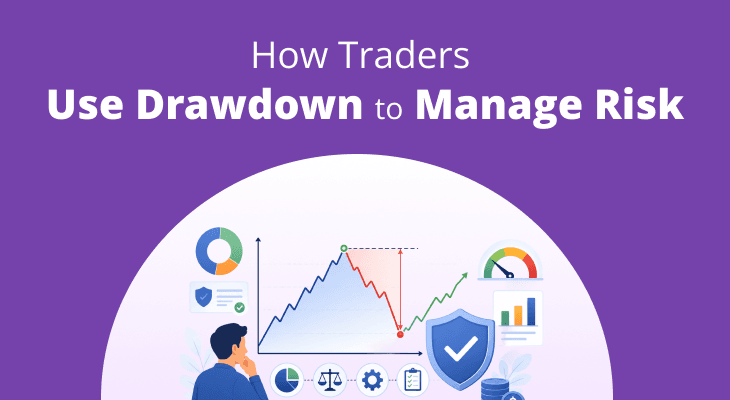
How Traders Use Maximum Drawdown to Manage Portfolio Risk?
 August 19, 2026 | 0 mins read
When evaluating an investment or trading strategy, returns usually receive the most attention. However, returns alone do not tell investors how much risk was taken to achieve them. Two portfolios may deliver the same annual return, but one may have experienced far steeper losses during market downturns. This is where max drawdown becomes useful. It measures the largest decline in the value of a portfolio, trading account, or investment from its highest point to its lowest point before a new peak is reached. Instead of focusing only on profits, it shows the worst historical loss an investor would have experienced by staying invested.
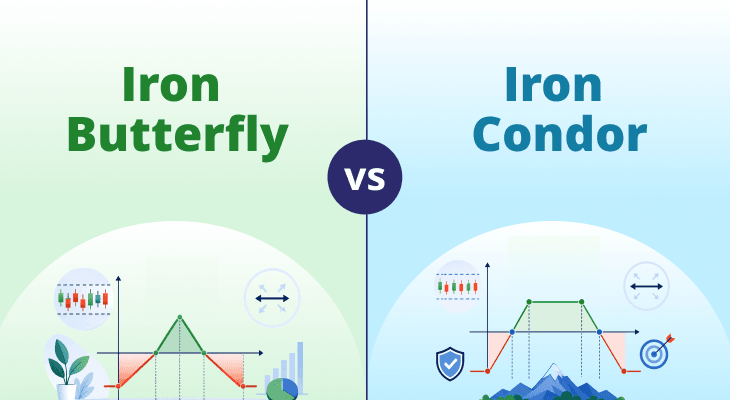
Iron Butterfly vs Iron Condor: Which Strategy Is Better?
August 19, 2026 | 0 mins read
Options trading is not always about predicting the next big market move. At times, the market trades within a narrow range, creating opportunities for strategies that benefit from stability rather than direction. Two of the most widely used neutral strategies are the iron butterfly strategy and the iron condor options strategy. While both strategies use four option contracts and defined risk, they do not behave in the same way. Differences in strike selection, profit range, and risk-reward dynamics can significantly affect trading outcomes. Understanding the difference between an iron condor and an iron butterfly can help you select a strategy that matches your market expectations and trading objectives.

Iron Condor Strategy
August 19, 2026 | 0 mins read
Markets do not always trend strongly. At times, prices remain within a narrow range, making directional trades more challenging. The iron condor strategy is designed for these market conditions. It doesn’t rely on a bullish or bearish outlook. It aims to generate returns when the underlying asset remains within a predefined price range. With clearly defined risk and reward, it has become a widely used approach among traders looking to capitalise on range-bound markets while maintaining controlled exposure.