

May 15, 2025 | 6 min read
What Is Growth Rate? Definition, Formula & Importance
Growth rate is a fundamental metric used to measure the expansion of a company, investment, or economy over time. Whether you are an investor analysing stock performance or a business assessing revenue growth, understanding growth rates can help in making informed investment decisions. This blog explains growth rate meaning, its formula, types, and how it applies to investments such as mutual funds and stocks.
What Is Growth Rate?
In general, growth rate refers to the rate at which a particular value increases over a specific period. It is commonly used in finance, economics, and business analysis to measure how fast a variable such as revenue, profits, stock prices, GDP, or population is growing.
For example:
- A company's sales revenue increasing from ₹ 50 crore to ₹ 60 crore in a year means a revenue growth rate of 20%.
- India's GDP growing from ₹ 2.5 lakh crore to ₹ 2.7 lakh crore represents a GDP growth rate of 8%.
- A stock's market value rising from ₹ 100 to ₹ 120 in one year means a stock price growth rate of 20%.
A positive growth rate indicates expansion, while a negative growth rate suggests decline. Consistently high growth rates are desirable for companies, economies, and investments. While it is used across industries to measure revenue, profits, sales, or investment returns, for investors, it provides insights into a company's financial health and future potential.
Let us know more about this metric in the financial context.
Formula for Growth Rate
The general formula for calculating growth rate is:
Growth Rate = ((Final Value − Initial Value) / Initial Value) × 100
Let us use one of the earlier examples where a company’s sales revenue rose from ₹ 50 crore to ₹ 60 crore. Here:
Final Value = ₹ 60 crore
Initial Value = ₹ 50 crore
Now, putting these values in the formula we find,
((60 - 50) / 50) x 100
(10 / 50) x 100
0.2 x 100 = 20% (growth rate)
How to Calculate Growth Rate
So, as you have seen, to calculate growth rate, follow these steps:
- Identify the metric to measure (e.g., stock price, revenue, sales, investment value).
- Determine the starting and ending values.
- Apply the growth rate formula.
But what about investments over multiple years? Total growth rate will not give you an accurate picture here. For this, you can use CAGR to assess average annual growth.
CAGR stands for compounded annual growth rate. It is a key metric used to measure the average annual growth of an investment over a specific period, smoothing out fluctuations. It is widely used for evaluating mutual funds, stocks, and business revenues. Unlike total growth rate, which measures absolute growth, CAGR provides a more accurate long-term performance assessment.
The formula is:
CAGR = ((End Value / Start Value)1 / Number of Years ) −1
So, if you bought a stock for ₹ 50 and its value has become ₹ 80 after three years, the total growth rate is 60%. But using the above mentioned formula, you will find the CAGR is 16.96%. In other words, the stock price grew at an annual average growth rate of 16.96% over a period of three years.
Types of Growth Rates & its Importance
Different types of growth rates help assess various aspects of business and investment performance:
1. Revenue Growth Rate
- Measures how a company’s revenue increases over time.
- Important for evaluating company performance and future potential.
2. Profit Growth Rate
- Indicates the growth of net income.
- Helps investors gauge a company's profitability trends.
3. Stock Price Growth Rate
- Tracks the percentage increase in stock value.
- Essential for investors looking for capital appreciation.
4. Mutual Fund Growth Rate
- Evaluates the increase in Net Asset Value (NAV) of a mutual fund over time.
- Helps in comparing fund performance.
5. Economic Growth Rate
- Measures GDP growth, indicating overall economic health.
- Used for macroeconomic analysis.
Understanding different growth rates allows investors and businesses to make better financial and strategic decisions.
Factors Affecting Growth Rate
Several factors influence a company’s or investment’s growth rate:
- Market Demand: High demand for products or services can drive revenue and stock price growth, making it one of the most crucial factors in determining growth rates.
- Economic Conditions: Inflation, interest rates, and GDP growth significantly impact a company’s ability to expand and maintain profitability.
- Company Strategy: Effective management strategies, including investment in innovation, marketing, and operational efficiency, play a key role in sustaining high growth rates.
- Competition: A competitive industry can either fuel rapid growth for companies with differentiation or suppress growth for firms struggling to gain market share.
- Government Policies: Regulatory changes, tax policies, and government incentives can either boost or hinder business expansion, directly impacting growth rates.
- Consumer Behaviour Trends: Changing consumer preferences, technological advancements, and shifts in buying patterns can create new growth opportunities or render existing products/services obsolete.
- Industry-Specific Factors: Some industries naturally experience higher growth due to trends like digital transformation, while others may have slow or cyclical growth patterns.
- Global Economic Influence: External factors such as global trade relations, currency fluctuations, and international economic conditions can indirectly affect a company’s growth trajectory.
Challenges in Measuring Growth Rate
While growth rates provide valuable insights, they come with challenges:
- Volatility: Short-term fluctuations in financial performance, often caused by market cycles, can distort actual growth trends.
- One-Time Events: Events such as mergers, acquisitions, government policy changes, or economic recessions can lead to misleading growth rate figures.
- Data Accuracy: Inconsistent or inaccurate financial reporting can make growth rate calculations unreliable.
- Different Calculation Methods: Various metrics (e.g., absolute growth rate, CAGR, revenue growth rate) can yield different results, making comparisons difficult.
- Sector-Specific Variations: Growth expectations differ across industries; for example, technology startups typically have higher growth rates than utility companies.
- Inflation Adjustments: Inflation impacts real growth rates, making it essential to differentiate between nominal and real growth.
- Short-Term vs. Long-Term Growth: Companies experiencing rapid short-term growth may not sustain it over time, making long-term growth analysis more reliable.
- External Factors: External events such as global crises, pandemics, or natural disasters can skew normal growth patterns and affect performance unpredictably.
To overcome these challenges, it’s best to analyse growth trends over extended periods, use multiple metrics, and consider broader industry comparisons.
Conclusion
Growth rate calculation is a powerful tool for investors and businesses alike. Whether measuring stock performance, mutual fund returns, or business expansion, understanding growth rate formulas and factors influencing them can lead to more informed financial decisions. By analysing different types of growth rates, you can better navigate market trends and identify investment opportunities for long-term wealth creation.
More Related Articles
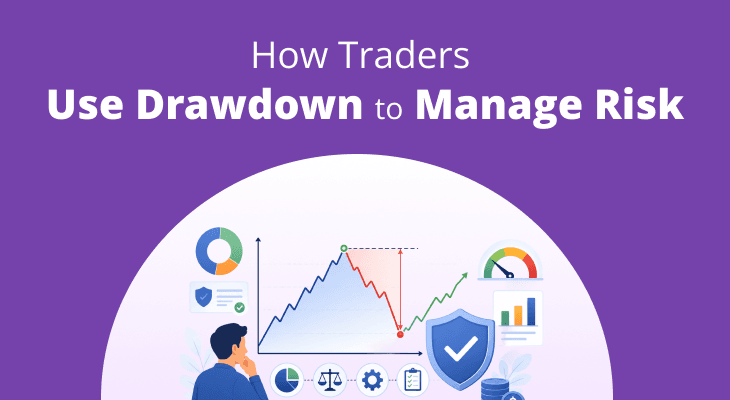
How Traders Use Maximum Drawdown to Manage Portfolio Risk?
 August 19, 2026 | 0 mins read
When evaluating an investment or trading strategy, returns usually receive the most attention. However, returns alone do not tell investors how much risk was taken to achieve them. Two portfolios may deliver the same annual return, but one may have experienced far steeper losses during market downturns. This is where max drawdown becomes useful. It measures the largest decline in the value of a portfolio, trading account, or investment from its highest point to its lowest point before a new peak is reached. Instead of focusing only on profits, it shows the worst historical loss an investor would have experienced by staying invested.
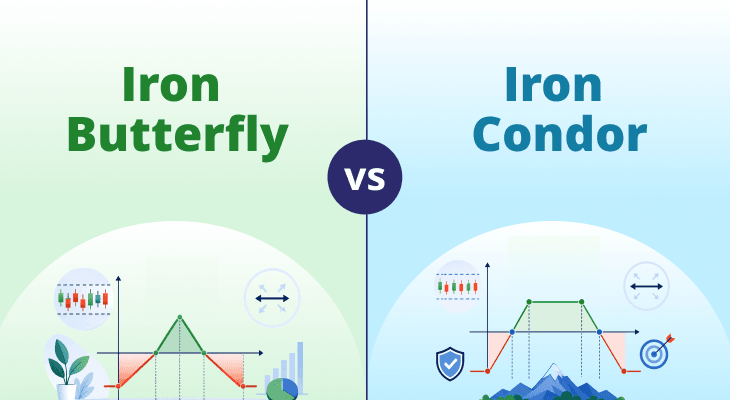
Iron Butterfly vs Iron Condor: Which Strategy Is Better?
August 19, 2026 | 0 mins read
Options trading is not always about predicting the next big market move. At times, the market trades within a narrow range, creating opportunities for strategies that benefit from stability rather than direction. Two of the most widely used neutral strategies are the iron butterfly strategy and the iron condor options strategy. While both strategies use four option contracts and defined risk, they do not behave in the same way. Differences in strike selection, profit range, and risk-reward dynamics can significantly affect trading outcomes. Understanding the difference between an iron condor and an iron butterfly can help you select a strategy that matches your market expectations and trading objectives.

Iron Condor Strategy
August 19, 2026 | 0 mins read
Markets do not always trend strongly. At times, prices remain within a narrow range, making directional trades more challenging. The iron condor strategy is designed for these market conditions. It doesn’t rely on a bullish or bearish outlook. It aims to generate returns when the underlying asset remains within a predefined price range. With clearly defined risk and reward, it has become a widely used approach among traders looking to capitalise on range-bound markets while maintaining controlled exposure.
FAQ
Growth rate in finance refers to the percentage increase or decrease in a financial metric, such as revenue, stock price, or investment value, over a given period.