
October 28, 2026 | 6 min read
What is slippage in trading? and its relevance in stock market
Picture this: While booking a cab to the office, you see an estimated fare of ₹100. Based on this estimate, you decide to proceed with the ride. However, because you are traveling during peak hour, the final fare turns out to be ₹120. Similar situations can occur in the stock market, resulting in what is known as slippage. This blog explains the concept of slippage in the stock market, including its meaning, how it works, and its relevance for investors and traders.
What is slippage in the stock market? Slippage meaning explained
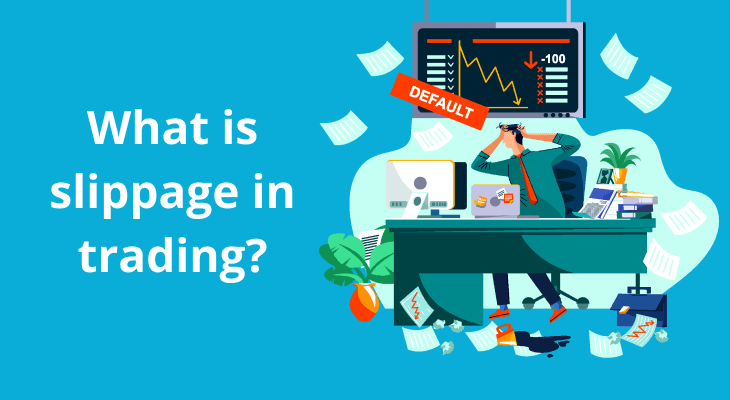
Slippage in trading refers to the difference between the expected price of a trade and the actual price at which it is executed. It commonly occurs in volatile or low-liquidity markets where prices can change rapidly between the time an order is placed and the time it is executed.
Slippage can be favourable or unfavourable depending on market conditions.
How does slippage work in the stock market?
The stock market is highly dynamic, with a large number of buy and sell transactions taking place throughout the trading day. When investors place a market order, they instruct the platform to buy or sell a specified quantity of securities at the best available market price.
However, due to rapid changes in demand and supply, stock prices can move within seconds. Slippage occurs when the market price changes between the time an order is placed and the time it is executed.
Slippage is generally lower in the case of limit orders, as traders specify the maximum price they are willing to pay while buying, or the minimum price they are willing to accept while selling. However, limit orders do not guarantee execution.
What causes slippage in trading?
Common reasons why slippage occurs include:
- Market volatility: Slippage is more common during volatile market conditions. Prices can change rapidly due to major corporate developments, earnings announcements, economic data releases, or geopolitical events.
- Illiquidity: When there are fewer market participants, it may take longer for orders to be matched. This gap between order placement and execution can increase the likelihood of slippage.
- Order size: Larger orders are more likely to experience slippage, especially in less liquid stocks. Different portions of the order may be executed at different prices, resulting in a higher average execution price.
- Market hours: The possibility of slippage is often higher during market opening and closing hours, when trading activity and price movements can be more pronounced.
- Technical issues and latency: Internet connectivity problems, platform delays, or other technical issues can slow down order transmission. This delay, known as latency, can contribute to slippage, especially in high-frequency trading environments.
Types of slippage in the stock market
There are three main types of slippage in the stock market:
- Positive slippage: Positive slippage occurs when a trade is executed at a better price than expected. For example, you expect a buy order to execute at ₹1,000, but it is executed at ₹990.
- Negative slippage: Negative slippage occurs when a trade is executed at a less favourable price than expected. For example, expect a sell order to execute at ₹1,000, but it is executed at ₹990.
- Neutral slippage: Also known as zero slippage, neutral slippage occurs when a trade is executed at the expected price, with no difference between the intended and executed prices. For example, you expect an order to execute at ₹1,000, and it is executed at ₹1,000.
Slippage in trading: example
Let’s assume you want to buy 100 shares of Company XYZ.
- Expected purchase price: ₹100 per share
- Expected trade value: ₹10,000
However, due to high market volatility, the share price jumps to ₹105 by the time your order is executed.
- Actual purchase price: ₹105 per share
- Actual trade value: ₹10,500
Therefore,
- Slippage per share = ₹105 - ₹100 = ₹5
- Total slippage cost = ₹5 ×100 = ₹500
In this case, you have experienced negative slippage because the shares were purchased at a higher price than initially expected.
Note: Slippage can also be positive. If the shares in this case had been purchased at ₹95, you would have saved ₹500 due to positive slippage.
How does slippage affect and investors?
Slippage can affect traders and investors in the following ways:
- Impact on profit margins: Slippage can affect profit margins positively or negatively, depending on whether the execution price is more or less favourable than expected. Traders who frequently trade with small profit margins and high trading volumes can be significantly impacted even by minor negative slippage. Investors with a long-term investment horizon are comparatively less affected because they are less sensitive to short-term fluctuations.
- Impact on stop-loss orders: Slippage can affect the effectiveness of stop-loss orders because they may be executed at a price different from the specified stop level. During volatile markets or gap openings, the actual exit price may be less favourable than expected, leading to larger losses.
- Higher transaction costs: Frequent negative slippage can increase the effective cost of trading, reducing net returns over time.
How to calculate average slippage?
As the name suggests, average slippage refers to the average slippage across multiple trades. It is calculated by dividing the total slippage across all trades by the total number of trades.
Average slippage = Total slippage across all trades ÷ Total number of trades
Let’s assume your slippage across five trades is as follows:
- Trade 1: ₹2
- Trade 2: ₹0.5
- Trade 3: ₹1.5
- Trade 4: ₹0.5
- Trade 5: ₹0.5
Total slippage = ₹5
Average slippage = ₹5 ÷ 5 = ₹1
Tracking average slippage helps traders evaluate execution efficiency and allows them to refine their trading strategies accordingly.
Common mistakes traders make regarding slippage
These common mistakes can increase slippage-related costs:
- Not planning for slippage: Ignoring potential slippage while estimating profits can lead to unrealistic expectations and poor trade planning.
- Trading highly illiquid stocks: Stocks that have low trading volumes often have wider bid-ask spreads and a higher likelihood of slippage.
- Relying excessively on market orders: Market orders specify only the quantity to be traded, while limit orders specify both the quantity and the desired price. As a result, market orders are more susceptible to slippage, especially during periods of high volatility.
- Trading during extreme volatility: Major corporate announcements, economic data releases, and unexpected events can cause sharp price movements that increase slippage risk.
- Not optimising order size: Larger orders are more likely to experience slippage because they may need to be executed across multiple price levels. This can lead to a less favourable average execution price.
Conclusion
Factors such as market volatility, illiquidity, order size, and latency issues can contribute to slippage—the difference between the expected trade price and the actual execution price.
While slippage in the stock market is a common occurrence, traders can reduce its impact by planning trades carefully, choosing liquid securities, using limit orders where appropriate, optimising order sizes, and avoiding periods of extreme market volatility.
More Related Articles
What is Coffee Can Investing? How to build a Coffee Can Portfolio?
 October 28, 2026 | 0 mins read
Coffee can investing is an investment strategy that involves buying fundamentally strong stocks and holding them for a long period, typically 10 years or more. The idea is to avoid frequent buying and selling and allow businesses to create wealth through sustained growth and the power of compounding. The term originates from an old American practice—common in many parts of the world—of storing valuables such as cash, jewellery, and important possessions in a coffee can and leaving them untouched for years. While the original idea was to preserve wealth for future needs, in investing, the objective is to potentially grow wealth over the long term.
REIT vs InVIT: Which Is Safer for Long-Term Investing?
October 27, 2026 | 0 mins read
Real Estate Investment Trusts (REITs) work in a similar fashion to mutual funds. However, instead of investing the pooled money in different securities, a REIT invests the collective amount primarily in completed, income-generating commercial real estate such as offices, malls, business parks, and warehouses. REIT investing allows investors to participate in the real estate market without buying or managing property directly. Investors can earn returns through the income generated by these properties, primarily in the form of rentals, along with the potential for capital appreciation in the value of the underlying assets.
Understanding the meaning and benefits of the systematic trading system
October 23, 2026 | 0 mins read
A systematic trader is an individual who uses a predesigned and backtested trading strategy to buy and sell financial instruments such as stocks, futures, currencies, or commodities. Instead of relying on gut feelings or emotions, they use a systematic trading system built on predefined rules, quantitative analysis, and technology to make trading decisions.
FAQ
Average slippage refers to the average amount of slippage across multiple trades. For instance, if the total slippage across five trades is ₹5, the average slippage would be ₹1.