
January 13, 2026 | 10 min read
What is stock market bubble and its different stages?
In recent years, talk of a market bubble has grown louder among investors, analysts, and policymakers alike. For someone participating in the stock market, understanding what a stock market bubble is, how it forms, and what risks it poses can help you make more informed decisions. A bubble is not just a temporary rally or a strong bull run. Rather, it is a speculative phenomenon where prices detach from underlying fundamentals, creating the risk of a sharp correction.
In this blog, we will delve into the meaning of a market bubble, examine the different stages of a market bubble, explore common types, and suggest how you can protect yourself. We will also explain how having a Demat account helps you navigate these cycles more effectively.
What Is a Stock Market Bubble?
A stock market bubble refers to a situation where share prices rise rapidly, driven largely by speculation, momentum, and exuberant investor behaviour, rather than by solid fundamentals such as earnings, cash flow, or realistic growth prospects. In a bubble, valuations are often stretched to levels far beyond what underlying corporate performance can support. Over time, this speculative demand becomes unsustainable, and when sentiment shifts, the bubble can “burst”, triggering a significant fall in prices.
Economists note that bubbles are often only obvious in hindsight. While prices are rising, many investors believe the party will continue indefinitely; only when the decline begins do people realise how fragile the structure was.
Five Stages of a Bubble (Based on Hyman Minsky’s Model)
One of the most respected frameworks to understand how a bubble develops comes from economist Hyman P. Minsky, who described five stages in a financial cycle. These stages help explain how a bubble forms, peaks, and eventually collapses. Let’s go through each stage in detail
Displacement
- In the displacement phase, something fundamental changes in the economy or the investment environment: it could be a technological breakthrough (for example, AI), a major policy shift, or a prolonged period of very low interest rates.
- As this takes hold, investors begin to re-evaluate risks and rewards. The opportunity seems fresh and promising. This change draws attention, and some investors start allocating funds in anticipation of significant future gains.
- In recent times, for instance, large investments into AI infrastructure or generative AI could be viewed as a “displacement” moment.
- In the Indian context, a policy change or reform, such as deregulation, tax incentives, or a major infrastructure push, can serve as a displacement trigger by creating fresh growth themes.
Boom
- After displacement comes the boom phase. Here, prices begin to rise noticeably. At first, the increase may appear modest, but over time, as more investors catch on, the price acceleration speeds up. Minsky’s model captures how more participants enter as momentum builds.
- Media coverage intensifies. As success stories emerge, narratives around “this time it’s different” gain strength. More people, including retail investors, start joining the rally.
- In this phase, valuation metrics might start to stretch. Technicals matter; speculative capital flows in; and many investors are driven by the fear of missing out.
Euphoria
- Euphoria is the phase when rational caution largely vanishes. Investors become convinced there is no limit to price increases.
- The “greater fool” theory often applies: many participants believe that even if something seems overvalued, someone else will buy it at an even higher price later.
- Traditional valuation metrics may be abandoned or reinterpreted. Investors claim that old rules don’t apply, perhaps earnings will catch up later, or new business models make previous metrics irrelevant.
- At this point, prices may reach extreme levels relative to earnings or economic fundamentals. The risk of a sharp reversal increases significantly.
Profit-Taking
- During this stage, more savvy or experienced investors begin exiting their positions. They recognise that valuations are overstretched and decide to lock in gains.
- This selling may not immediately lead to a crash, but it introduces volatility. Price increases may slow down or flatten as demand cools.
- Those who exit early reduce their exposure, while latecomers may still be heavily invested, hoping for further gains. Meanwhile, others may dismiss the selling as a mere dip in exuberance.
Panic (or “Crash”)
- Eventually, confidence erodes more broadly. Some trigger event or simply the weight of overvaluation causes a sell-off.
- As more investors attempt to exit, supply overwhelms demand. Prices fall sharply and often very quickly.
- Margin calls, forced liquidations, and a cascade of exits may worsen the decline.
- Investor sentiment shifts dramatically: from euphoria to fear. Panic spreads, and the bubble bursts in a sudden, painful way.
- Historical examples of such panic include many famed bubbles, such as the dot‑com crash and real estate-led crises.
Common Types of Market Bubbles
While the term “stock market bubble” often refers to equities, market bubbles can take various forms. Here are some of the common types:
Equity (Stock) Bubbles
- These involve shares of listed companies. Prices rise rapidly, often without supporting earnings or business success.
- The dot-com bubble of the late 1990s is a classic example, where many internet-related companies went public with little or no revenue.
- In the current context, technology-driven sectors such as AI, cloud computing, or electric vehicles are being closely watched as potential bubble zones.
Real-Estate Bubbles
- Though not strictly a part of the stock market, real estate bubbles often have close links with financial markets. Easy credit, speculation, and investor mania in property markets can lead to rapid price appreciation and unsustainable debt.
- When such bubbles burst, the shock can ripple through other markets, including stocks, especially financial institutions.
Credit Bubbles
- These happen when borrowing, be it corporate debt, consumer loans, or mortgages, escalates to risky levels. Overconfidence leads to over-lending, and eventually, defaults or liquidity crunches.
- Credit bubbles are particularly dangerous because they can cause systemic breakdowns, not just in stock markets but across the financial system.
Commodity Bubbles
- Commodities such as oil, gold, or agricultural products can also experience bubbles. Speculative demand, supply shocks, or geopolitical narratives can push prices far beyond intrinsic supply-demand ratios.
- When this happens, the impact may feed back into equities (e.g., commodity-driven companies) and broader macroeconomic risk.
Currency or Crypto Bubbles
- Traditional currencies or digital assets (cryptocurrencies) can also form bubbles. Valuations may be driven by speculative demand rather than real use or adoption.
- For example, cryptocurrency markets have seen episodes where prices surge rapidly and then collapse as investor sentiment reverses.
Systemic or Macro Bubbles
- Sometimes, the bubble is not limited to a single asset class but affects large parts of the economy. When multiple asset classes inflate together (equities + real estate + credit), analysts may refer to an “economic bubble”.
- These systemic bubbles pose a greater risk to financial stability because a burst could potentially destabilise banking systems, pension funds, and government finances.
Warning Signs of a Bubble
Identifying a bubble before it bursts is notoriously difficult. However, there are certain warning signs and red flags you can watch for. Here are some common signals, drawn from historical behaviour and modern analysis:
Valuations Are Overshooting Historical Norms
- Key valuation metrics such as P/E (price-to-earnings) or long-term measures like the Shiller CAPE ratio may be well above their long-term averages.
- In fact, as of September 2025, the Shiller P/E ratio was reported to be over 40, near levels seen during the dot-com bubble.
- Such stretched valuations suggest that prices may not be grounded in realistic earnings expectations.
Heavy Speculative Activity
- When speculative themes drive investor interest, particularly via hot sectors (e.g., AI, biotech, crypto), it could be a sign of frothy markets.
- Narratives often dominate: investors begin to assert that “this time is different” or that traditional valuation metrics no longer apply.
Easy Credit and Leverage
- Excess liquidity, cheap borrowing, or lax credit conditions often fuel bubbles. When money is easy to borrow, more participants speculate.
- Leverage amplifies gains during the boom but can accelerate losses when prices reverse.
Strong Herd Mentality
- An inflow of inexperienced or retail investors driven by the fear of missing out can accelerate bubbles.
- Public discourse (media, social media) may become highly positive or one-sided, downplaying risks and emphasising only success stories.
Risk Narratives Are Downplayed
- Dissenting or negative views may be dismissed as being “pessimistic” or “short-term noise”
- There may be confident talk about the future catching up to valuations. For example, earnings growth seemingly justifying the high price, even if the present metrics do not support that.
Regulator or Central Bank Warnings
- Sometimes regulators or central banks begin to issue caution, signalling that valuations are elevated or that certain sectors are overheated.
- These warnings may or may not prevent a crash, but they serve as a red flag for investors to reassess their exposure.
Market Concentration
- A small number of firms may come to dominate market gains, especially in thematic bubbles. For instance, in 2025, the rise in AI-related technology companies has raised concerns about concentration risk.
- If most of the gains are driven by a few names, the risk of a steep drop is more acute if sentiment shifts.
How to Protect Yourself from a Bubble
Bubbles are inherently risky, but there are strategies you can adopt to mitigate their impact on your investments. Here are some practical steps to protect yourself:
Focus on Fundamentals
- Do not invest solely based on hype. Analyse earnings, cash flow, debt levels, and business models.
- Prefer companies with solid fundamentals rather than speculative stories. Over the long term, value-based or quality investing tends to be more resilient.
Diversify Your Portfolio
- Spread your investments across different sectors, geographies, and asset classes (equities, debt, commodities).
- This strategy helps cushion the blow if one segment, particularly a speculative sector, collapses.
Take Profits Strategically
- As prices rise, consider booking partial profits rather than letting all gains run. This is especially important when you suspect valuations are stretched.
- Rebalance your portfolio periodically to lock in gains.
Limit Use of Leverage
- Avoid excessive margin borrowing or leveraged positions, especially during speculative phases. Leverage amplifies losses.
- Use margin cautiously, and maintain a buffer to absorb potential corrections.
Stay Informed
- Keep up with regulatory warnings, central bank commentary, and macroeconomic trends.
- Be sceptical of overly optimistic narratives, ask critical questions about growth assumptions.
Develop an Exit Plan
- Predefine your risk tolerance and exit triggers. Know in advance how much loss you are willing to bear or at what point you will exit.
- Use stop-loss orders or alert mechanisms in your Demat account to react quickly if markets reverse.
Maintain a Long-Term Perspective
- If your investment horizon is long (5–10 years or more), short-term bubbles may matter less.
- Focus on compounding and wealth creation rather than speculative timing.
How m.Stock Helps You Navigate Bubbles
Easy Monitoring
- With an m.Stock Demat account, you get real-time access to your holdings, which helps you monitor valuation levels closely.
- You can keep an eye on when certain stocks or sectors are becoming overvalued and act accordingly.
Flexible Trading Options
- You can execute sell orders, partial profits, or stop-loss orders directly through our trading platform.
- If you want to reduce exposure, you can scale down your positions in a measured way.
Access to Research Tools
- m.Stock provides research reports, valuation tools, and expert commentary. Use these to gauge whether valuations are stretched or supported by fundamentals.
Diversification Made Simpler
- It also allows you to build a diversified portfolio across equities, ETFs, and mutual funds from the same platform.
- By diversifying within your Demat holdings, you can distribute risk more effectively.
Regular Rebalancing
- Use your m.Stock Demat account to rebalance periodically. Sell overgrown positions and redistribute to sectors or stocks that offer better risk-reward.
- Rebalancing is especially useful when parts of your portfolio become overheated due to bubble-like behaviour.
Liquidity Advantage
- During profit-taking or a panic phase, liquidity is crucial. Owning liquid stocks in your account allows you to exit quickly.
- In a weak market, having sell-ready positions helps you avoid being stuck with illiquid or risky bets.
Conclusion
A stock market bubble is a powerful financial phenomenon. It combines speculative psychology, confidence, and leverage in a way that can inflate prices far beyond reasonable valuations. But when that confidence begins to crack, the resulting fallout can be sharp and painful. By understanding the five stages of a bubble (displacement, boom, euphoria, profit-taking, and panic), you can keep a closer watch on where the market might be in the cycle.
By combining a disciplined investment strategy with awareness of bubble dynamics, and using the helpful features offered by m.Stock, you can navigate volatility with greater resilience.
Also Read: Stock Market Trading Guide for Beginners
More Related Articles
How Traders Use Maximum Drawdown to Manage Portfolio Risk?
 August 19, 2026 | 0 mins read
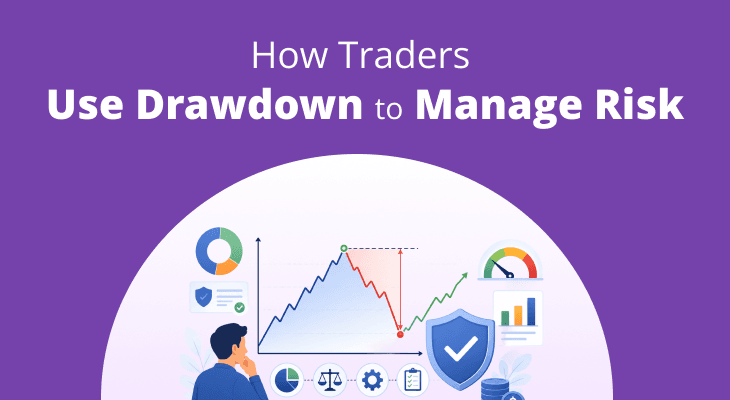
When evaluating an investment or trading strategy, returns usually receive the most attention. However, returns alone do not tell investors how much risk was taken to achieve them. Two portfolios may deliver the same annual return, but one may have experienced far steeper losses during market downturns. This is where max drawdown becomes useful. It measures the largest decline in the value of a portfolio, trading account, or investment from its highest point to its lowest point before a new peak is reached. Instead of focusing only on profits, it shows the worst historical loss an investor would have experienced by staying invested.
Iron Butterfly vs Iron Condor: Which Strategy Is Better?
August 19, 2026 | 0 mins read
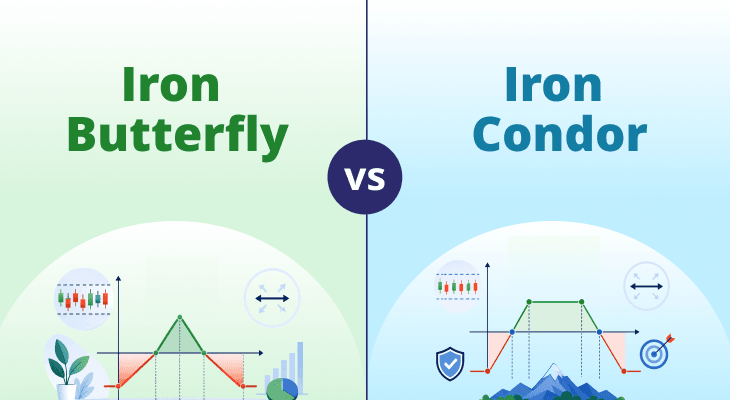
Options trading is not always about predicting the next big market move. At times, the market trades within a narrow range, creating opportunities for strategies that benefit from stability rather than direction. Two of the most widely used neutral strategies are the iron butterfly strategy and the iron condor options strategy. While both strategies use four option contracts and defined risk, they do not behave in the same way. Differences in strike selection, profit range, and risk-reward dynamics can significantly affect trading outcomes. Understanding the difference between an iron condor and an iron butterfly can help you select a strategy that matches your market expectations and trading objectives.

Iron Condor Strategy
August 19, 2026 | 0 mins read
Markets do not always trend strongly. At times, prices remain within a narrow range, making directional trades more challenging. The iron condor strategy is designed for these market conditions. It doesn’t rely on a bullish or bearish outlook. It aims to generate returns when the underlying asset remains within a predefined price range. With clearly defined risk and reward, it has become a widely used approach among traders looking to capitalise on range-bound markets while maintaining controlled exposure.
FAQ
A market bubble generally arises from a combination of speculative enthusiasm, easy access to credit, and narratives that downplay risk. When investors collectively start believing in a “new paradigm” (such as a revolutionary technology), they may push prices aggressively, ignoring fundamentals like earnings or debt. Leverage, herd mentality, and media hype also contribute.