
June 10, 2026 | 5 min read
What investors can learn from last quarter’s ETF flows and market signals
ETF flows show where investors are putting new money and where they are pulling it out. It offers useful clues about sentiment but is not a perfect prediction tool.
ETF inflows and outflows over any quarter tell you three main things. They show which asset classes or sectors investors favoured, how risk-on or risk-off they felt, and where liquidity and trading interest are building up.
If you read those signals in context with prices and macro news, you can use them to fine-tune your asset allocation and avoid chasing short-lived fads.
What are ETF inflows and outflows?
ETF inflows are money moving into an ETF when investors buy new units. ETF outflows are money moving out when investors redeem or sell units and the fund cancels shares.
Net ETF flows tell you how much money went in or out of the fund over a period. It is basically money in minus money out, after adjusting for any technical changes like stock splits. Net inflows mean more cash has come in than gone out, while net outflows mean the reverse.
What last quarter’s ETF inflows indicate
When you look at last quarter’s ETF inflows by broad category, you often see clear preferences. You will get to know equity ETFs which have tended to attract more money than fixed income, with particularly strong inflows into growth strategies and certain sectors.
At the same time, some defensive or out-of-favor areas can show net outflows, for example energy or healthcare ETFs in one recent period. This pattern usually indicates that investors were more comfortable taking risk in growth-oriented themes. Also, they were trimming exposure to sectors, which they felt were less attractive at current prices.
ETF inflows and outflows by category
Breaking ETF flows into categories helps you see where the big shifts are happening.
Example: category‑wise flows snapshot
Category | Recent trend in flows | What it may signal |
|---|---|---|
Broad equity ETFs | Large net inflows | Investors adding general equity exposure. |
Fixed income ETFs | Strong but smaller inflows | Demand for income and stability alongside equities. |
Sector equity (for example tech) | Select sectors show big inflows | Targeted bets on sectors with strong narratives. |
Sector equity (for example energy) | Outflows in some periods | Profit‑booking or lower conviction in those themes. |
Commodities (for example gold) | Inflows during stress | Hedge against inflation or geopolitical risk. |
For beginners, the key is to see these as sentiment indicators, not as recommendations to copy blindly.
Reading an ETF flow chart the right way
An ETF flow chart usually shows net inflows or outflows over time, by fund or category. A rising bars pattern for a category means more money has been entering those ETFs over that period.
How an ETF flow chart works
Imagine a simple ETF flow chart for one category, like equity ETFs, over 4 quarters.
Quarter | Net ETF flows (₹ crore) | Category index return |
|---|---|---|
Q1 | +₹5,000 | +4% |
Q2 | +₹8,000 | +7% |
Q3 | -₹2,000 | -3% |
Q4 | +₹1,000 | +1% |
If you plotted the flows as bars and the index return as a line, you would see:
- There are in net inflows in Q1, Q2, and Q4.
- However, in Q3 you can see net outflows.
- A rising pattern in Q1 and Q2, followed by a dip in Q3 and a small recovery in Q4.
This is what we mean when we say, a rising bars pattern for a category means more money has been entering those ETFs over that period.
When reading these charts, you should also check three things. Look at the time frame (daily flows can be noisy while quarterly flows show trends), compare flows with the size of the fund or category, and read them alongside price moves instead of in isolation.
Three checkpoints when reading ETF flow data
When you describe the three checks, you can format them like this:
Time frame
- Daily or weekly flows can jump around due to short-term trading and news.
- Quarterly or yearly ETF flow charts smooth out noise and make real trends easier to see.
Size of flows vs size of fund or category
- ₹1,000 crore in net inflows is huge for a small niche category but modest for a very large broad-market ETF group.
- Always compare flows as a percentage of total assets to judge how meaningful they are.
Flows together with price moves, not alone
- Rising prices plus strong inflows can mean investors are chasing a winning theme.
- Falling prices plus inflows may signal contrarian buying, while outflows in a falling market can show capitulation.
- Reading ETF flow charts alongside price charts or index returns helps you avoid overreacting to flows by themselves.
ETF flows vs market performance
ETF flows and performance influence each other but are not the same thing. Sometimes strong inflows follow good performance as investors chase winners, and sometimes contrarian investors buy after a sell‑off so flows rise while prices are still low.
Academic work shows that unexpected components of ETF flows can have some power to predict short-term returns, especially at the daily level, but this effect is subtle and difficult to use for most retail investors. For long‑term investors, it is safer to treat flows as context rather than as a trading signal by themselves.
How to use ETF flow insights in your portfolio
You can use ETF flow trends in three practical ways.
Gauge overall risk appetite
If broad equity ETFs and cyclical sectors are seeing strong inflows while defensive areas see outflows, markets are likely in a more risk‑on mood. If flows flip towards government bond and gold ETFs, investors may be turning more cautious.Double‑check your own positioning
When you see big inflows into a theme you already own, you can ask whether your exposure is now higher than you intended. This helps you avoid being over‑concentrated in fashionable areas.Generate ideas, not final decisions
Strong inflows into a new category can put it on your research list, but it should still pass your usual checks on index quality, costs, risk, and role in your asset allocation before you act.
Simple way to interpret flows for your portfolio
Flow pattern | Possible interpretation | Example action for a long‑term investor |
|---|---|---|
Strong inflows into broad equity, modest fixed income inflows | Risk‑on but still some demand for stability. | Check if your equity share has drifted too high and rebalance if needed. |
Big inflows into gold and government bond ETFs | Rising worry about inflation or geopolitical risk. | Ensure you have some diversifiers but avoid rushing into crowded trades. |
Heavy outflows from sector ETFs after a rally | Profit‑booking and lower conviction in that sector. | Review your exposure and decide if you still like the long‑term story. |
Last quarter’s ETF inflows and outflows give a useful window into how investors are interpreting market signals and shifting their money. They can help you understand sentiment and pressure points. They work best as one input alongside fundamentals, valuation, and your own goals rather than as standalone buy or sell triggers.
More Related Articles
How Much Risk Should You Take in Your 20s, 30s, 40s & 50s?
 July 24, 2026 | 0 mins read
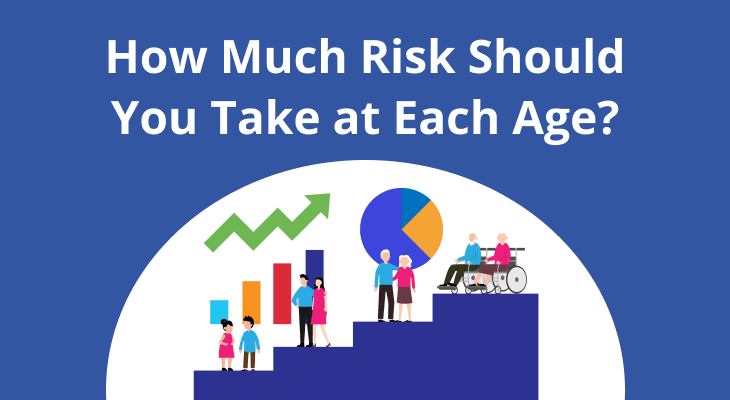
Risk is the price one has to pay for return. The higher the potential gain, the more uncertainty you take on to get it. Every investment carries some degree of that uncertainty the question is how much makes sense for where you are in life. A 25-year-old and a 55-year-old looking at the same stock market are in fundamentally different situations. At 25, putting most of your savings into equity mutual funds is a reasonable decision. At 55, the same decision could leave you in a difficult position if markets fall sharply in the years leading up to retirement.

How to Choose the Right Investment Method for Short‑Term Goals
July 24, 2026 | 0 mins read
A short-term goal is any financial target you need to meet within 1-3 years. This could be building an emergency fund, saving for a holiday, making a down payment on a house, or setting money aside for advance tax payments. Because the money has a fixed purpose and a financial need that is not too far into the future. The priority is simple: protect what you have and make sure you have easy access to it when you need it.

What is Rights Entitlement (RE) in the Stock Market?
July 23, 2026 | 0 mins read
At times, your demat account may reflect entries that fall outside the familiar pattern of buying and selling securities. Rights entitlement is one such instance. It appears quietly, and requires timely action on your part. You might notice an extra line item against a stock you already own, tagged differently, priced differently. It is not a bonus, not a split, and not exactly a new investment either. But it does carry value.
FAQ
Flows can sometimes line up with short-term moves, and research finds that unexpected parts of ETF flows have some predictive power at the daily level. However, they do not reliably forecast long‑term market direction for most investors.